_(2).jpg)
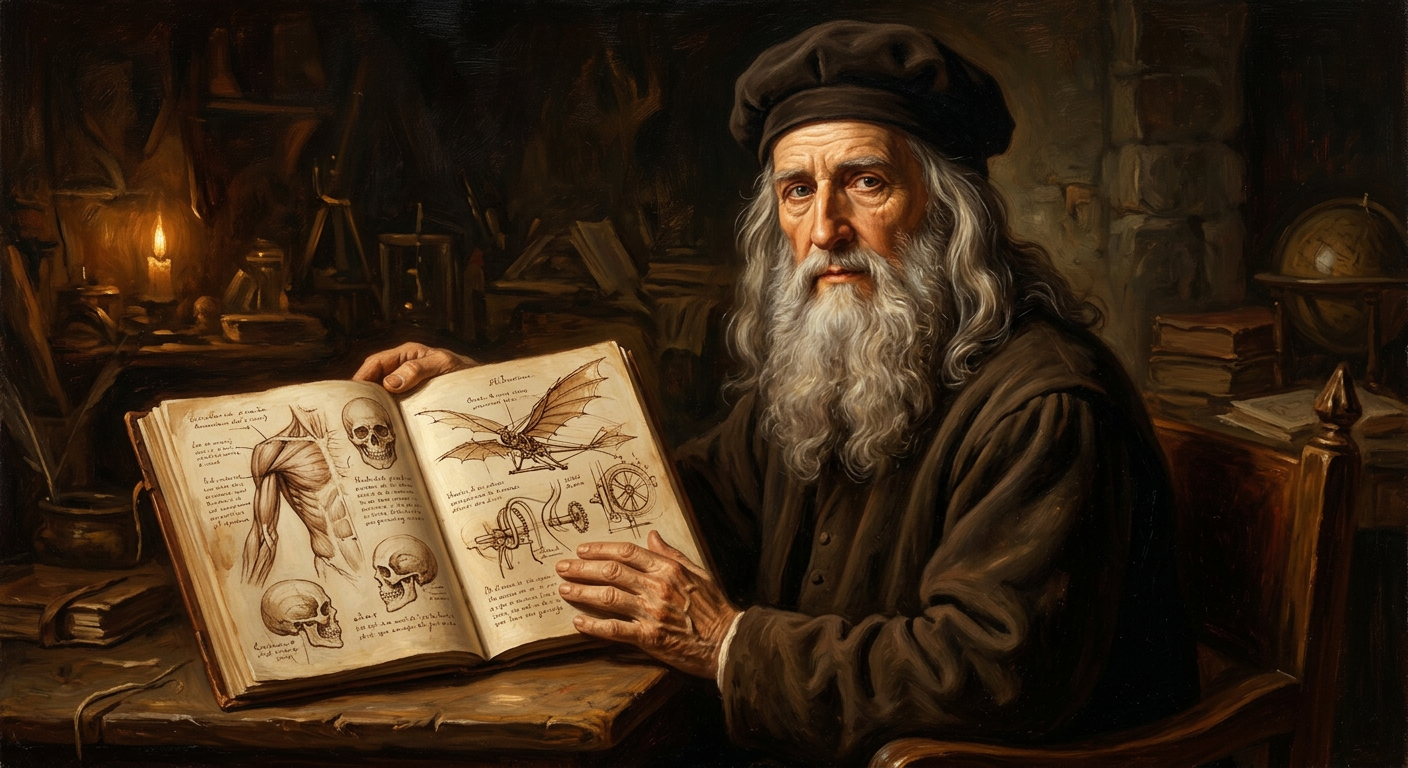
Leonardo da Vinci
1452–1519 · Polymath: Artist, Engineer, Anatomist, and Inventor
A self-taught genius born out of wedlock in a Tuscan village, whose insatiable curiosity drove him to sketch flying machines, dissect human bodies, and paint the most famous portrait in the world.
“Learning never exhausts the mind.”
Leonardo wrote most of his notebooks in mirror writing — right to left, so the words appear backwards. Some scholars think it was to protect his ideas from the Inquisition; others think he was simply left-handed and found it faster to write that way.
Why is this scientist famous?
The quintessential Renaissance man whose notebooks overflow with visionary inventions, anatomical studies, and master paintings like the Mona Lisa.
Leonardo designed flying machines, armoured vehicles, and anatomical studies centuries ahead of his time. He showed that art and science are two ways of looking at the same world. The idea that an inventor can sketch a wild idea on paper and eventually see it built — from helicopters to parachutes — starts with his notebooks, which still inspire engineers and artists today.
Leonardo's story
The Illegitimate Son
Leonardo da Vinci was born on 15 April 1452 in Anchiano, a tiny hamlet near the town of Vinci in Tuscany. He was the illegitimate son of Ser Piero, a wealthy notary, and a peasant woman named Caterina. Because he was born out of wedlock, Leonardo was barred from attending university, joining a guild, or inheriting his father''s profession. It was a stigma that shaped his life — but also freed him. With no expected career path, he followed his curiosity wherever it led. He received only the most basic schooling: reading, writing, and arithmetic. Everything else — mathematics, anatomy, engineering, painting — he taught himself, with an intensity that astonished everyone who met him.
The Workshop of Verrocchio
At about 14, Leonardo was apprenticed to Andrea del Verrocchio, one of Florence''s leading artists and engineers. Verrocchio''s workshop was a creative factory that produced paintings, sculptures, metalwork, and theatrical machinery. Leonardo learned all of it. He ground pigments, cast bronze, designed stage sets, and painted portions of his master''s works. According to a famous story, when Leonardo painted an angel in Verrocchio''s Baptism of Christ, the older artist was so humbled by his pupil''s talent that he never painted again. Whether true or not, it captures the truth: Leonardo was a prodigy whose skill outstripped his teachers almost from the start. He was accepted into the painters'' guild in 1472, at just 20.
The Notebooks
From his early twenties, Leonardo began keeping notebooks — and he never stopped. Over his lifetime he filled an estimated 7,200 pages with drawings, diagrams, observations, and ideas, written in a distinctive mirror script that reads right to left. He drew everything: the muscles of the human heart, the flight of birds, the geology of river valleys, the mechanics of gears and levers. He designed flying machines, parachutes, armoured vehicles, scuba gear, and self-propelled carts — none of which he could build with the materials of his time. He dissected thirty human corpses, mapping the body with an accuracy that would not be surpassed for centuries. The notebooks are the greatest record of a restless mind in history, and about 4,000 pages survive today, scattered across museums from Milan to London to Seattle.
Milan and the Great Horse
In 1482, Leonardo left Florence for Milan, seeking the patronage of Duke Ludovico Sforza. He wrote a remarkable job application letter listing his military engineering skills — bridges, cannons, mortars, and ''vehicles safe and indestructible'' — and mentioned painting almost as an afterthought. In Milan he spent 17 productive years, painting the Last Supper, staging elaborate court pageants, and beginning work on a colossal bronze horse — a 23-foot equestrian statue that would have been the largest in the world. He made the full-scale clay model, but before the bronze could be cast, war broke out and the metal was needed for cannons. The French invaders used the clay model for target practice. It was a devastation Leonardo never forgot.
The Mona Lisa and the Last Supper
Leonardo painted relatively few pictures — fewer than 20 survive — but two of them are among the most famous images in human history. The Last Supper, painted on a refectory wall in Milan between 1495 and 1498, captures the moment Jesus says ''one of you will betray me,'' with each disciple reacting in a uniquely human way. Leonardo experimented with a new fresco technique that proved disastrous — the paint began flaking within his lifetime. The Mona Lisa, begun around 1503, is a small portrait that Leonardo carried with him until his death, constantly refining it. Its fame comes from the subject''s enigmatic expression and Leonardo''s pioneering use of sfumato — the smoky blending of colours at the edges that creates an illusion of depth and life.
The Final Years
Leonardo spent his last years in France, invited by King Francis I, who gave him the title of First Painter, Engineer, and Architect to the King and a handsome pension. He lived in a manor house near the royal château at Amboise, still sketching, still thinking, still designing — though now more interested in water management, geometry, and the flight of birds than in painting. He died on 2 May 1519 at the age of 67, reportedly in the arms of the king himself, though that story may be more legend than fact. He left his notebooks to his favourite pupil, Francesco Melzi. The thousands of pages were preserved, lost, scattered, and rediscovered over centuries — a testament to a mind that never stopped asking ''why.''
What did they discover?
Anatomical Studies
Leonardo dissected around thirty human corpses and produced the most accurate anatomical drawings of his era, mapping the heart, skeleton, muscles, and organs with a precision that predates modern anatomy by centuries.
Flying Machine Designs
He designed an ornithopter (a machine with flapping wings), a parachute, and a concept for a helicopter — none buildable with 15th-century materials, but all mechanically sound in principle.
The Last Supper
His mural painting in Milan, depicting the moment of Christ''s betrayal announcement, revolutionised composition and psychological depth in art and remains one of the most studied images in the world.
The Mona Lisa
This small portrait, painted using his pioneering sfumato technique of smoky colour blending, became the most famous painting in history, renowned for its lifelike expression and atmospheric depth.
Armoured Vehicle and War Machines
He designed a conical armoured car powered by cranks, a multi-barrelled gun, and a giant crossbow — visionary military engineering that anticipated tanks and rapid-fire weapons by 400 years.
Civil Engineering and Hydraulics
He designed canals, locks, bridges, and water-lifting machines, and produced detailed studies of fluid dynamics that informed irrigation and flood control projects across Italy.
Amazing facts
Leonardo was born out of wedlock and received almost no formal education — he taught himself everything he knew.
He wrote his notebooks in mirror writing, right to left, so the words appear backwards when viewed normally.
He was left-handed and may have written in mirror script simply because it was faster and less smudgy for him.
He dissected around thirty human corpses, mapping anatomy with an accuracy that would not be surpassed for centuries.
He designed a parachute, a helicopter, an armoured tank, and a diving suit — all centuries ahead of their time, though none were ever built.
His 23-foot clay model for a giant bronze equestrian statue was used for target practice by French soldiers and destroyed before it could be cast.
He was so strong and handsome that people called him a near-giant — he could bend horseshoes with his bare hands.
He was a strict vegetarian who loved animals so much that he would buy caged birds in the market just to release them.
The Mona Lisa was never delivered to its patron — Leonardo kept it with him for over 15 years, constantly refining it until his death.
About 4,000 pages of his notebooks survive today, scattered across museums and private collections from Milan to London to Seattle.
He was the first person to draw a human foetus inside the womb, and correctly guessed that the umbilical cord was how the baby received nourishment.
Timeline
Born in Anchiano, near Vinci, Tuscany, the illegitimate son of a notary and a peasant woman
Apprenticed to the artist and engineer Andrea del Verrocchio in Florence
Accepted into the Compagnia di San Luca, the Florentine painters'' guild, at age 20
Received his first independent commission for a painting in Florence
Moved to Milan to work for Duke Ludovico Sforza, staying for 17 years
Began keeping systematic notebooks filled with drawings, observations, and inventions
Began painting the Last Supper on the refectory wall of Santa Maria delle Grazie in Milan
French forces invaded Milan and destroyed his clay model for the giant equestrian statue
Began painting the Mona Lisa, a portrait he would keep and refine for the rest of his life
Moved to Rome at the invitation of Pope Leo X, but received few commissions
Moved to France at the invitation of King Francis I, who gave him a pension and a manor house
Continued his notebooks and hydraulic studies in France, preparing designs for a royal palace
Died at the Château du Clos Lucé near Amboise, France, at age 67
Awards & honours
Related Super Scientists
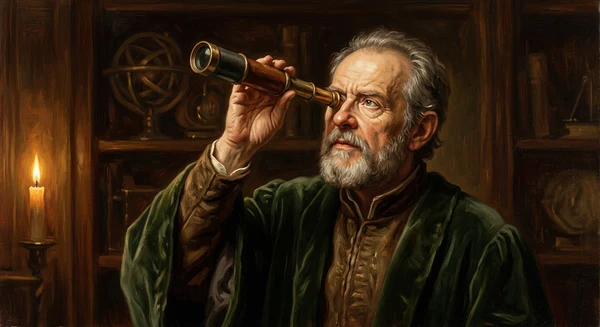
Galileo Galilei
1564–1642 · Astronomer & Physicist
Proving that the Earth orbits the Sun and founding modern observational astronomy.
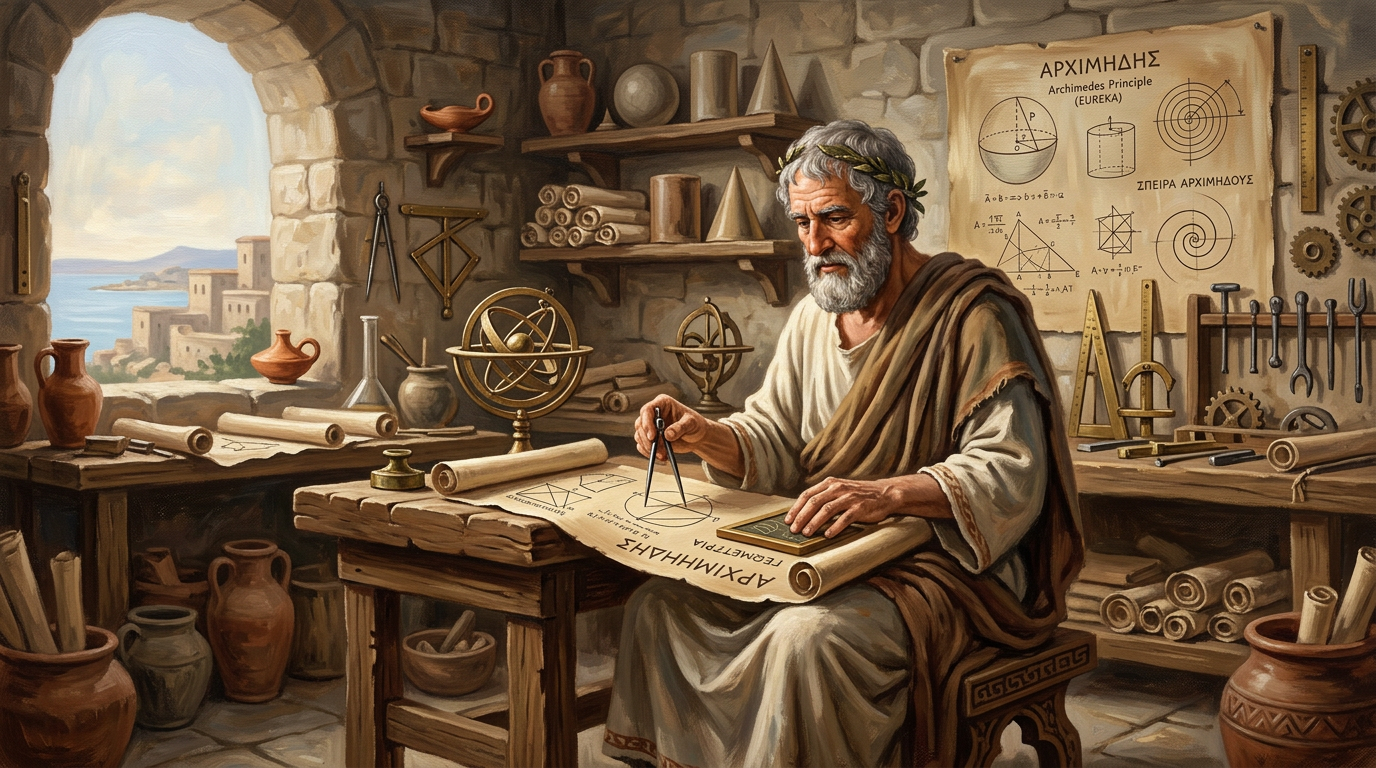
Archimedes
-287–-212 · Mathematician and inventor
Discovering the principles of buoyancy, the lever, and pioneering mathematical methods that anticipated calculus.
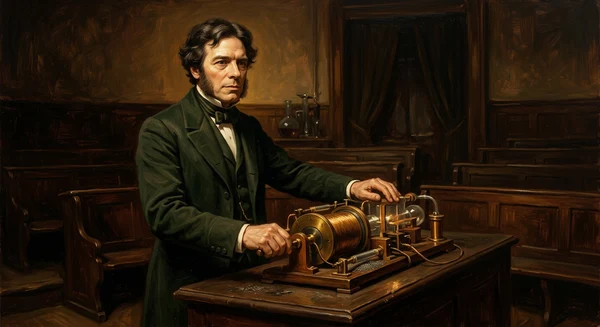
Michael Faraday
1791–1867 · Physicist & Chemist
Discovered electromagnetic induction and built the first electric motor and generator.
Sources & references
Books and educational kits about Leonardo da Vinci coming soon