_(2).jpg)
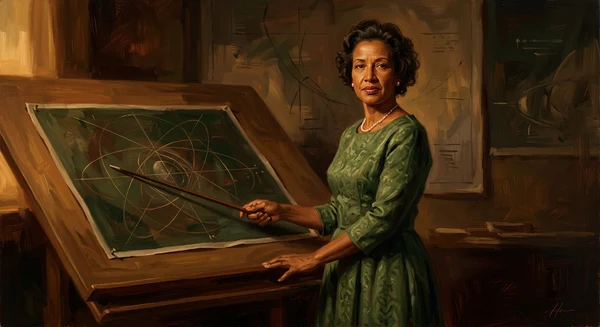
Katherine Johnson
1918–2020 · Mathematician
A "human computer" at NASA, Katherine Johnson's calculations were trusted above the earliest electronic computers for some of the most important space missions in history.
“Girls are capable of doing everything men are capable of doing.”
Katherine Johnson calculated the trajectory for Alan Shepard's first American space flight by hand — the astronauts trusted her math more than the computer.
Why is this scientist famous?
Calculating the trajectories that put the first Americans into space and on the Moon.
Katherine Johnson calculated the trajectories that put astronauts into orbit and brought them safely home. Her maths guided Alan Shepard's first flight and John Glenn's orbit around the Earth. When NASA started using computers for the Moon landing, Glenn asked her to double-check the numbers first. Her story shows how mathematics — done by hand, with precision — can literally reach the stars.
Katherine's story
Early Life
Born Creola Katherine Coleman in White Sulphur Springs, West Virginia. She was a math prodigy: she was counting everything in sight by age four, and by ten she had completed middle school. Her county did not offer high school to Black students, so her family moved 120 miles so she could attend a high school that did.
Human Computer
After teaching for years, she joined NACA (NASA's predecessor) in 1953 as a "human computer" — one of a group of Black women mathematicians who performed complex calculations by hand. She quickly distinguished herself, asking to attend editorial meetings previously closed to women and proving herself indispensable.
Space Race
Johnson calculated the trajectory for Alan Shepard's 1961 suborbital flight — America's first crewed space mission. For John Glenn's 1962 orbital flight, the astronaut specifically asked for Johnson to double-check the electronic computer's numbers by hand before he would fly. She also worked on the Apollo 11 Moon landing and the Space Shuttle programme.
Recognition
For decades, her contributions went unrecognised outside NASA. That changed when the 2016 book and film "Hidden Figures" told her story to the world. In 2015, President Obama awarded her the Presidential Medal of Freedom, the nation's highest civilian honour.
What did they discover?
Freedom 7 Trajectory
Calculated the exact flight path for Alan Shepard's 1961 mission, making him the first American in space.
Friendship 7 Verification
John Glenn trusted her hand calculations over the electronic computer's for his 1962 orbital flight.
Apollo 11 Return Trajectory
Her work helped calculate the path that brought the first astronauts back safely from the Moon.
Amazing facts
John Glenn refused to fly until "the girl" — Katherine Johnson — had checked the computer's numbers by hand.
She was the first woman in NASA's Flight Research Division to receive co-authorship credit on a research report.
She graduated from high school at 14 and college at 18, graduating summa cum laude.
She was a math teacher before joining NASA because computing jobs were some of the few open to Black women with math skills.
She received the Presidential Medal of Freedom in 2015 at age 97.
NASA named a building after her: the Katherine G. Johnson Computational Research Facility.
Timeline
Born in White Sulphur Springs, West Virginia
Joined NACA as a "human computer"
Calculated trajectory for Alan Shepard's first American spaceflight
Verified calculations for John Glenn's orbital flight
Worked on Apollo 11 Moon landing calculations
Awarded the Presidential Medal of Freedom
Died at age 101
Awards & honours
Related Super Scientists
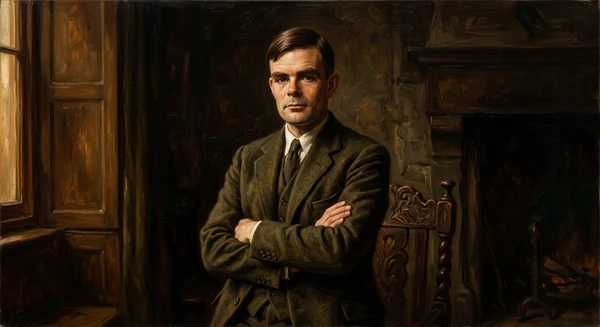
Alan Turing
1912–1954 · Mathematician & Computer Scientist
Breaking Nazi codes and founding the science of artificial intelligence.
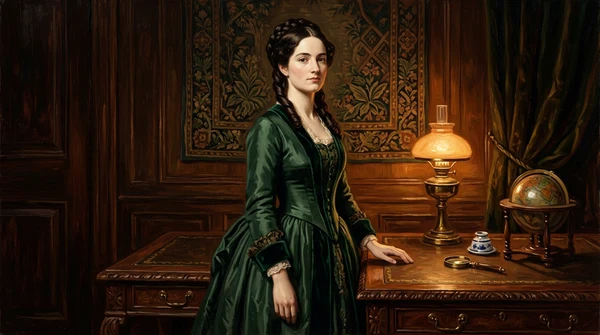
Ada Lovelace
1815–1852 · Mathematician
Writing the first computer algorithm, a century before electronic computers existed.
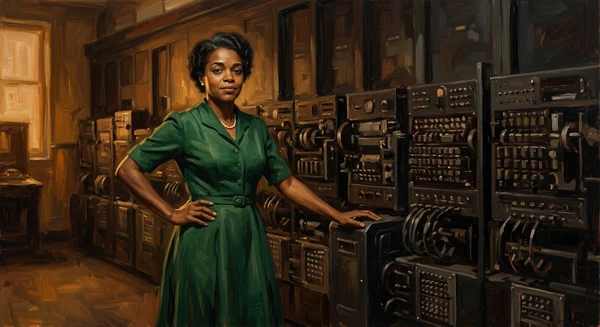
Dorothy Vaughan
1910–2008 · Mathematician & Computer Programmer
NASA's first Black supervisor and a pioneer of FORTRAN programming.
Articles about this scientist
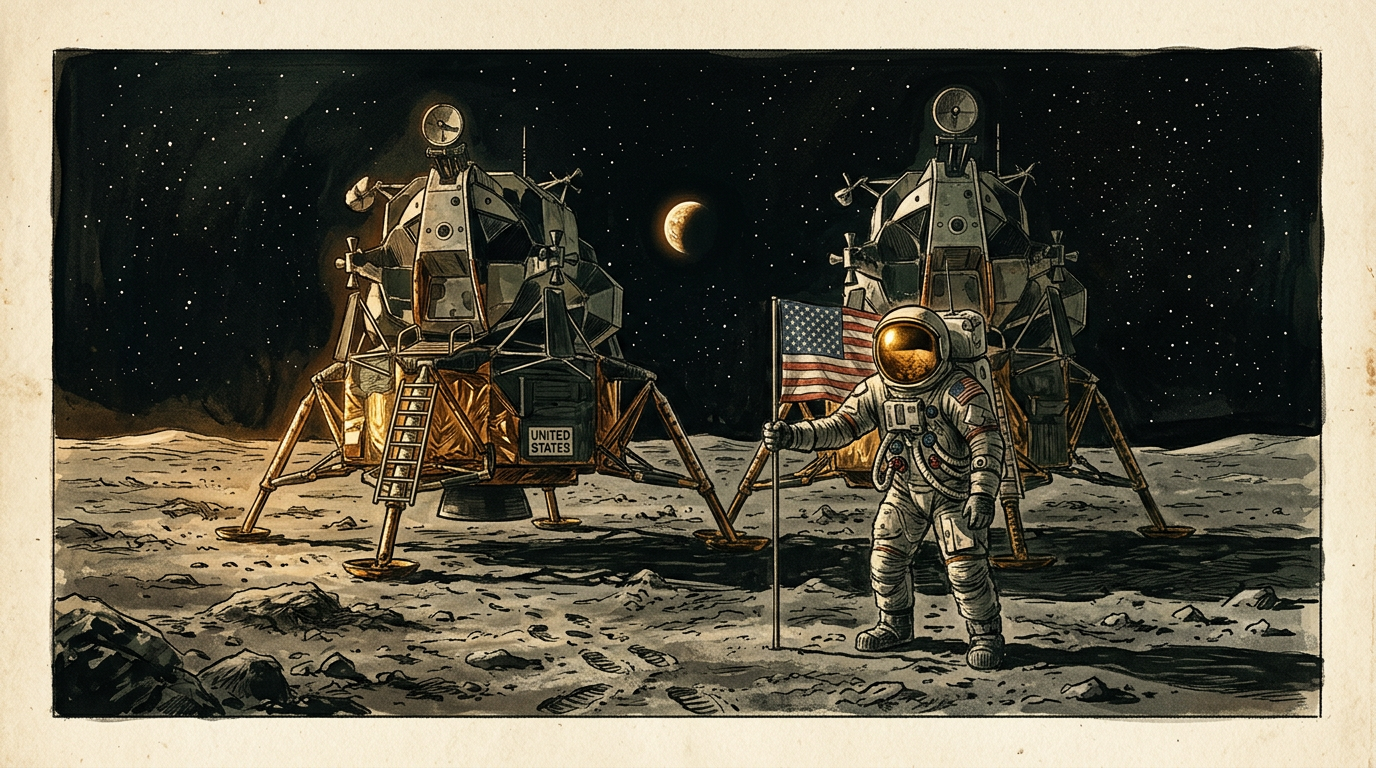
Reaching the Moon
On 20 July 1969, Neil Armstrong took the first human step on the Moon. But behind that footprint were thousands of engineers and a computer with less memory than a single email.
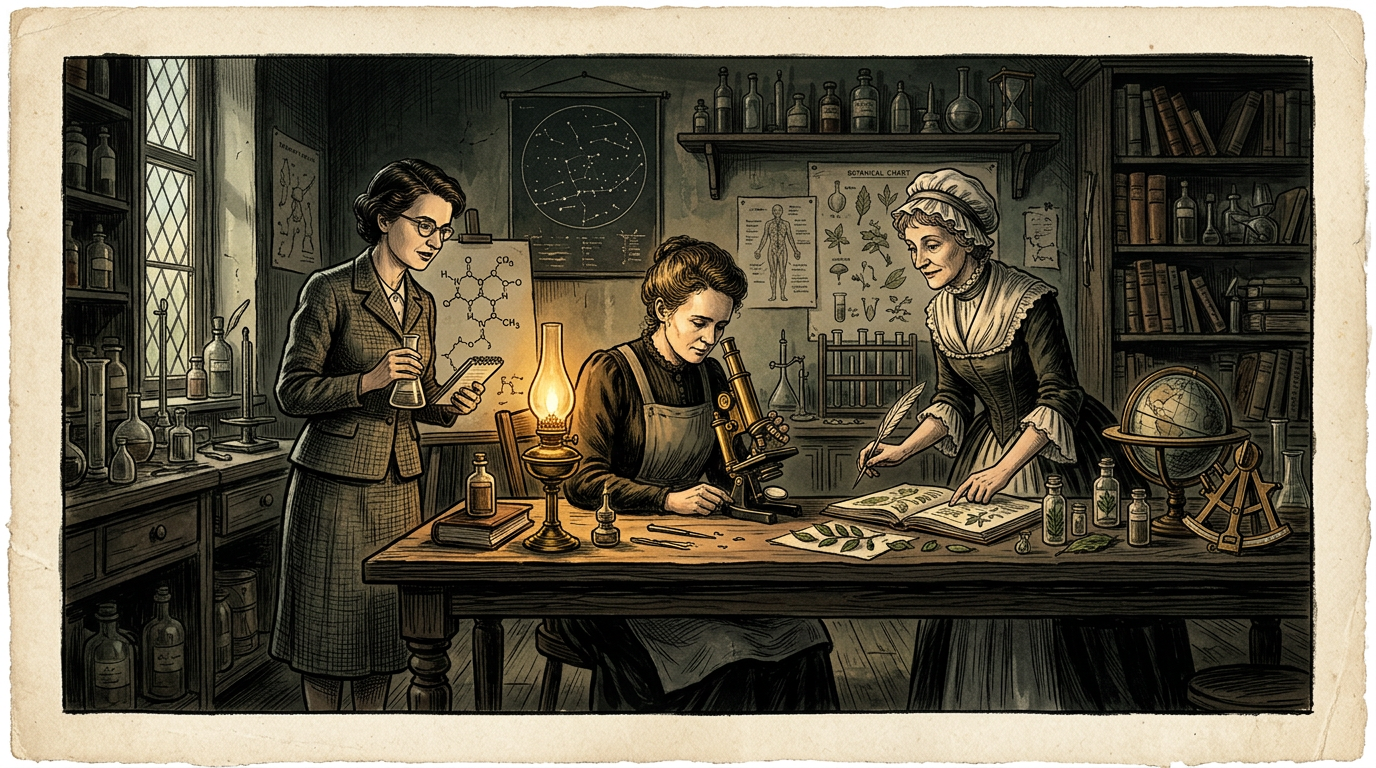
Women Who Changed Science
Throughout history, women in science have faced exclusion, dismissal, and erasure. Yet their discoveries have been transformative. This article celebrates the women whose brilliance could not be held back by the barriers of their time.
Sources & references
Books and educational kits about Katherine Johnson coming soon