_(2).jpg)
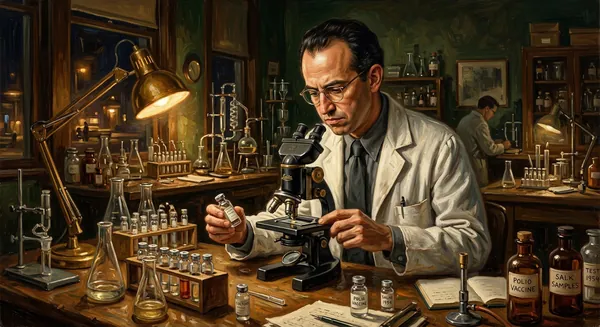
Jonas Salk
1914–1995 · Virologist and Medical Researcher
Jonas Salk developed the first polio vaccine, defying scientific convention and ending an epidemic that paralysed tens of thousands of children a year — then gave it away without patenting it.
“There is hope in dreams, imagination, and in the courage of those who wish to make those dreams a reality.”
Salk refused to patent his polio vaccine, saying the people owned it. When asked who owned the patent, he replied: ‘Well, the people, I would say. Could you patent the sun?’
Why is this scientist famous?
Developing the first safe and effective polio vaccine, which ended a disease that paralysed and killed children by the thousands.
Salk developed the first safe and effective polio vaccine and refused to patent it, saying the patent belonged to the people. Polio once paralyzed thousands of children every year; thanks to his vaccine, it is nearly eradicated. His decision to give the vaccine away is a reminder that science can be a gift shared with the whole world.
Jonas's story
A World Terrified by Polio
In the first half of the 20th century, polio was one of the most feared diseases in the world. It struck mostly children, paralysing limbs and destroying the ability to breathe. In the United States alone, outbreaks infected tens of thousands each summer, leaving children in iron lung machines and parents in a state of dread. Jonas Salk was born in New York in 1914, the son of Jewish immigrants from Russia who had barely a grade-school education. He was the first in his family to go to college, and he grew up in a world where polio was an ever-present terror.
A New Kind of Vaccine
Salk studied medicine at New York University and became fascinated with virology. At the University of Pittsburgh, he began working on a polio vaccine. The scientific establishment favoured a vaccine using weakened live virus — the approach his rival Albert Sabin would later take. Salk took a different, more controversial path: he killed the virus with formaldehyde so it could not cause infection but still triggered the immune system to build protection. Many prominent scientists dismissed his approach, arguing that a killed-virus vaccine could not produce lasting immunity.
The Largest Trial in History
In 1954, Salk’s vaccine was tested in the largest clinical trial ever conducted, involving 1.8 million children across the United States — an unprecedented scale of public participation. Parents volunteered their children by the millions, desperate for an end to the terror. The trial was overseen by Dr. Thomas Francis of the University of Michigan, and on 12 April 1955 — ten years to the day after the death of President Roosevelt, who had himself been paralysed by polio — the results were announced: the vaccine was safe and effective. The news sparked nationwide celebration, with church bells ringing and factory whistles blowing across the country.
Giving It Away
When the vaccine was approved, Salk refused to patent it. He had no interest in personal wealth from a discovery that could save children’s lives. When asked later who owned the patent, he gave his famous reply: ‘Well, the people, I would say. Could you patent the sun?’ Within years, polio cases in the United States dropped by over 90 per cent. Sabin’s oral vaccine later joined it in the global effort, and together the two vaccines brought polio to the brink of extinction. Salk spent his final years searching for an AIDS vaccine and founding the Salk Institute for Biological Studies in La Jolla, California — a research centre that remains one of the world’s most influential.
What did they discover?
Killed-Virus Polio Vaccine
Developed the first safe and effective polio vaccine using formaldehyde-killed virus, defying the scientific consensus that only live-virus vaccines could work — a decision that ended the largest polio epidemic in history.
The 1954 Field Trial
Organised the largest clinical trial ever conducted, with 1.8 million children participating — a model for large-scale public health studies that proved the vaccine’s safety and effectiveness.
The Salk Institute
Founded the Salk Institute for Biological Studies in 1963 in La Jolla, California, which became one of the world’s leading biological research centres, home to six Nobel laureates.
Unpatented Vaccine
Refused to patent the polio vaccine, forfeiting an estimated $7 billion in royalties so that the medicine would be available to everyone — a decision that accelerated global polio eradication.
Amazing facts
He refused to patent his polio vaccine, saying: ‘Could you patent the sun?’ — forfeiting an estimated $7 billion in potential royalties.
He was the first member of his family to go to college; his parents were Jewish immigrants from Russia with barely a grade-school education.
The 1954 vaccine trial involved 1.8 million children — the largest clinical trial in history at the time.
The results were announced on 12 April 1955, exactly ten years after the death of President Roosevelt, who had been paralysed by polio himself.
Church bells rang and factory whistles blew across America when the vaccine was declared safe and effective.
His rival Albert Sabin developed a competing oral vaccine using live weakened virus — the two men had a lifelong professional rivalry, but both vaccines were needed to eradicate polio.
He spent the last years of his life searching for a vaccine against AIDS, a quest he did not live to see completed.
The Salk Institute he founded in La Jolla has produced six Nobel laureates and remains one of the world’s top biological research centres.
Timeline
Born in New York City, son of Russian Jewish immigrants
Earned his medical degree from New York University
Joined the University of Pittsburgh to research polio
Developed the first effective killed-virus polio vaccine
Launched the largest clinical trial in history with 1.8 million children
Vaccine declared safe and effective on 12 April — nationwide celebration
Founded the Salk Institute for Biological Studies in La Jolla, California
Began searching for a vaccine against AIDS
Died in La Jolla, California, age 80
Awards & honours
Related Super Scientists
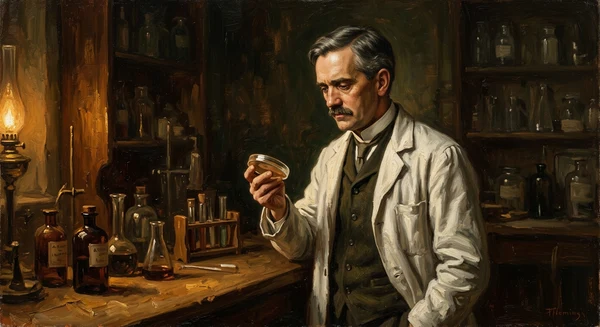
Alexander Fleming
1881–1955 · Bacteriologist
Discovered penicillin, the world's first antibiotic, saving hundreds of millions of lives.
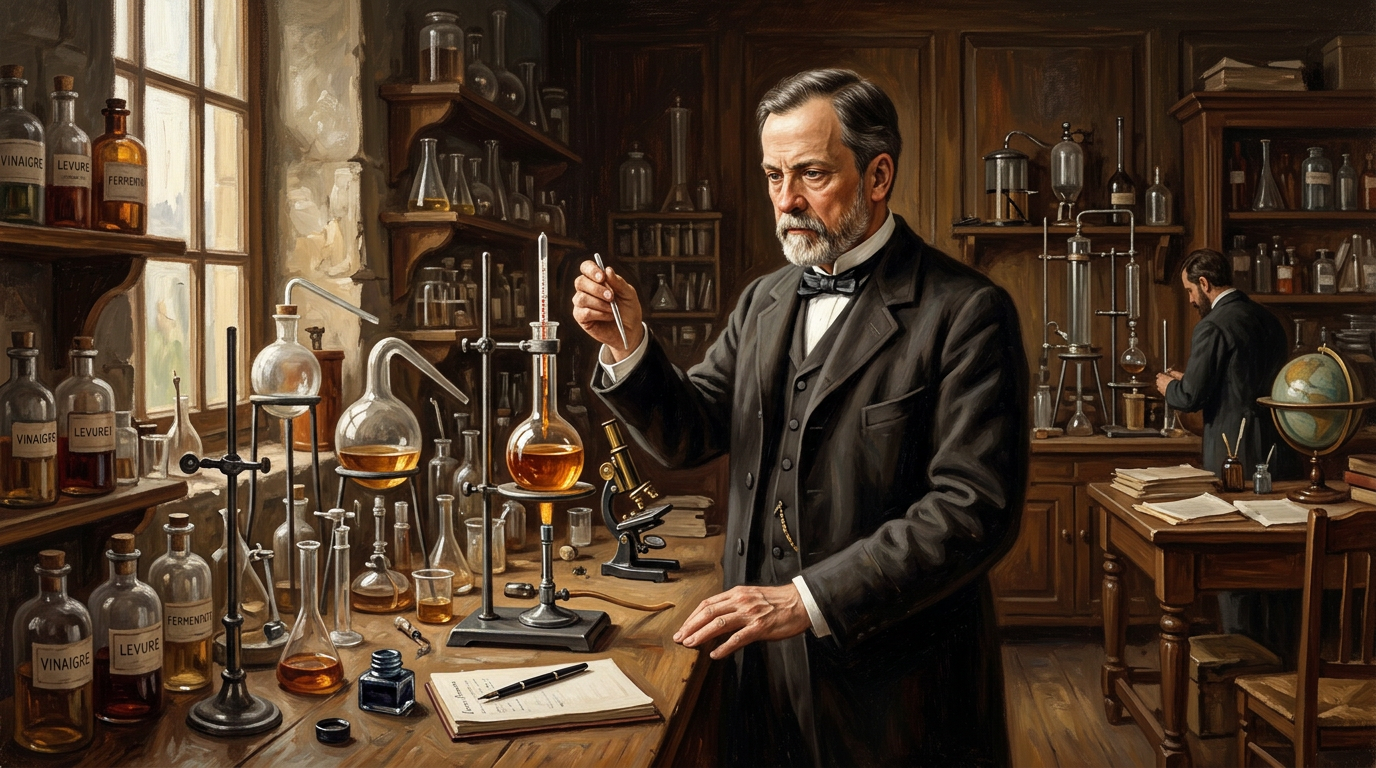
Louis Pasteur
1822–1895 · Chemist and microbiologist
Proving that germs cause disease, developing pasteurisation, and creating the first rabies vaccine.
Sources & references
Books and educational kits about Jonas Salk coming soon