_(2).jpg)
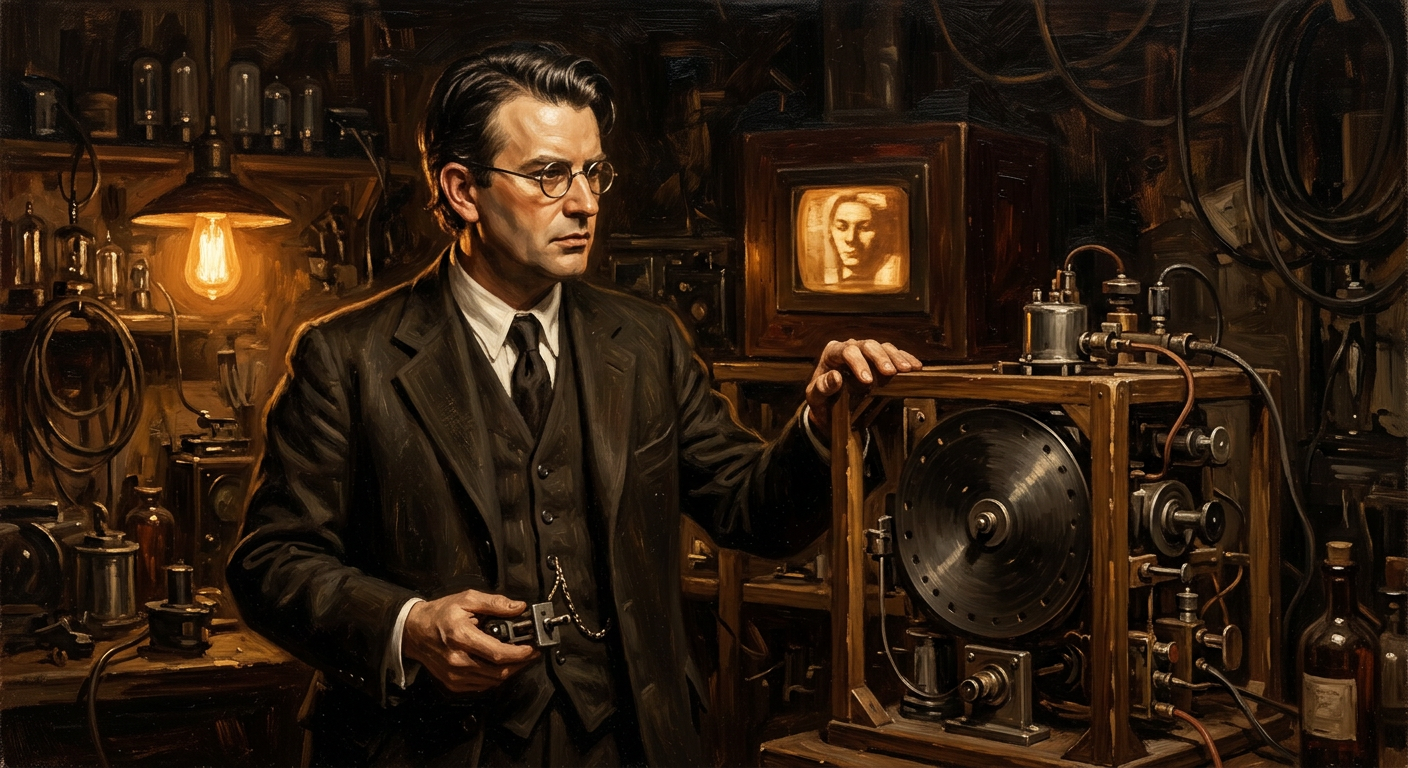
John Logie Baird
1888–1946 · Engineer and Inventor
A Scottish inventor who built the first working television from scraps and brought moving pictures through the air into people’s homes.
Baird’s first television was built using a hat box, knitting needles, scissors, glue, and a bicycle lamp.
Why is this scientist famous?
Demonstrated the first working television system in 1926 and later pioneered colour television.
John's story
A Sickly Boy with Big Ideas
John Logie Baird was born in 1888 in Helensburgh, a small town on the west coast of Scotland. His father was a minister in the local church. As a child, John was often ill — he suffered from poor health throughout his life — but he had a restless, inventive mind. He rigged up a primitive telephone exchange between his bedroom and a friend’s house using wires strung across the street, and he built a small electric lighting system for his father’s house. He studied electrical engineering at what is now the University of Strathclyde, but his studies were cut short by the First World War. He tried to enlist but was rejected because of his health. He spent the war years working for an electrical company, then tried his hand at a series of failed businesses: he set up a jam factory in Trinidad, tried to make soap, and attempted to sell socks. None of them succeeded. But Baird had one idea that would not leave him alone: the idea of transmitting moving pictures through the air.
Television from a Hat Box
In the early 1920s, Baird was living in near-poverty in the seaside town of Hastings on the south coast of England. He had very little money and no proper laboratory, but he was obsessed with the idea of television. He built his first working apparatus out of the most unlikely materials: a hat box, a pair of knitting needles, scissors, glue, a bicycle lamp, and a rotating disc pierced with a spiral of small holes. The disc was a Nipkow disc, invented by a German engineer decades earlier, and it was the key to his system. As the disc spun, each hole scanned a line of the image, and a light-sensitive cell converted the brightness into an electrical signal. At the receiving end, a second disc and a flickering lamp recreated the image. It was crude, flickering, and the picture was tiny — but it worked. In 1924, he successfully transmitted the image of a moving cross. The following year, he transmitted the face of a ventriloquist’s dummy called Stooky Bill, because the light was so hot and bright that no human could tolerate it for long.
The First Public Demonstration
On 26 January 1926, Baird gave the first public demonstration of a working television before an audience of around forty scientists at his attic laboratory in Soho, London. The image was small — about the size of a postcard — and flickering, but the audience could clearly see moving faces on the screen. It was a moment that would change entertainment, news, and communication forever. In 1928, Baird achieved the first transatlantic television transmission, sending an image from London to New York. He also demonstrated the first colour television and the first three-dimensional television. The BBC began broadcasting television using Baird’s system in 1929, and for several years his mechanical system was the only way to see television. But by the mid-1930s, a rival electronic system developed by the Marconi-EMI company was proving far superior, producing clearer pictures with no moving parts. In 1937, the BBC switched to the electronic system, and Baird’s mechanical television was retired. It was a bitter blow, but Baird did not give up — he continued developing colour television and large-screen projection systems from his own laboratory.
A Visionary Who Died Too Soon
Baird continued to innovate into the 1940s. He demonstrated a colour television system that was remarkably advanced for its time, and he developed a high-definition colour system that would not be commercially realised for decades. But his health, always fragile, was failing. He suffered a stroke in 1946 and died in June of that year, aged fifty-seven. He did not live to see television become the dominant form of entertainment in the world. Today, his house in Hastings bears a blue plaque, and a statue of him stands in Helensburgh. He is remembered as the first person to make television work — not the person who perfected it, but the person who proved it was possible. From a hat box and a pair of knitting needles in a cold attic, he brought moving images through the air and into the world.
What did they discover?
First Working Television
In January 1926, Baird gave the first public demonstration of a working television in his Soho laboratory, transmitting moving faces to a small screen. It proved that television was not just a dream but a real technology.
First Transatlantic Television Transmission
In 1928, Baird transmitted a television image from London to New York — the first time a picture had crossed the Atlantic by wireless, proving television could work over long distances.
First Colour Television
Baird demonstrated the world’s first colour television transmission, as well as the first three-dimensional television, years before these technologies became commercially practical.
Large-Screen Projection Television
In the 1940s, Baird developed a large-screen colour television projection system that was far ahead of its time, anticipating technologies that would not be commercially realised for decades.
Amazing facts
Baird built his first television from a hat box, knitting needles, scissors, glue, a bicycle lamp, and a Nipkow disc.
He used a ventriloquist’s dummy called Stooky Bill for early tests because the hot, bright lights would have burned a human subject.
His first public television demonstration in 1926 produced an image about the size of a postcard.
He sent the first transatlantic television transmission from London to New York in 1928.
He demonstrated both colour television and 3D television in the 1920s, decades before they became practical.
His mechanical television system was replaced by the electronic Marconi-EMI system in 1937 — but he kept inventing colour systems right up to his death.
Timeline
Born in Helensburgh, Scotland
Attempts to enlist in the army but is rejected due to poor health
Begins experiments with television in Hastings, living in near-poverty
Successfully transmits the image of a moving cross using his mechanical system
Gives the first public demonstration of a working television in Soho, London
Achieves the first transatlantic television transmission from London to New York
The BBC begins broadcasting television using Baird’s system
The BBC switches to the electronic Marconi-EMI system, retiring Baird’s mechanical television
Demonstrates an advanced colour television system, the Telechrome
Dies in Bexhill-on-Sea, Sussex, aged 57
Awards & honours
Related Super Scientists
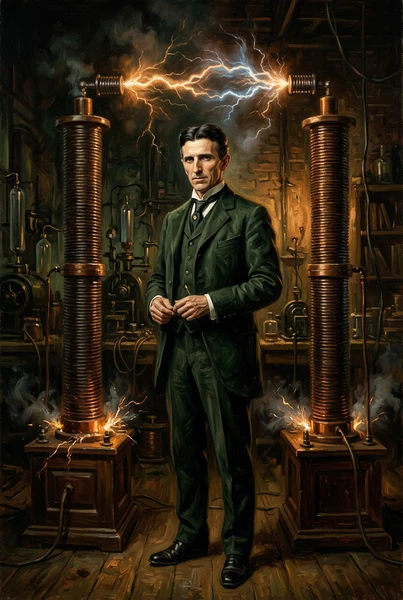
Nikola Tesla
1856–1943 · Inventor & Engineer
Pioneering alternating current (AC) electricity and numerous electrical inventions.
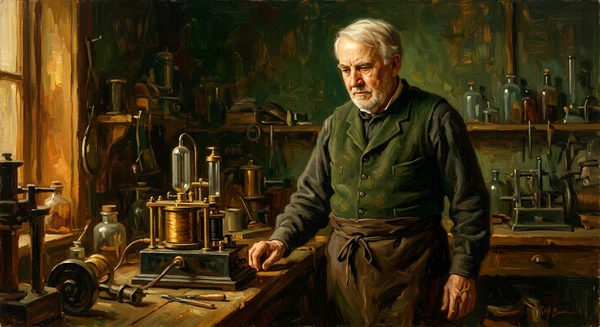
Thomas Edison
1847–1931 · Inventor & Businessman
Invented the practical incandescent light bulb, phonograph, and motion picture camera.
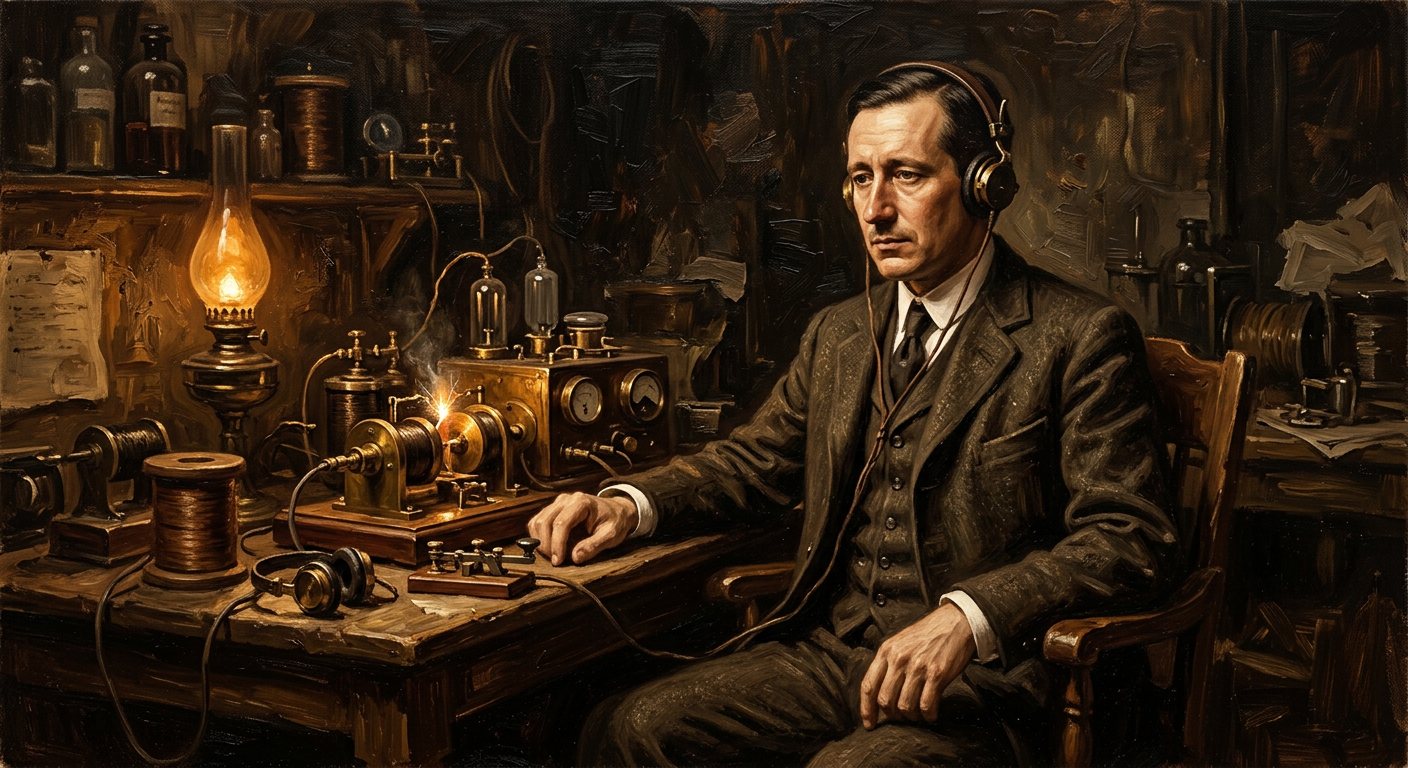
Guglielmo Marconi
1874–1937 · Electrical Engineer and Inventor
Developing the first practical wireless telegraphy system (radio) and sending the first transatlantic radio signal across the Atlantic Ocean.
Sources & references
Books and educational kits about John Logie Baird coming soon