_(2).jpg)
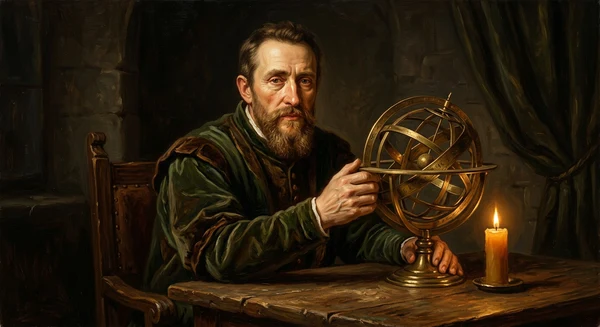
Johannes Kepler
1571–1630 · Astronomer & Mathematician
Johannes Kepler was a German astronomer who discovered that planets move in elliptical orbits, not perfect circles. His three laws of planetary motion laid the groundwork for Newton's theory of gravity and our modern understanding of the solar system.
“The diversity of the phenomena of nature is so great, and the treasures hidden in the heavens so rich, precisely in order that the human mind shall never be lacking in fresh nourishment.”
Kepler proved that planets move in oval-shaped orbits, not circles — shattering 2,000 years of belief that the heavens were perfect and everything moved in perfect circles.
Why is this scientist famous?
Discovered the three laws of planetary motion that proved planets orbit in ellipses, not circles.
Kepler discovered that planets move in elliptical orbits, not perfect circles, and wrote three laws that describe exactly how they move. Those laws still guide spacecraft navigation — when a probe flies past Jupiter or lands on Mars, engineers use Kepler's maths to plot the course. He showed that the universe follows rules we can discover and write down.
Johannes's story
Early Life
Born in 1571 in Weil der Stadt, Germany, Kepler grew up in a turbulent household — his father was a mercenary soldier who abandoned the family. He won a scholarship to the University of Tübingen, where he studied astronomy and was introduced to the revolutionary idea that the Earth moves around the Sun.
The Mars Problem
Working as an assistant to the great observational astronomer Tycho Brahe, Kepler was given the task of calculating the orbit of Mars. Brahe's observations were the most accurate ever made before the telescope. After years of painstaking calculations, Kepler realized Mars's orbit could only be explained if it was an ellipse, not a circle. This broke with 2,000 years of astronomical tradition.
The Three Laws
Kepler formulated three laws: (1) planets orbit in ellipses with the Sun at one focus, (2) they move faster when closer to the Sun and slower when farther away, and (3) the square of a planet's orbital period is proportional to the cube of its distance from the Sun. These laws were later explained by Newton's law of gravitation.
Renaissance Scientist
Kepler also discovered a supernova in 1604 (Kepler's Supernova), wrote one of the first science fiction stories about traveling to the Moon, and made improvements to the telescope. He lived through the Thirty Years' War, lost his first wife to illness, and had to defend his mother against accusations of witchcraft — yet he never stopped working.
What did they discover?
First Law: Elliptical Orbits
Proved that planets orbit the Sun in ellipses, not circles — overturning 2,000 years of astronomical dogma.
Second Law: Equal Areas
Showed that a line from a planet to the Sun sweeps out equal areas in equal times, meaning planets move faster when closer to the Sun.
Third Law: The Harmonic Law
Established that the square of a planet's orbital period is proportional to the cube of its average distance from the Sun, creating a mathematical map of the solar system.
Kepler's Supernova
Observed and documented the last supernova seen in our galaxy in 1604, providing crucial evidence that the heavens change over time.
Amazing facts
He successfully defended his mother against a witchcraft trial in 1620 — she had been accused by neighbors of casting spells.
He wrote a science fiction story in 1608 called "The Dream" about a man traveling to the Moon, complete with descriptions of space travel and lunar geography.
He was so poor that he had to sell his own calculations as astrological predictions to pay for food.
His boss, Tycho Brahe, had a golden nose after losing his real one in a sword duel.
His three laws were proven correct by Newton's theory of gravity about 70 years later.
A planet, a crater on Mars, a crater on the Moon, and a NASA telescope are all named after him.
Timeline
Born in Weil der Stadt, Germany on December 27
Began studying at the University of Tübingen on a scholarship
Became assistant to Tycho Brahe in Prague
Succeeded Brahe as Imperial Mathematician after Brahe's death
Observed and documented a supernova, now called Kepler's Supernova
Published Astronomia Nova, containing his first two laws of planetary motion
Published his third law of planetary motion in Harmonices Mundi
Defended his mother Katharina against witchcraft charges
Died in Regensburg, Germany on November 15, age 58
Awards & honours
Related Super Scientists
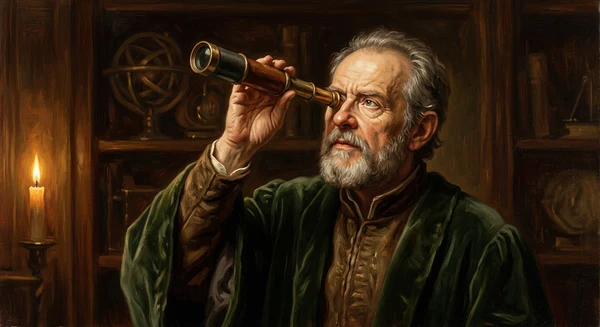
Galileo Galilei
1564–1642 · Astronomer & Physicist
Proving that the Earth orbits the Sun and founding modern observational astronomy.
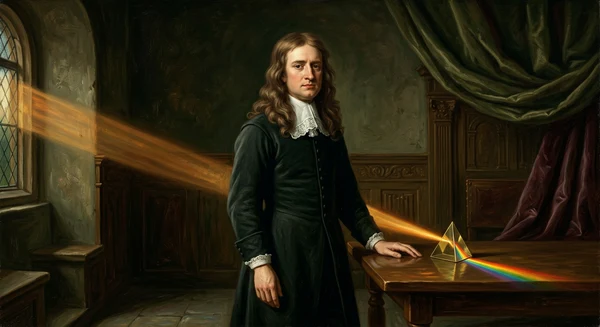
Isaac Newton
1643–1727 · Physicist & Mathematician
Formulating the laws of motion and universal gravitation.
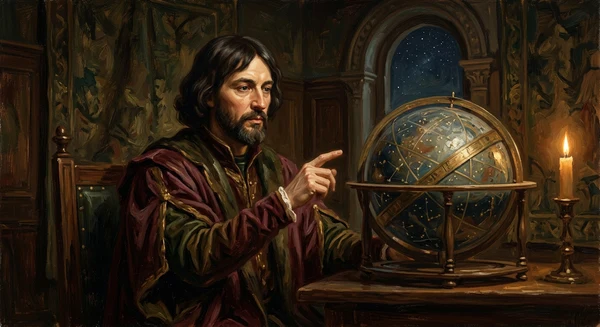
Nicolaus Copernicus
1473–1543 · Astronomer & Mathematician
Proposed the heliocentric model — that the Earth and planets revolve around the Sun.
Sources & references
Books and educational kits about Johannes Kepler coming soon