_(2).jpg)
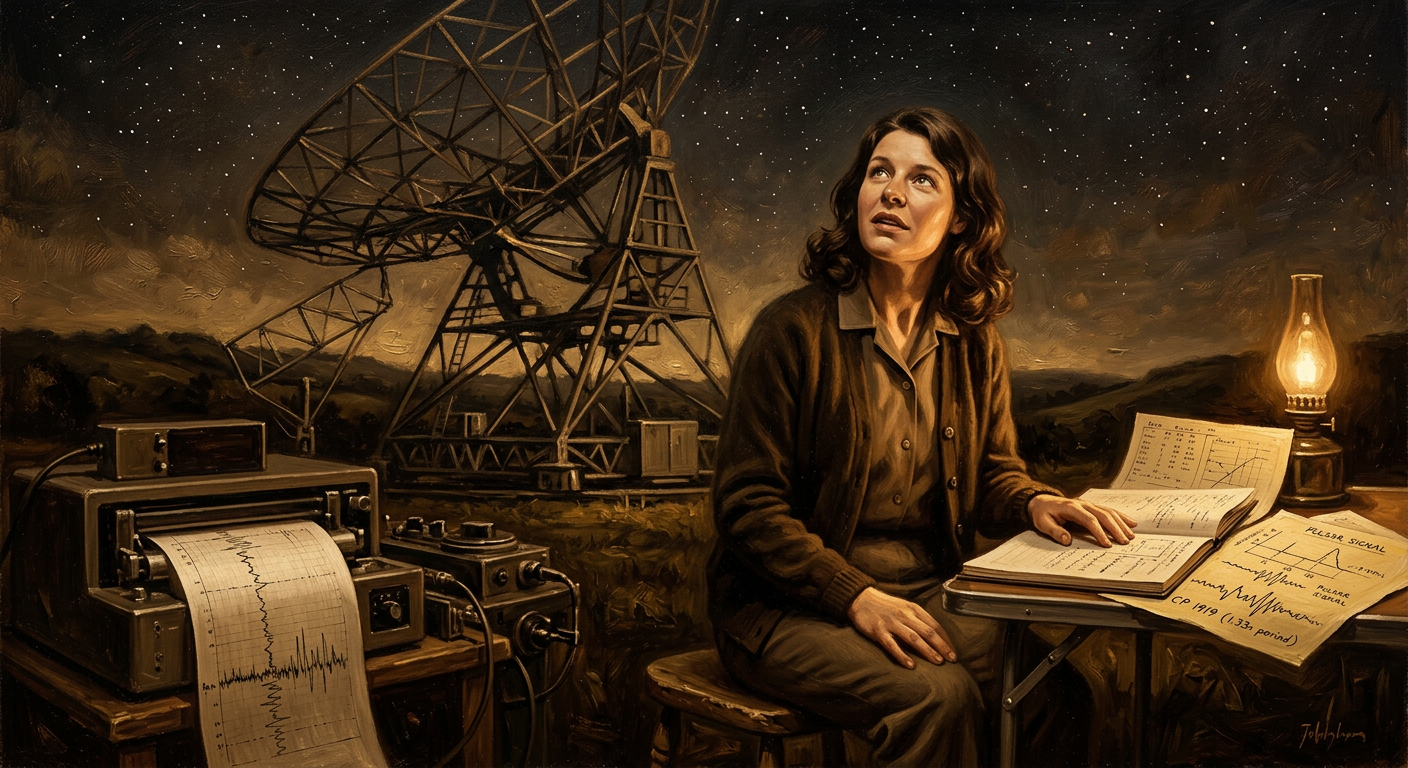
Jocelyn Bell Burnell
1943–present · Astrophysicist
Jocelyn Bell Burnell discovered the first radio pulsars as a 24-year-old postgraduate student at Cambridge, one of the most significant astronomical finds of the 20th century. She was famously overlooked for the Nobel Prize, which went to her supervisor, but she has spent a lifetime championing women in science.
“I believe it would demean Nobel Prizes if they were awarded to research students, except in very exceptional cases, and I do not believe this is one of them.”
The first pulsar signal she detected was nicknamed "LGM-1" — for "Little Green Men" — because its clock-like regularity made the Cambridge team half-seriously wonder if it was an extraterrestrial beacon.
Why is this scientist famous?
Discovering the first radio pulsars as a postgraduate student at Cambridge, transforming our understanding of the universe.
Jocelyn's story
Early Life in Belfast
Susan Jocelyn Bell was born on July 15, 1943, in Belfast, Northern Ireland. Her father was an architect who loved astronomy, and he brought home books on the subject that captivated his young daughter. As a child, Jocelyn visited the Armagh Planetarium and was transfixed by the night sky. She was a bright student, but she nearly did not get the chance to pursue science. At her grammar school, girls were steered toward domestic subjects like cooking and sewing rather than physics. When the school finally allowed girls to study science, it was only because a group of determined parents, including Jocelyn's, pushed for the change. She went on to earn a physics degree from the University of Glasgow in 1965.
The Pulsar Discovery
In 1965, Bell arrived at Cambridge University as a postgraduate student to work with the radio astronomer Antony Hewish. Her job was to help build and operate a massive radio telescope — a sprawling array of poles and wires spread across four acres of muddy fields near the Cavendish Laboratory. She had to physically string thousands of copper cables and operate the telescope by hand, churning through nearly 100 feet of paper chart recordings every week. In November 1967, she spotted a peculiar signal she called 'a bit of scruff' on the charts: a perfectly regular pulse arriving every 1.337 seconds. The signal was so precise that the team jokingly considered whether it could be an alien beacon, and they nicknamed it LGM-1, for 'Little Green Men.' Over the next months, Bell found three more such sources, confirming they were a new class of astronomical object — rapidly spinning neutron stars, later called pulsars.
The Nobel Controversy
In 1974, the Nobel Prize in Physics was awarded to Antony Hewish and Martin Ryle for the discovery of pulsars. Bell Burnell was not included. Many astronomers, including the eminent Fred Hoyle, publicly criticized the decision, arguing that it was Bell who had actually made the discovery. The omission became one of the most famous cases of a woman being overlooked for a major scientific prize. Bell Burnell herself responded with characteristic grace, saying she believed the Nobel should not be awarded to research students and that she was proud her work had helped convince the committee that astrophysics was real physics. Her contemporaries, however, were far less forgiving — one of them jokingly called it the 'No-Bell' prize.
A Life of Advocacy
Bell Burnell went on to a distinguished career as a professor and researcher, holding positions at the University of Southampton, University College London, the Open University, and Oxford. She became a passionate advocate for women and underrepresented groups in science, speaking openly about the sexism she faced throughout her career. In 2018, she was awarded the Special Breakthrough Prize in Fundamental Physics, worth three million dollars, for her discovery of pulsars and a lifetime of inspiring leadership. In a characteristically generous move, she donated the entire prize to a fund supporting women and underrepresented minorities in physics graduate studies, saying the money could do more good helping others than sitting in her bank account. She was made a Dame Commander of the Order of the British Empire and remains a visiting academic at Oxford.
What did they discover?
Discovery of the First Radio Pulsars
As a postgraduate student at Cambridge, Bell Burnell identified the first pulsar, a rapidly rotating neutron star emitting beams of radio waves like a lighthouse. The discovery confirmed the existence of neutron stars and opened an entirely new field of astrophysics.
Mapping the Interstellar Medium
Her work with the Cambridge radio telescope helped map the dispersion of radio signals through the ionized gas of interstellar space, a technique still used today to study the structure of the galaxy.
Advocacy for Women in Science
Bell Burnell has spent decades campaigning for the inclusion of women and minorities in physics, culminating in her donation of the entire three-million-dollar Breakthrough Prize to fund graduate scholarships for underrepresented groups.
Amazing facts
The first pulsar signal was nicknamed 'LGM-1' for 'Little Green Men' because its clock-like regularity made the team half-seriously consider an alien origin.
She had to physically string thousands of copper cables to build the radio telescope she used, working in muddy Cambridge fields for two years before the discovery.
She churned through nearly 100 feet of paper chart recordings each week, analyzing them by hand to spot the tiny irregular signals.
When she found the first pulsar, her supervisor initially dismissed the signal as interference and told her it was probably from a nearby car engine.
She was made a Dame Commander of the Order of the British Empire in 2007.
She donated her entire three-million-dollar Breakthrough Prize to fund physics graduate students from underrepresented groups.
She was the first woman to serve as president of the Royal Astronomical Society.
One of her fellow astronomers jokingly called the 1974 Nobel the 'No-Bell' prize because she was excluded from the award.
Timeline
Born in Belfast, Northern Ireland
Graduated with a physics degree from the University of Glasgow
Began postgraduate studies at Cambridge University under Antony Hewish
Discovered the first radio pulsar, initially nicknamed 'LGM-1'
The discovery of pulsars was published in Nature, with Bell as second author
The Nobel Prize in Physics was awarded to her supervisor Antony Hewish, excluding Bell Burnell
Publicly addressed the Nobel controversy with characteristic grace at a major conference
Appointed Dame Commander of the Order of the British Empire
Awarded the Special Breakthrough Prize in Fundamental Physics and donated the full three million dollars to fund diversity in physics
Continued as a visiting academic at Mansfield College, Oxford
Awards & honours
Related Super Scientists
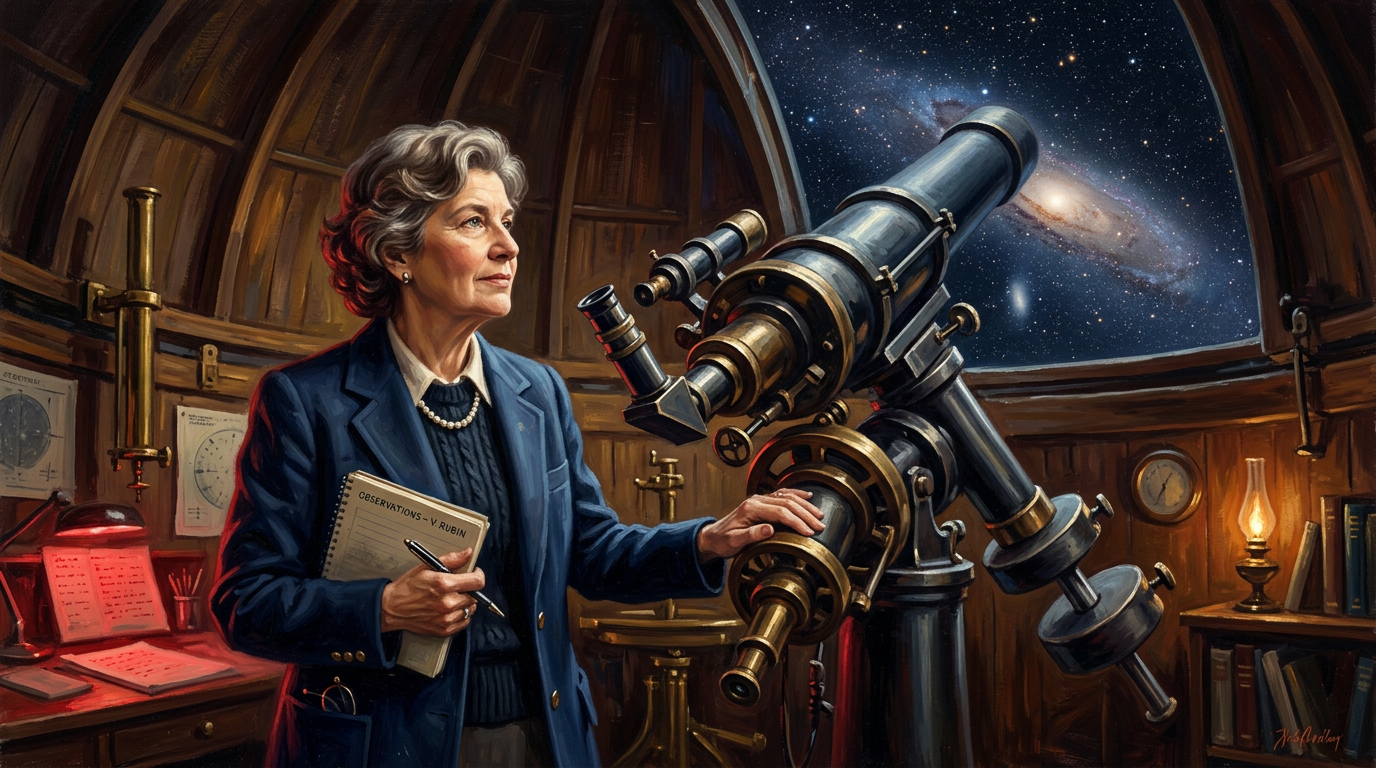
Vera Rubin
1928–2016 · Astronomer
Providing the most compelling early evidence for the existence of dark matter through galaxy rotation measurements.
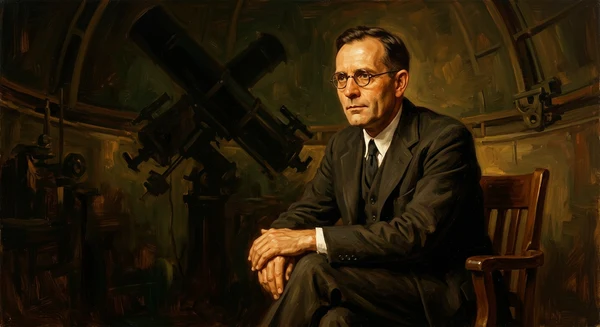
Edwin Hubble
1889–1953 · Astronomer
Proved that the universe is expanding and that other galaxies exist beyond our own.
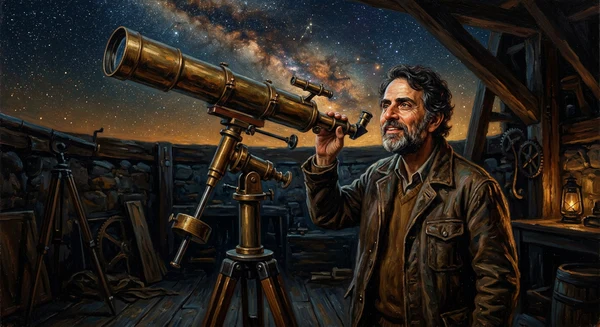
Carl Sagan
1934–1996 · Astronomer & Science Communicator
Created the Voyager Golden Record, wrote Cosmos, and inspired millions to love science.
Sources & references
Books and educational kits about Jocelyn Bell Burnell coming soon