_(2).jpg)
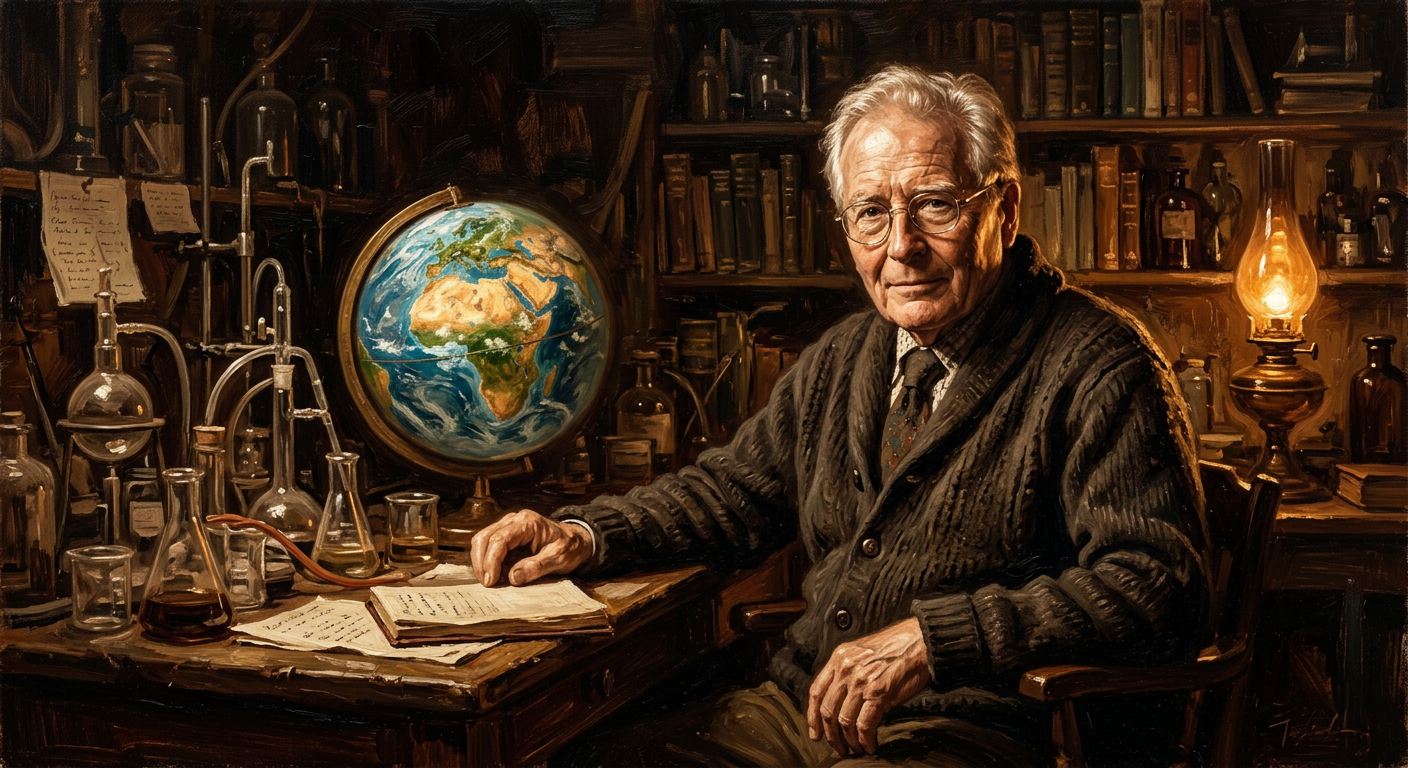
James Lovelock
1919–2022 · Independent Scientist and Environmentalist
James Lovelock was a brilliant and independent British scientist who worked alone from his home laboratory and proposed that Earth behaves like a single living organism that regulates itself to keep conditions favourable for life.
“Gaia is the Earth seen as a single physiological system, an entity that is alive.”
Lovelock lived to be 103 years old, dying on his birthday in 2022, and was still writing books and giving interviews well past his hundredth year.
Why is this scientist famous?
Proposing the Gaia hypothesis, which views Earth as a self-regulating living system, and inventing the electron capture detector that revealed the dangers of CFCs.
James's story
A Boy Who Built Things
James Lovelock was born in 1919 in Letchworth Garden City, Hertfordshire. His mother had grown up in a workhouse and left school at thirteen, but she was fiercely determined that her son would have the education she never received. From an early age, Lovelock was a tinkerer. He built radios from scrap parts and filled notebooks with inventions. He studied chemistry at the Victoria University of Manchester, where he earned his degree in 1941. During the Second World War, he worked at the National Institute for Medical Research in London, where he learned to design and build his own scientific instruments, a skill that would define his entire career.
A Lab in His Own Home
Unlike most scientists, Lovelock never settled into a permanent university post. In 1961, NASA invited him to work on instruments for detecting life on Mars, which meant moving to California. But Lovelock preferred his independence, and after a few years he returned to England and set up a laboratory in his own home in Bowerchalme, Wiltshire. He built instruments on commission for laboratories around the world and invented the electron capture detector, a device so sensitive it could measure trace amounts of chemicals in the air at concentrations as low as one part per trillion. It was one of the most sensitive instruments ever invented, and it would change the world.
Discovering CFCs and Gaia
Using his electron capture detector, Lovelock measured the atmosphere and discovered that chlorofluorocarbons, chemicals used in refrigerators and aerosol sprays, were spreading everywhere, even in the clean air over the Atlantic. His measurements later helped prove that CFCs were destroying the ozone layer, leading to a global ban. While designing instruments for NASA’s Mars programme, Lovelock had a bigger idea. He reasoned that if Mars had life, its atmosphere would show signs of chemical imbalance, the way Earth’s atmosphere does. Mars did not. But thinking about why Earth’s atmosphere stayed so perfectly suited for life led him to his most famous idea: the Gaia hypothesis, named after the Greek goddess of the Earth. He proposed that the living and non-living parts of Earth work together as a self-regulating system, keeping the planet’s temperature and chemistry within the narrow range that life needs.
A Long and Productive Life
The Gaia hypothesis was controversial. Many scientists dismissed it as mystical or unscientific, and Lovelock was attacked by both evolutionary biologists and environmentalists for different reasons. But over decades, evidence mounted that living organisms do indeed regulate the planet’s conditions, and Gaia became an influential idea in Earth system science. Lovelock continued working into his nineties and hundreds, writing books and warning about climate change with a clarity that was sometimes alarming. He became a fellow of the Royal Society and received numerous honours. He died on his 103rd birthday in 2022, having spent a century observing the planet he taught us to see as alive.
What did they discover?
Electron Capture Detector
Lovelock invented a device so sensitive it could detect chemicals at concentrations of one part per trillion, enabling the discovery that CFCs were spreading through the entire atmosphere.
Gaia Hypothesis
Lovelock proposed that Earth functions as a self-regulating system in which living organisms interact with the atmosphere, oceans, and rocks to maintain conditions favourable for life.
Detecting Atmospheric CFCs
Using his own instrument, Lovelock was the first to measure the global spread of chlorofluorocarbons, work that eventually led to the Montreal Protocol banning ozone-destroying chemicals.
Cryopreservation Experiments
Early in his career, Lovelock successfully froze and revived hamsters, developing methods that influenced the field of cryonics and the preservation of biological tissues.
Amazing facts
Lovelock worked as an independent scientist from a home laboratory for most of his career, never holding a permanent university post.
He invented the electron capture detector in his spare time, and it became one of the most sensitive measuring instruments ever created.
He worked for NASA in the 1960s, designing instruments to detect life on Mars, which led him to the Gaia hypothesis.
Lovelock was one of the first scientists to warn about climate change, publishing a book called The Vanishing Face of Gaia in 2009.
He was made a Fellow of the Royal Society in 1974 and a Companion of Honour by the Queen in 2003.
Lovelock proposed that instead of reducing carbon emissions, we might need to use giant mirrors in space to reflect sunlight away from Earth, a controversial idea he later reconsidered.
Timeline
Born in Letchworth Garden City, Hertfordshire
Graduated with a degree in chemistry from the University of Manchester
Began work at the National Institute for Medical Research in London
Invented the electron capture detector
Joined NASA to design instruments for Mars life-detection experiments
First proposed the Gaia hypothesis with Lynn Margulis
Elected Fellow of the Royal Society
Published Gaia: A New Look at Life on Earth
Appointed Companion of Honour by Queen Elizabeth II
Died at home in Abbotsbury, Dorset, on his 103rd birthday
Awards & honours
Related Super Scientists
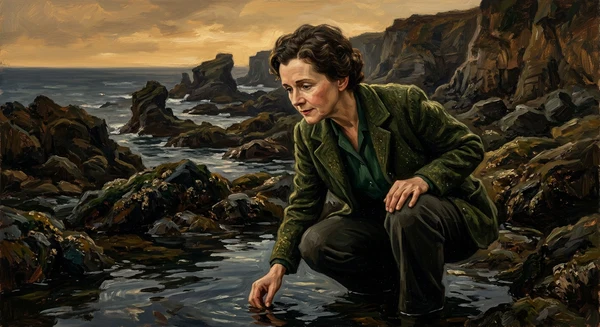
Rachel Carson
1907–1964 · Marine Biologist & Conservationist
Wrote Silent Spring, launching the global environmental movement.

Wangari Maathai
1940–2011 · Environmental scientist and activist
Founding the Green Belt Movement and becoming the first African woman to win the Nobel Peace Prize.
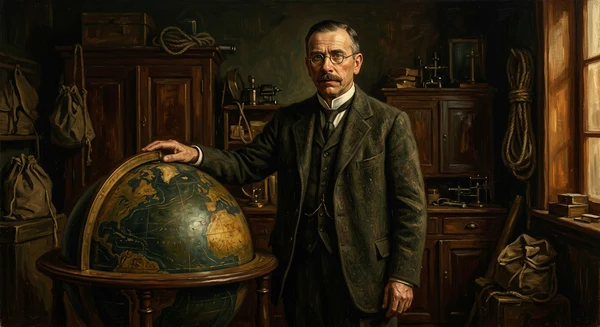
Alfred Wegener
1880–1930 · Meteorologist & Geophysicist
Proposed the theory of continental drift, the foundation of modern plate tectonics.
Sources & references
Books and educational kits about James Lovelock coming soon