_(2).jpg)
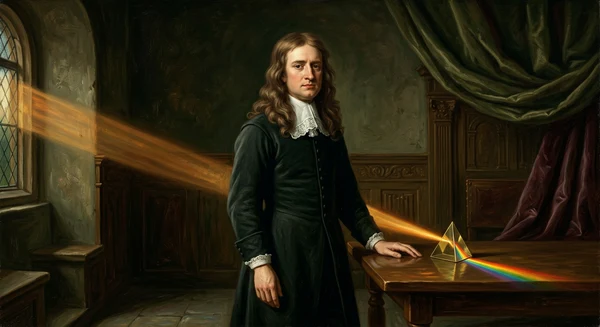
Isaac Newton
1643–1727 · Physicist & Mathematician
One of the most influential scientists in history, Newton laid the foundations of classical mechanics and co-invented calculus.
“If I have seen further it is by standing on the shoulders of giants.”
Newton once stuck a needle into his own eye socket to study how pressure affected vision — and remarkably, he didn't damage his eyesight.
Why is this scientist famous?
Formulating the laws of motion and universal gravitation.
Newton's three laws of motion explain why a ball arcs through the air, why a seatbelt saves you in a crash, and how rockets reach space. His law of universal gravitation showed that the same force pulling an apple to the ground holds the Moon in orbit. Almost every physics problem you will ever solve builds on the rules he wrote down over 300 years ago.
Isaac's story
Early Life
Born in Woolsthorpe, Lincolnshire, Newton was so small at birth he was not expected to survive. His father had died before he was born, and his mother left him with his grandmother when she remarried. He was a solitary, introspective child who built clocks, sundials, and model windmills, and showed an early talent for mechanical invention.
The Plague Years
When Cambridge University closed due to the Great Plague in 1665, Newton returned home for two years — the most productive period of his life. There, he developed his theory of colours, began his work on calculus, and, according to his own account, watched an apple fall and wondered whether the same force that pulled it down might also keep the Moon in orbit. In this period of isolation he laid the groundwork for nearly all of his major discoveries.
The Principia
Encouraged by Edmund Halley, who paid for the printing out of his own pocket, Newton published 'Philosophiæ Naturalis Principia Mathematica' in 1687. In it, he set out his three laws of motion and the law of universal gravitation, showing that the same laws govern a falling apple and the orbits of planets. It is considered one of the greatest scientific works ever written and dominated physics for over two centuries.
Optics and Light
Newton made major contributions to optics, inventing the reflecting telescope — which used mirrors instead of lenses to avoid colour distortion — and demonstrating that white light is actually a mixture of all colours. His experiments with prisms showed that colour is a property of light itself, not of the prism. He published 'Opticks' in 1704, written in English rather than Latin so that a wider audience could read it.
Master of the Mint
In 1696 Newton was appointed Warden, then Master, of the Royal Mint. He took the role with characteristic intensity, personally leading investigations that sent dozens of counterfeiters to the gallows. He oversaw the Great Recoinage of 1696, reforming England's currency at a time of crisis. He was elected President of the Royal Society in 1703 and knighted by Queen Anne in 1705.
Legacy
Newton spent more time on theology and alchemy than on physics, leaving behind over a million words on biblical prophecy and mystical subjects. He had bitter, decades-long feuds with Robert Hooke over credit for optics and with Gottfried Leibniz over who invented calculus first. Despite his difficult personality, his physics dominated science until Einstein overturned it in 1915. He is buried in Westminster Abbey — the first scientist so honoured.
What did they discover?
Three Laws of Motion
Three laws describing how objects move: inertia, force equals mass times acceleration, and action–reaction. These laws formed the foundation of classical mechanics for over 200 years.
Universal Gravitation
Every object in the universe attracts every other object with a force proportional to their masses and inversely proportional to the square of the distance between them — unifying the heavens and the Earth.
Calculus
Developed (independently of Leibniz) a new branch of mathematics for describing rates of change — essential to modern physics, engineering, and economics.
Reflecting Telescope
Used mirrors instead of lenses to avoid colour distortion, a design still used in most large telescopes today, including the Hubble and James Webb space telescopes.
Theory of Colour
Demonstrated with prisms that white light is a mixture of all colours, and that colour is a property of light, not of the lens or prism.
Amazing facts
The famous apple story is partly true — Newton himself described being inspired by a falling apple.
He spent more time studying the Bible and alchemy than he did on physics.
He once stuck a needle into his eye socket to study how pressure affects vision — and survived.
He had a bitter, decades-long feud with Gottfried Leibniz over who invented calculus first.
As Master of the Royal Mint, he personally led investigations that sent counterfeiters to the gallows.
He was the second scientist ever to be knighted (after Francis Bacon).
His Principia was published at Halley's expense — Newton could not afford it himself.
He suffered a nervous breakdown in 1693 and stopped doing scientific work for several years.
He wrote over a million words on alchemy and biblical prophecy — more than on physics.
He was the first scientist to be buried in Westminster Abbey.
Timeline
Born in Woolsthorpe, England (by modern calendar)
Entered Trinity College, Cambridge
Returned home during the plague; his most productive period
Built the first reflecting telescope
Elected to the Royal Society after presenting his reflecting telescope
Published the Principia at Halley's expense
Suffered a nervous breakdown
Appointed Warden of the Royal Mint
Published 'Opticks'
Knighted by Queen Anne
Became President of the Royal Society
Died in London and was buried in Westminster Abbey
Awards & honours
Related Super Scientists
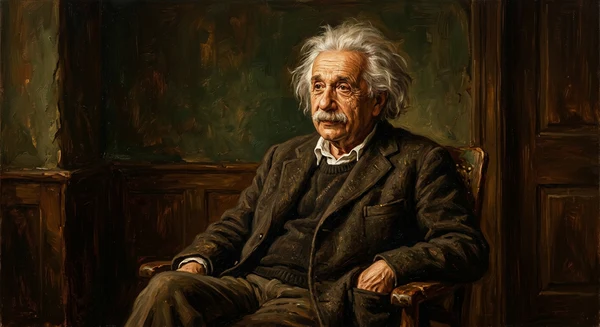
Albert Einstein
1879–1955 · Theoretical Physicist
Developing the theory of relativity and the equation E=mc².
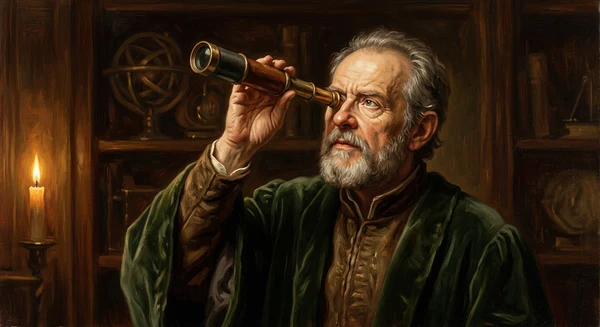
Galileo Galilei
1564–1642 · Astronomer & Physicist
Proving that the Earth orbits the Sun and founding modern observational astronomy.
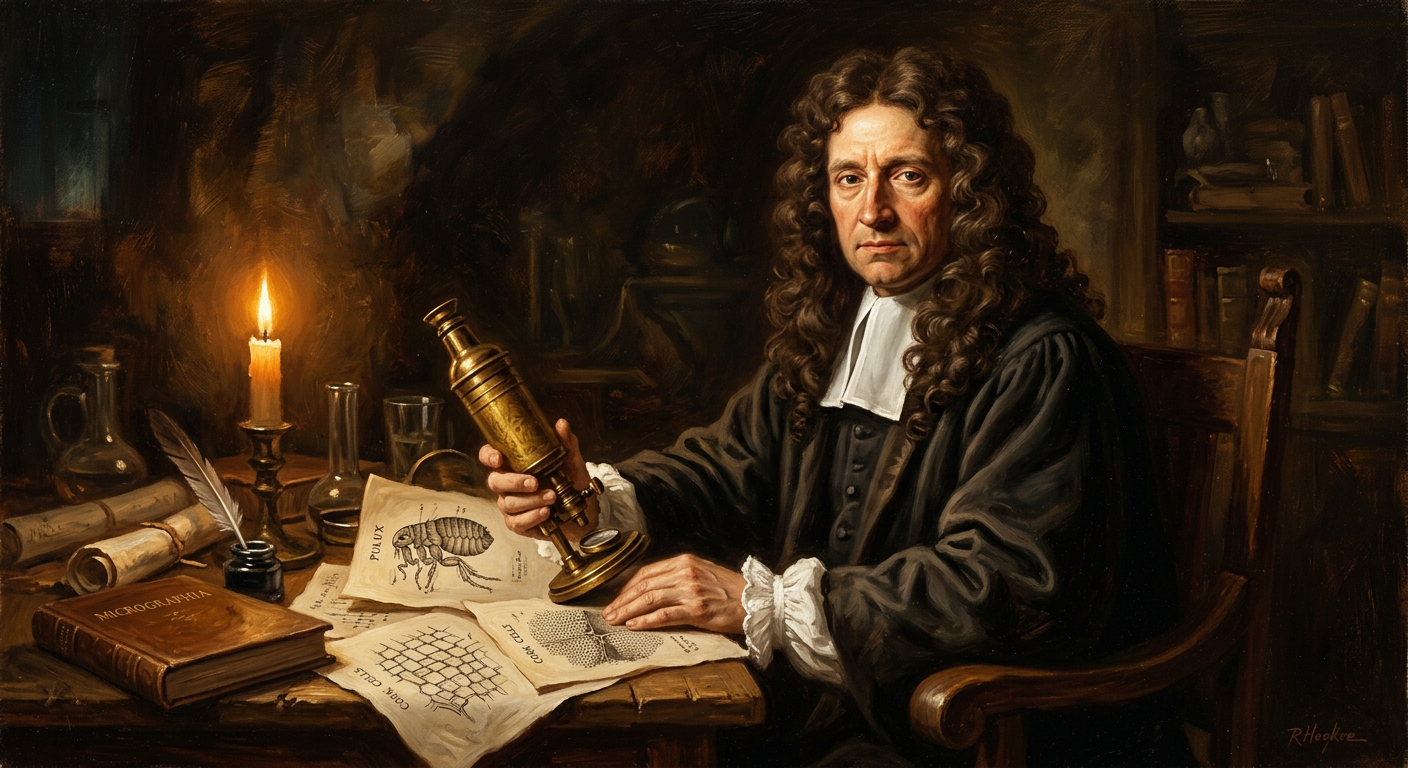
Robert Hooke
1635–1703 · Biologist and Physicist
Coined the word "cell" after examining cork under a microscope and formulated Hooke’s Law on springs.
Articles about this scientist
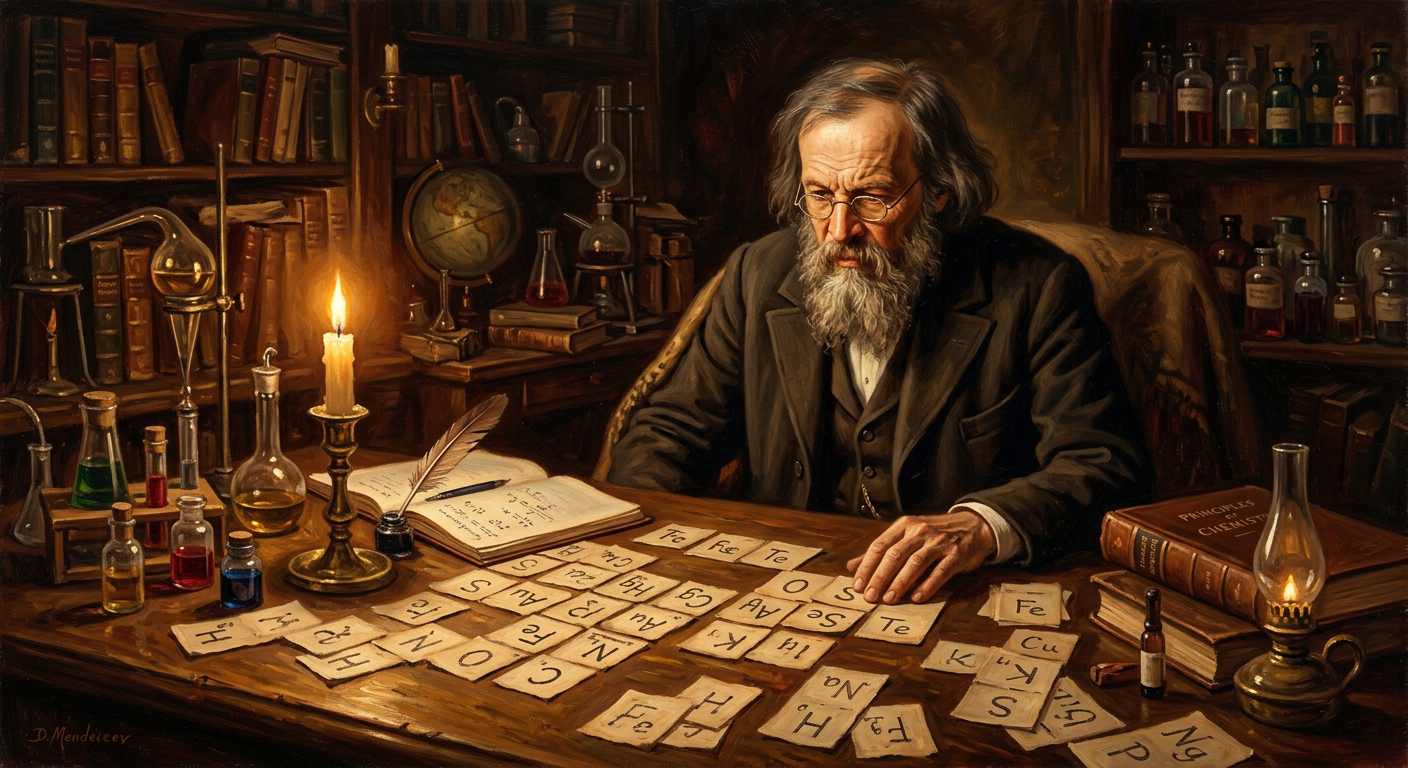
The Periodic Table
Dmitri Mendeleev arranged the known elements by their properties and predicted elements no one had found yet. The table that bears his name is still on every classroom wall.
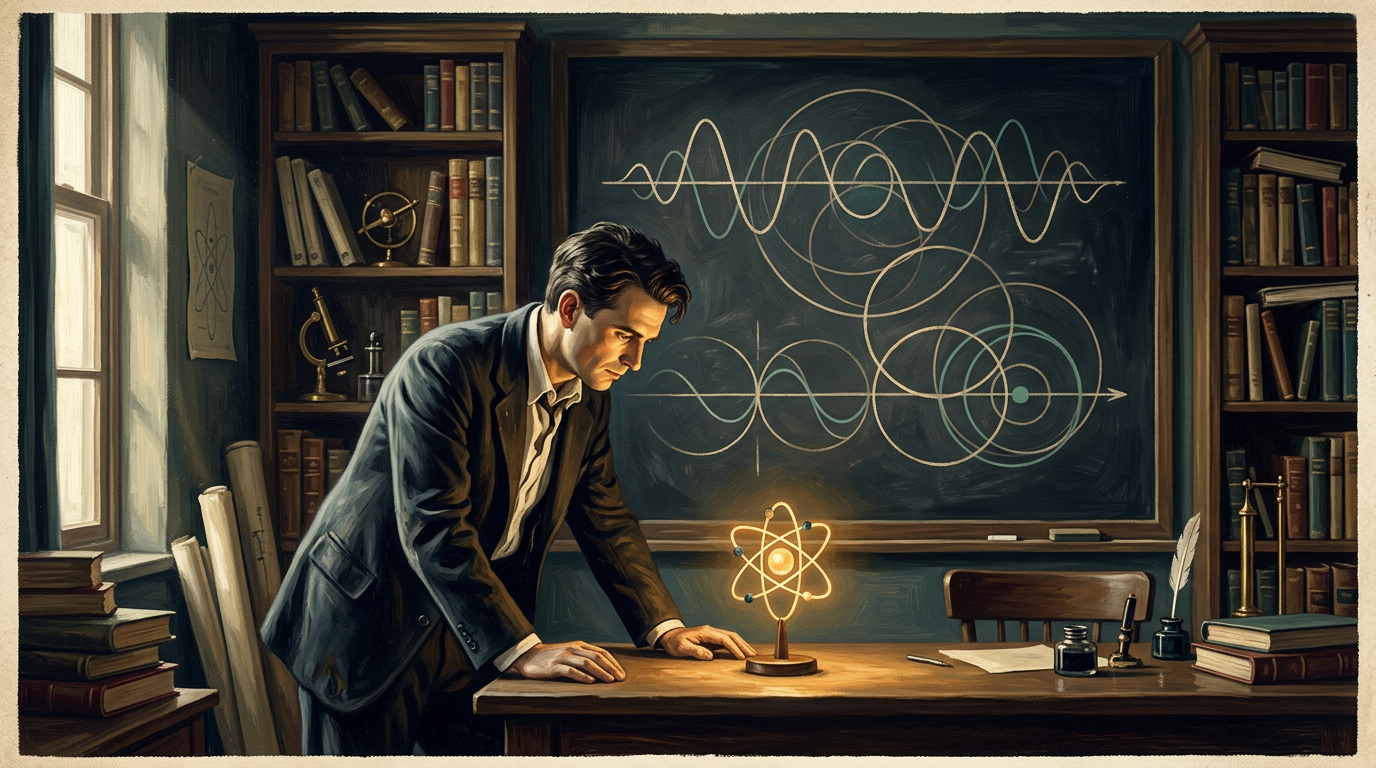
The Quantum Revolution
In the early 20th century, a small group of physicists discovered that the rules governing the subatomic world are fundamentally different from anything we experience.
Sources & references
Books and educational kits about Isaac Newton coming soon