_(2).jpg)
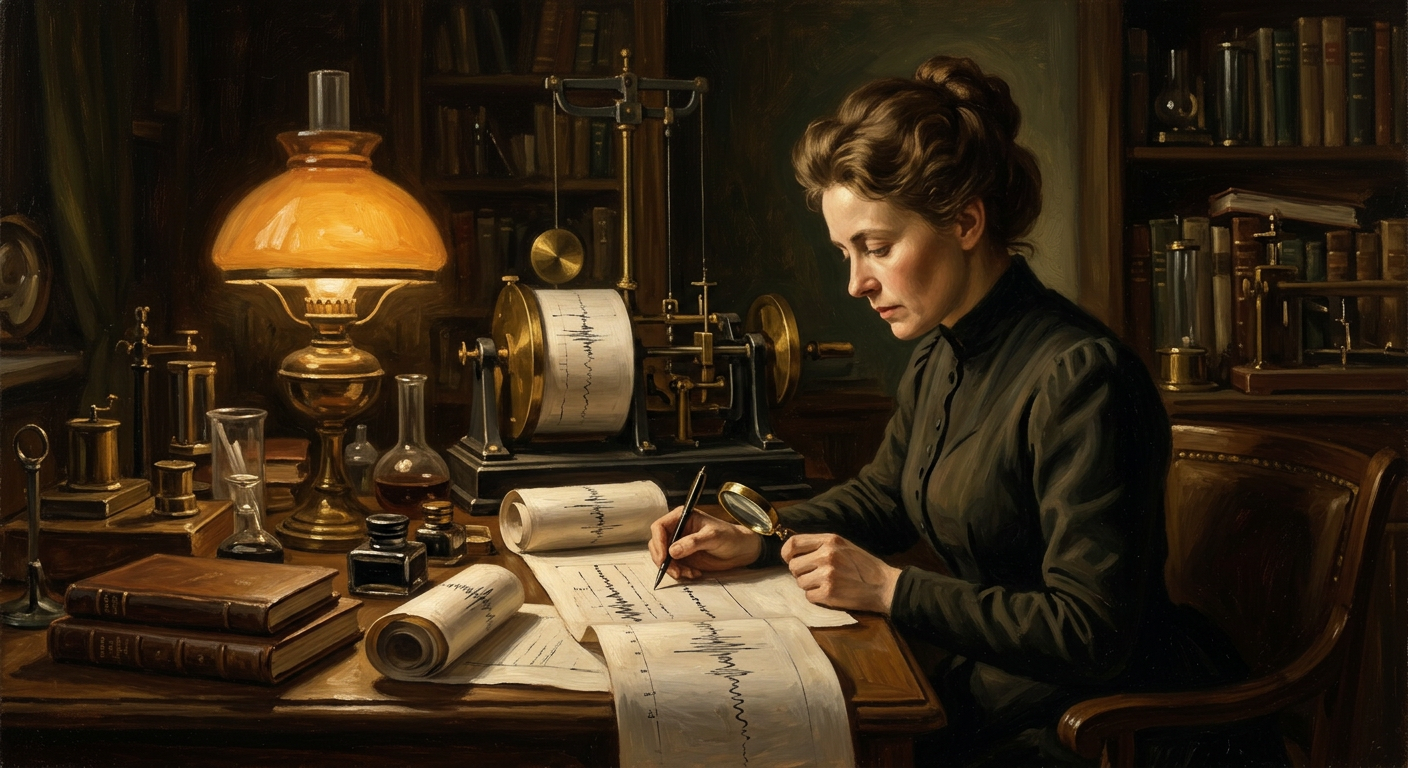
Inge Lehmann
1888–1993 · Seismologist
Inge Lehmann was a Danish seismologist who proved that Earth’s core is not simply a ball of molten metal, but has a solid inner core inside a liquid outer core. She lived to 104, and her discovery changed our understanding of the planet we live on.
“You should know how many incompetent men I had to compete with — in vain.”
She lived to be 104 years old, long enough to see her 1936 discovery confirmed by computer models in the 1970s — nearly four decades after she first proposed it.
Why is this scientist famous?
Discovering that Earth has a solid inner core inside its liquid outer core — the only person to identify a major new layer of our planet.
Lehmann studied earthquake waves and realized the Earth has a solid inner core inside its liquid outer core — something no one could see directly. Her discovery helps us understand Earth's magnetic field, which protects us from solar radiation and makes compasses work. Seismologists still use her methods to study the deep planet we stand on.
Inge's story
A Headstrong Girl in Copenhagen
Inge Lehmann was born in 1888 in Copenhagen, Denmark, into a progressive and educated family. Her father was a psychologist who explored experimental psychology — unusual work for the time — and he encouraged his daughter’s intellectual curiosity from the start. Inge attended the first co-educational school in Denmark, founded by Hanna Adler, where boys and girls were taught together and treated as equals — a radical idea in the 1890s. She later said this school gave her the confidence to believe she could do anything boys could do. She studied mathematics at the University of Copenhagen, but had to pause her studies due to exhaustion and poor health, working for several years in an insurance office before completing her degree in 1920.
From Insurance to Seismology
After finishing her mathematics degree, Lehmann moved to work as a geodesist — measuring the Earth’s shape and gravitational field. In 1925, she joined the Danish Geodetic Institute and began working with the seismology section, helping to establish seismic stations across Denmark and Greenland. She travelled to Greenland to set up instruments, a remarkable undertaking for a woman in the 1920s. She studied seismology at the Royal Observatory in Brussels and at the University of Cambridge under some of the leading seismologists of the day. In 1928, she earned a second degree in geodesy and became the head of the Royal Danish Geodetic Institute’s seismology department — a post she would hold for nearly three decades.
The P’ Phase and the Solid Inner Core
By the 1930s, seismologists knew Earth had a core, and they believed it was entirely liquid, based on the way earthquake waves travelled through the planet. But Lehmann kept seeing something puzzling in her seismic records: faint, unexpected wave arrivals that could not be explained by a purely liquid core. She studied thousands of seismograms from earthquakes recorded around the world, often working alone late at night. In 1936, she published a short paper — just three pages — proposing that the core had a solid inner core inside the liquid outer core, which would reflect seismic waves in exactly the pattern she observed. She called the reflected waves ‘P’ phases.’ It was a bold, elegant claim, made by a woman working in a tiny Danish observatory, challenging the consensus of the world’s leading seismologists.
Vindication and Legacy
Lehmann’s proposal was met with scepticism initially, but within a few years, leading seismologists like Beno Gutenberg and Charles Richter confirmed her findings. Her solid inner core was accepted into mainstream geophysics, and in the 1970s, modern computer modelling fully confirmed her 1936 paper. She continued working into her seventies, studying the Earth’s mantle and the boundary between the crust and the mantle. She was elected to the Royal Danish Academy of Sciences in 1936, and received the William Bowie Medal — the highest honour of the American Geophysical Union — in 1971, at the age of 82. She lived to 104, dying in 1993, having seen her discovery become a fundamental part of every Earth science textbook. The boundary between the inner and outer core is named the ‘Lehmann discontinuity’ in her honour.
What did they discover?
The Solid Inner Core
In a three-page 1936 paper, Lehmann proposed that Earth has a solid inner core inside its liquid outer core, explaining mysterious seismic wave reflections that had baffled geophysicists. The boundary is now called the Lehmann discontinuity.
Seismic Networks in Denmark and Greenland
She established and maintained seismic stations across Denmark and Greenland, travelling to remote locations to install instruments — remarkable work for a woman in the 1920s and 30s.
Mantle Research
In her seventies, she continued to study the Earth’s mantle, identifying another seismic discontinuity (the Lehmann discontinuity in the mantle) that revealed unexpected complexity in the planet’s interior structure.
Amazing facts
She lived to be 104 years old — long enough to see her 1936 discovery confirmed by computer models nearly four decades later.
Her 1936 paper proposing the solid inner core was just three pages long, yet it changed geophysics forever.
The boundary between Earth’s solid inner core and liquid outer core is named the ‘Lehmann discontinuity’ in her honour.
She travelled to Greenland in the 1920s to set up seismic instruments — an extraordinary undertaking for a Danish woman of that era.
She attended Denmark’s first co-educational school, where boys and girls were taught as equals — she later credited this with giving her the confidence to pursue science.
She received the William Bowie Medal, the American Geophysical Union’s highest honour, at age 82 in 1971.
She worked in the same building as Niels Bohr’s Institute for Theoretical Physics in Copenhagen — the two great Danish scientists worked just floors apart.
Timeline
Born in Copenhagen, Denmark
Began studying mathematics at the University of Copenhagen
Completed her mathematics degree after a break for health reasons
Joined the Danish Geodetic Institute and began working in seismology
Earned a degree in geodesy and became head of the seismology department
Published her paper proposing the solid inner core of the Earth
Retired from the Royal Danish Geodetic Institute but continued research
Published work on the Lehmann discontinuity in the upper mantle
Received the William Bowie Medal from the American Geophysical Union at age 82
Died in Copenhagen, age 104
Awards & honours
Related Super Scientists
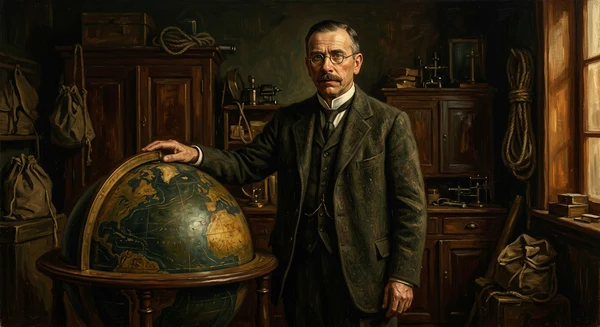
Alfred Wegener
1880–1930 · Meteorologist & Geophysicist
Proposed the theory of continental drift, the foundation of modern plate tectonics.

Mary Anning
1799–1847 · Paleontologist
Discovered the first complete Ichthyosaurus skeleton and became the greatest fossil hunter in history.
Sources & references
Books and educational kits about Inge Lehmann coming soon