_(2).jpg)
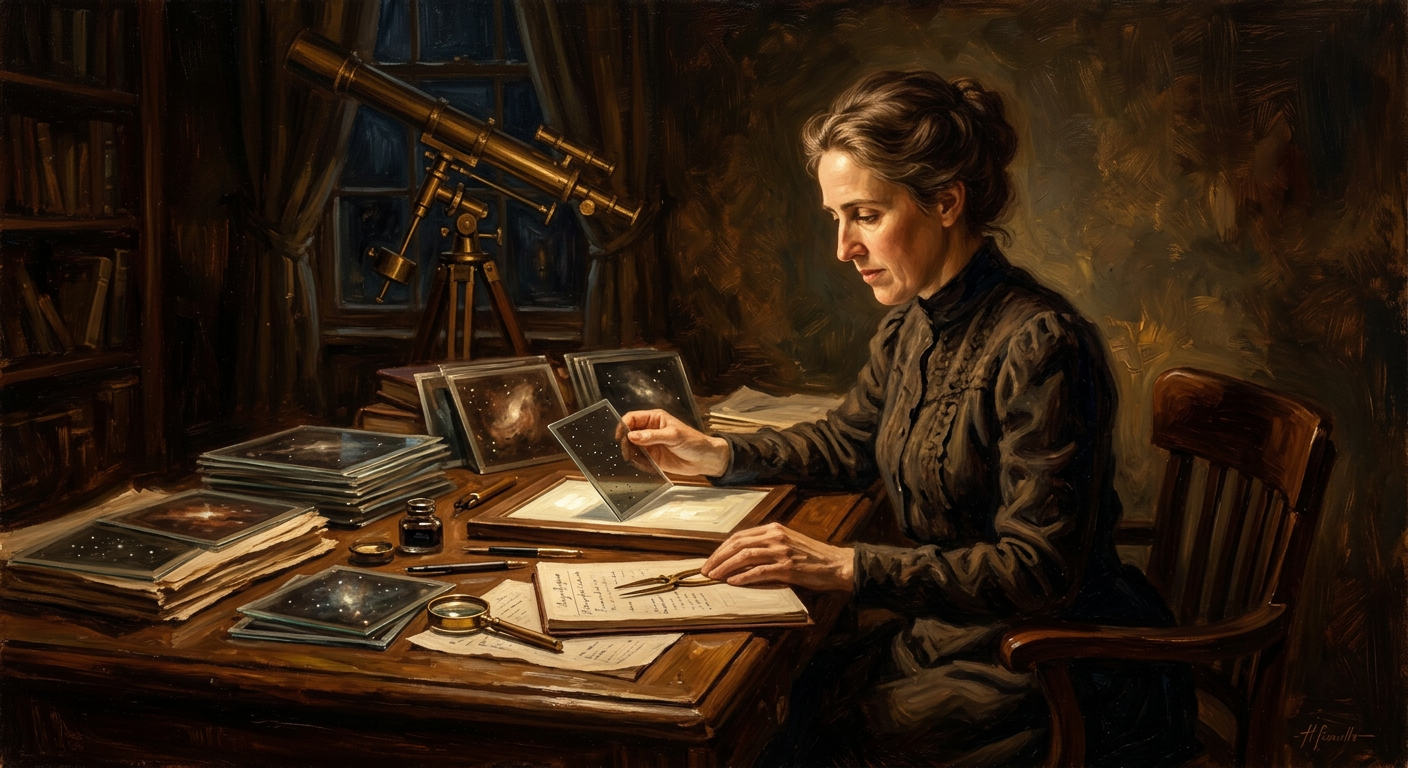
Henrietta Leavitt
1868–1921 · Astronomer
Henrietta Leavitt was a astronomer at Harvard whose discovery of the relationship between the brightness and pulsation period of Cepheid variable stars gave astronomers their first tool for measuring the size of the universe.
“A straight line can be readily drawn among each of the two series of points corresponding to maxima and minima, thus showing that there is a simple relation between the brightness of the variables and their periods.”
She was progressively deaf for much of her working life, yet her discovery gave astronomy its first reliable way to measure cosmic distances. In 1925, a Swedish mathematician considered nominating her for the Nobel Prize, not knowing she had died four years earlier.
Why is this scientist famous?
Discovering the period-luminosity relationship of Cepheid variable stars, which gave astronomy its first reliable method for measuring cosmic distances.
Henrietta's story
Early Life and Education
Henrietta Swan Leavitt was born on July 4, 1868, in Lancaster, Massachusetts. She came from a prominent New England family — her father was a Congregational church minister — and she grew up in a household that valued education. She attended Oberlin College and then Radcliffe College, the women’s college associated with Harvard, graduating in 1892. During her studies she discovered a passion for astronomy, but career options for women in science were almost nonexistent. After graduation, she worked as an unpaid volunteer and then a paid assistant at the Harvard College Observatory, one of the few places in the world where women could do astronomical research.
The Harvard Computers
At the observatory, Leavitt joined a group of women known as the ‘Harvard Computers,’ hired by the director Edward Charles Pickering to analyze thousands of photographic plates of the night sky. The work was tedious and exacting: sitting at desks in a small room, the women measured the positions and brightness of stars recorded on glass plates, cataloguing them by hand. They were paid 25 to 30 cents an hour, less than a secretary’s wage. Pickering assigned Leavitt the task of studying variable stars, stars whose brightness changes over time. She had to compare plates taken on different nights, identifying stars that appeared and disappeared, and measuring their changing brightness. It was painstaking work that required extraordinary patience and an eye for detail.
The Period-Luminosity Relationship
Leavitt’s great discovery came from studying Cepheid variable stars in the Small Magellanic Cloud, a nearby dwarf galaxy visible from the Southern Hemisphere. She noticed something remarkable: the brighter a Cepheid was, the longer it took to complete one pulse from dim to bright and back. Because all the stars in the Small Magellanic Cloud are at roughly the same distance from Earth, this meant that a Cepheid’s pulsation period was directly related to its true brightness. This was a discovery of cosmic importance. If you could measure how fast a Cepheid pulsed, you could work out its true brightness, and by comparing that to how bright it appeared from Earth, you could calculate how far away it was. Astronomers suddenly had a ‘standard candle’ — a ruler for measuring the universe.
Legacy
Leavitt published her discovery in 1912, but she received almost no recognition during her lifetime. She continued her careful, quiet work at the observatory, cataloguing thousands more variable stars, until her death from stomach cancer on December 12, 1921, at the age of 53. She had no idea that her discovery would transform our understanding of the cosmos. A few years after her death, Edwin Hubble used her period-luminosity relationship to prove that the Andromeda nebula was not part of our galaxy but an entirely separate galaxy, and that the universe was far larger than anyone had imagined. Hubble himself said that Leavitt deserved the Nobel Prize for her work. In 1925, a Swedish mathematician tried to nominate her, only to discover she had died four years earlier. Today, astronomers recognize her as one of the most important figures in the history of astronomy, a woman who gave us the first tool to measure the size of the universe.
What did they discover?
The Period-Luminosity Relationship
Leavitt discovered that the pulsation period of a Cepheid variable star is directly related to its true brightness. This gave astronomers a ‘standard candle’ to measure cosmic distances, the tool Edwin Hubble later used to prove other galaxies existed beyond our own.
Cataloguing Variable Stars
She identified and catalogued thousands of variable stars in the Magellanic Clouds, a painstaking process of comparing photographic plates taken on different nights. Her catalogue became a foundational resource for 20th-century astronomy.
Amazing facts
She was progressively deaf for much of her working life, following an illness that caused severe hearing loss.
She worked as one of the ‘Harvard Computers,’ a group of women paid 25 to 30 cents an hour to analyze photographic plates of the night sky.
She had no idea her discovery would be used to prove the universe was far larger than anyone imagined.
Edwin Hubble said that Leavitt deserved the Nobel Prize for her contribution to astronomy.
In 1925, a Swedish mathematician tried to nominate her for the Nobel Prize, not knowing she had died four years earlier — the prize is not awarded posthumously.
She was paid less than a secretary’s wage for work that would transform our understanding of the cosmos.
A crater on the Moon is named Leavitt in her honour, located on the far side.
She catalogued 2,400 variable stars during her career, more than anyone had ever identified before.
Timeline
Born in Lancaster, Massachusetts
Graduated from Radcliffe College with a degree in astronomy
Began working as a volunteer assistant at the Harvard College Observatory
Appointed to the permanent staff of the Harvard Observatory
Published initial observations of variable stars in the Small Magellanic Cloud
Published the period-luminosity relationship for Cepheid variable stars
Died of stomach cancer in Cambridge, Massachusetts, age 53
Edwin Hubble used her relationship to prove Andromeda was a separate galaxy
A Swedish mathematician attempted to nominate her for the Nobel Prize, not knowing she had died
Awards & honours
Related Super Scientists
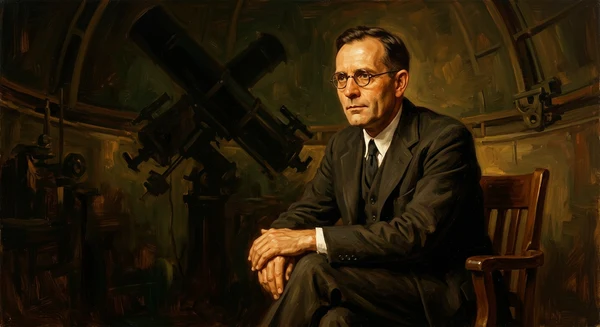
Edwin Hubble
1889–1953 · Astronomer
Proved that the universe is expanding and that other galaxies exist beyond our own.
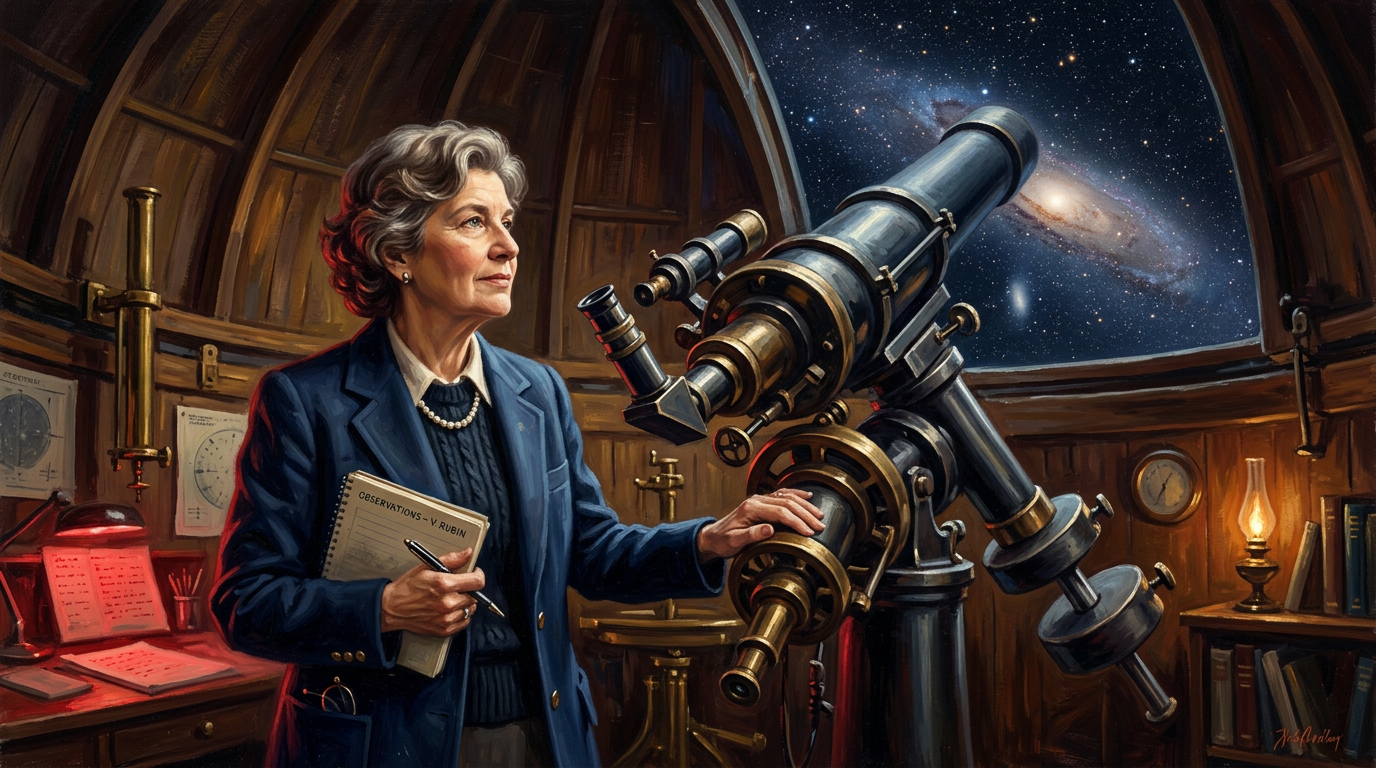
Vera Rubin
1928–2016 · Astronomer
Providing the most compelling early evidence for the existence of dark matter through galaxy rotation measurements.
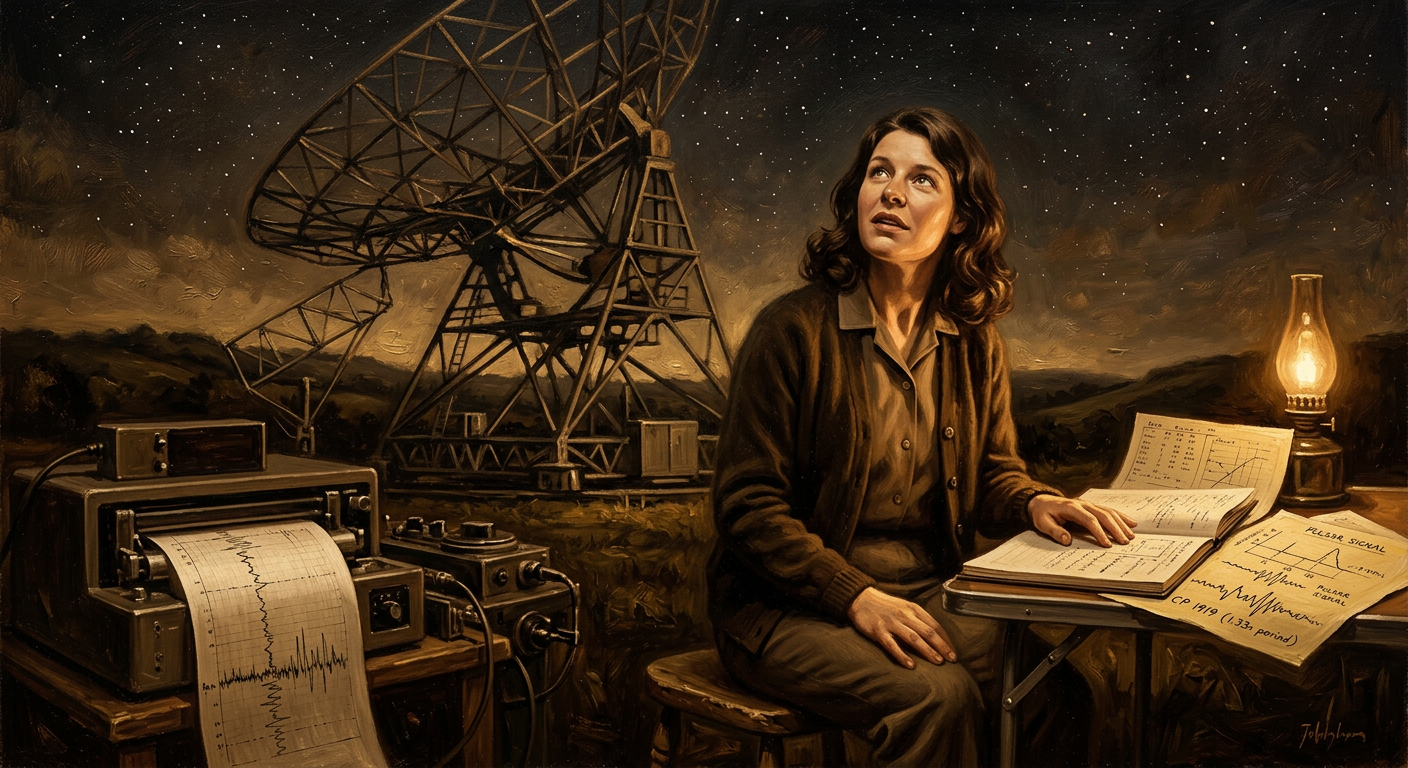
Jocelyn Bell Burnell
1943–present · Astrophysicist
Discovering the first radio pulsars as a postgraduate student at Cambridge, transforming our understanding of the universe.
Sources & references
Books and educational kits about Henrietta Leavitt coming soon