_(2).jpg)
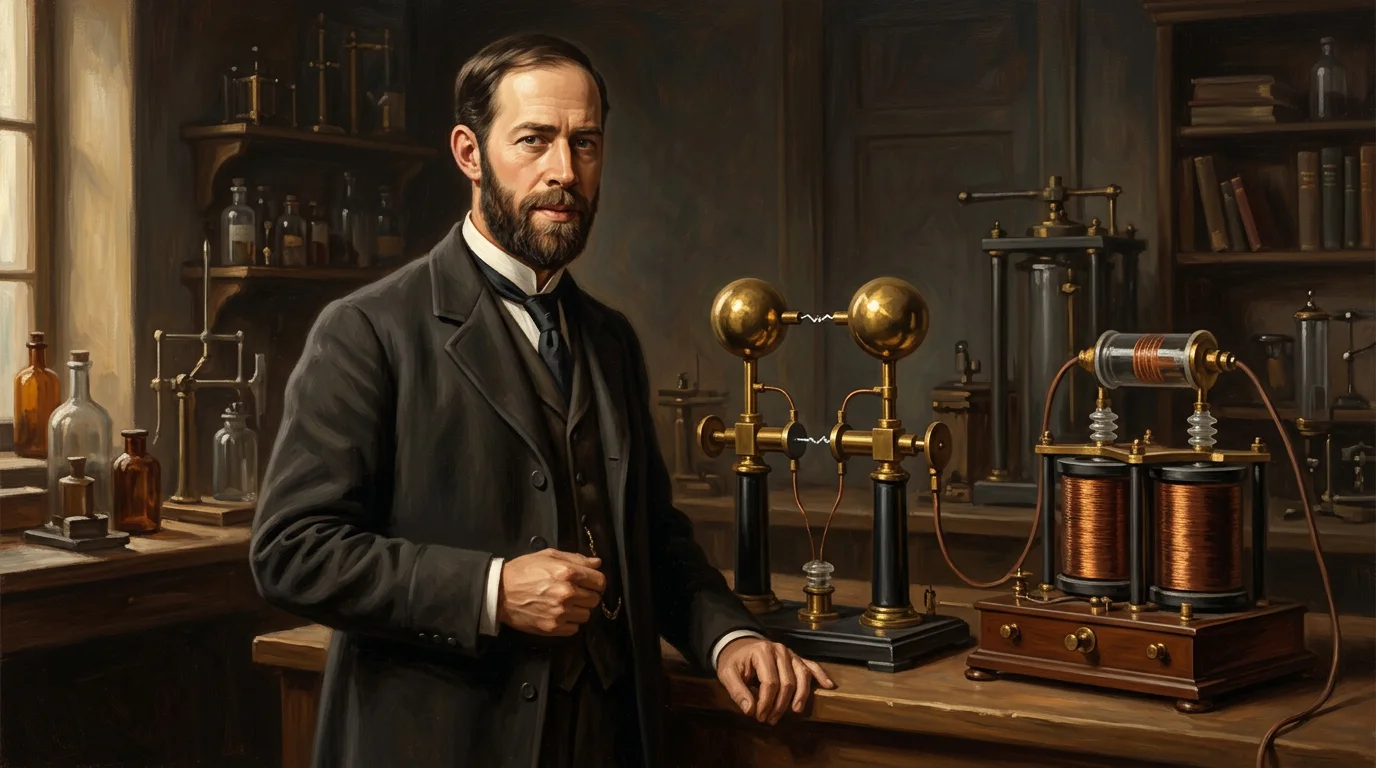
Heinrich Hertz
1857–1894 · Physicist
A German physicist who proved that invisible electromagnetic waves travel through the air at the speed of light — an achievement that made radio, television, and wireless communication possible.
“I do not think that the radio waves I have discovered will have any practical application.”
Hertz died at just 36, never living to see his discovery of radio waves lead to the invention of radio, television, and every wireless technology that followed.
Why is this scientist famous?
Demonstrated the existence of electromagnetic waves in 1887, proving James Clerk Maxwell's theory of electromagnetism and laying the foundation for radio technology. The unit hertz (Hz) is named after him.
Heinrich's story
Early Life
Heinrich Rudolf Hertz was born in Hamburg, Germany, into a prosperous Jewish family that had converted to Christianity. His father was a lawyer and later a senator in the city government. From an early age Heinrich showed extraordinary ability in mathematics and science, but he was also remarkably practical — he enjoyed building things with his hands and took up carpentry and metalwork as hobbies. He studied at universities in Munich and Berlin under some of the greatest physicists of the age, including Hermann von Helmholtz and Gustav Kirchhoff, who quickly recognised his exceptional talent.
The Electromagnetic Challenge
By the 1880s, James Clerk Maxwell's theory of electromagnetism was the most tantalising unsolved problem in physics. Maxwell had predicted that oscillating electric charges should produce waves that travel through space at the speed of light, and that light itself was just such a wave. But no one had ever detected these waves. Proving Maxwell right would require generating electromagnetic waves deliberately and detecting them — a feat that seemed beyond the capabilities of any laboratory. Hertz, now a professor at the Karlsruhe Institute of Technology, decided to try.
The Spark That Changed Everything
In 1887 Hertz built a simple but brilliant apparatus: a spark-gap transmitter that produced high-frequency electrical oscillations, and a wire loop with a small gap that acted as a receiver. When he triggered a spark at the transmitter, he observed a tiny spark jumping across the receiver's gap — even though the two devices were not connected by any wire. He had generated and detected electromagnetic waves travelling through free space. Over the following months he meticulously measured their properties: they could be reflected, refracted, polarised, and they travelled at the speed of light, exactly as Maxwell had predicted. Maxwell's theory was no longer speculation — it was experimentally proven fact.
A Scientist's Philosophy
Hertz was a perfectionist who valued elegance and clarity above all. When asked about the practical applications of his discovery, he reportedly said he did not think the waves would have any practical use — he had been testing a theory, not inventing a technology. This was not naivety but a reflection of his view that fundamental science was worth pursuing for its own sake. His work was driven by curiosity about the laws of nature, not by any desire to build devices. Within a decade of his death, Guglielmo Marconi would use Hertz's waves to invent radio, proving the practical consequences of pure science can be profound and entirely unforeseen.
Tragic Early Death
Hertz's career was cut tragically short. In 1892 he began suffering from severe headaches and was diagnosed with an incurable illness. He continued to work and write as long as he could, completing his important book 'Electric Waves' and dictating papers from his sickbed. He died in Bonn on 1 January 1894, at the age of just 36. His wife, Elisabeth, never remarried and devoted herself to preserving his legacy, editing and publishing his remaining papers. Though his active research career lasted barely ten years, his impact on physics was enormous.
Legacy
In 1930 the International Electrotechnical Commission named the unit of frequency — the hertz, representing one cycle per second — in his honour. Every radio station, every Wi-Fi router, every mobile phone, every microwave operates on frequencies measured in hertz. Hertz proved that invisible waves could travel through the air, and in doing so he opened the door to the entire age of wireless communication. He never imagined the world his discovery would create, but he built its foundation with his spark-gap apparatus in a Karlsruhe laboratory.
What did they discover?
Proof of Electromagnetic Waves
In 1887 Hertz generated and detected electromagnetic waves in his laboratory, proving Maxwell's prediction that oscillating electric charges produce waves that travel through space at the speed of light. This single achievement confirmed Maxwell's entire theory of electromagnetism and made all wireless technology possible.
The Photoelectric Effect
During his electromagnetic experiments, Hertz noticed that ultraviolet light affected the spark in his receiver. This observation of the photoelectric effect would later inspire Einstein's 1905 work on light quanta, which earned Einstein the Nobel Prize.
Measurement of Wave Properties
Hertz demonstrated that electromagnetic waves could be reflected, refracted, polarised, and focused — showing they behaved exactly like light waves but with much longer wavelengths. He also measured their speed and confirmed it matched the speed of light.
'Electric Waves' (Book)
His 1893 book 'Electric Waves: Being Researches on the Propagation of Electric Action with Finite Velocity Through Space' collected his experimental results and became a foundational text for the new field of wireless physics.
Amazing facts
Hertz died at just 36 years old from a degenerative illness, never living to see his discovery lead to radio, television, and every wireless technology that followed.
He reportedly said his radio waves would have 'no practical application' — within a decade, Marconi used them to invent radio.
During his electromagnetic wave experiments, Hertz accidentally discovered the photoelectric effect, which Einstein later used to win the 1921 Nobel Prize.
The unit of frequency — the hertz (Hz), one cycle per second — was named in his honour in 1930.
Hertz was an accomplished craftsman who built all his own experimental apparatus by hand, including the spark-gap transmitter and receiver that detected electromagnetic waves.
His wife Elisabeth never remarried and spent years after his death editing and publishing his unfinished papers to preserve his scientific legacy.
Timeline
Born in Hamburg, Germany
Completed his doctorate under Hermann von Helmholtz at the University of Berlin
Appointed professor of physics at the Karlsruhe Institute of Technology
Generated and detected electromagnetic waves for the first time, proving Maxwell's theory
Published detailed measurements showing electromagnetic waves reflect, refract, and travel at the speed of light
Began suffering from the illness that would prove fatal; continued working from his sickbed
Published 'Electric Waves', his landmark book collecting his electromagnetic research
Died in Bonn, aged 36
Awards & honours
Related Super Scientists
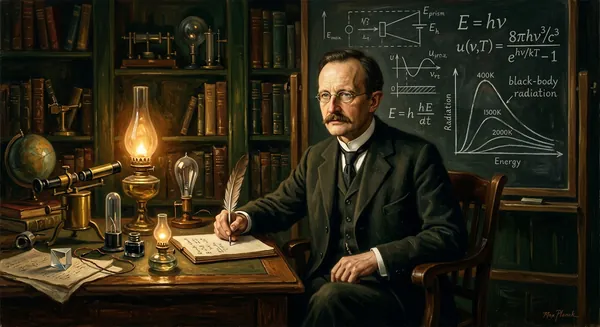
Max Planck
1858–1947 · Theoretical Physicist
Discovering that energy is emitted in discrete packets called quanta, launching the field of quantum physics.
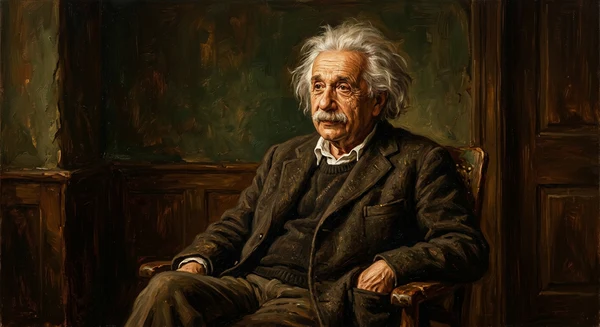
Albert Einstein
1879–1955 · Theoretical Physicist
Developing the theory of relativity and the equation E=mc².
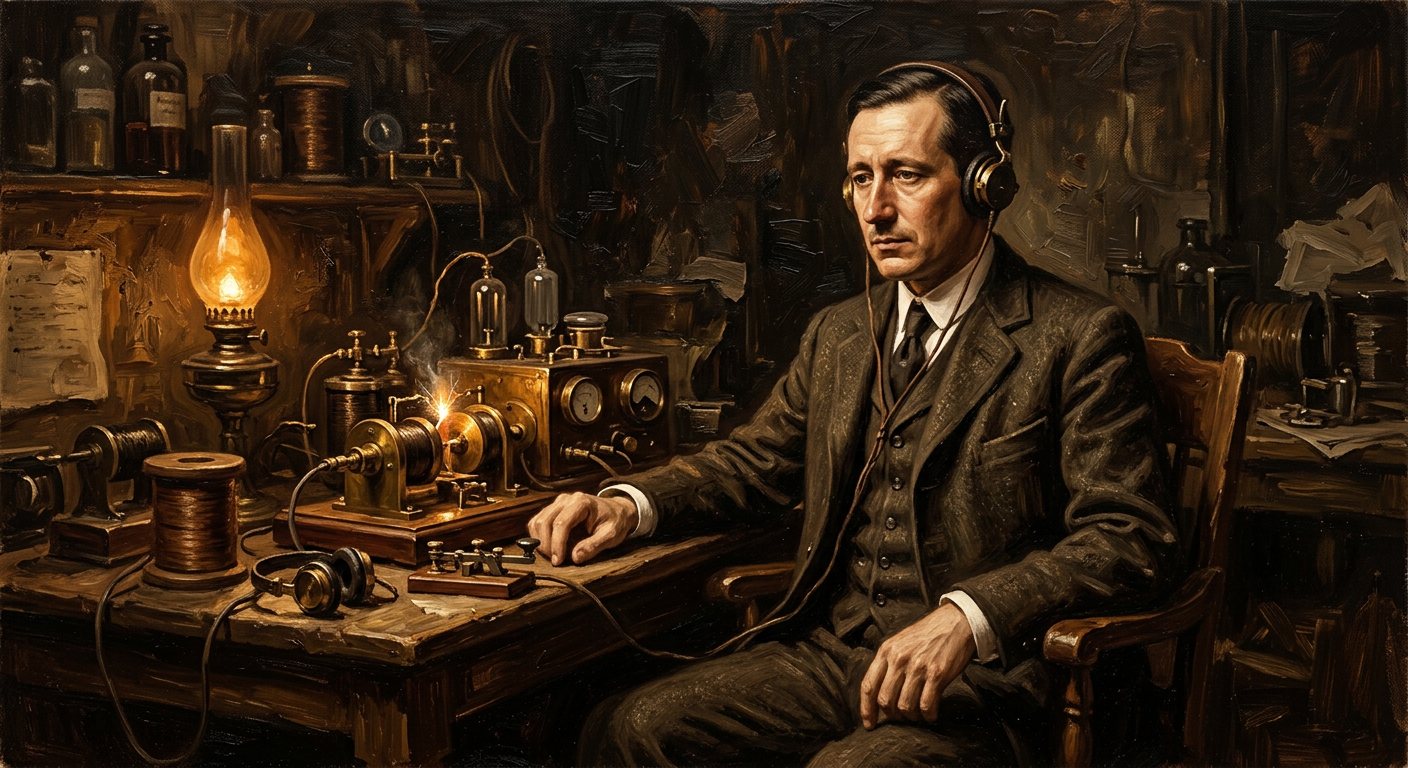
Guglielmo Marconi
1874–1937 · Electrical Engineer and Inventor
Developing the first practical wireless telegraphy system (radio) and sending the first transatlantic radio signal across the Atlantic Ocean.
Sources & references
Books and educational kits about Heinrich Hertz coming soon