_(2).jpg)
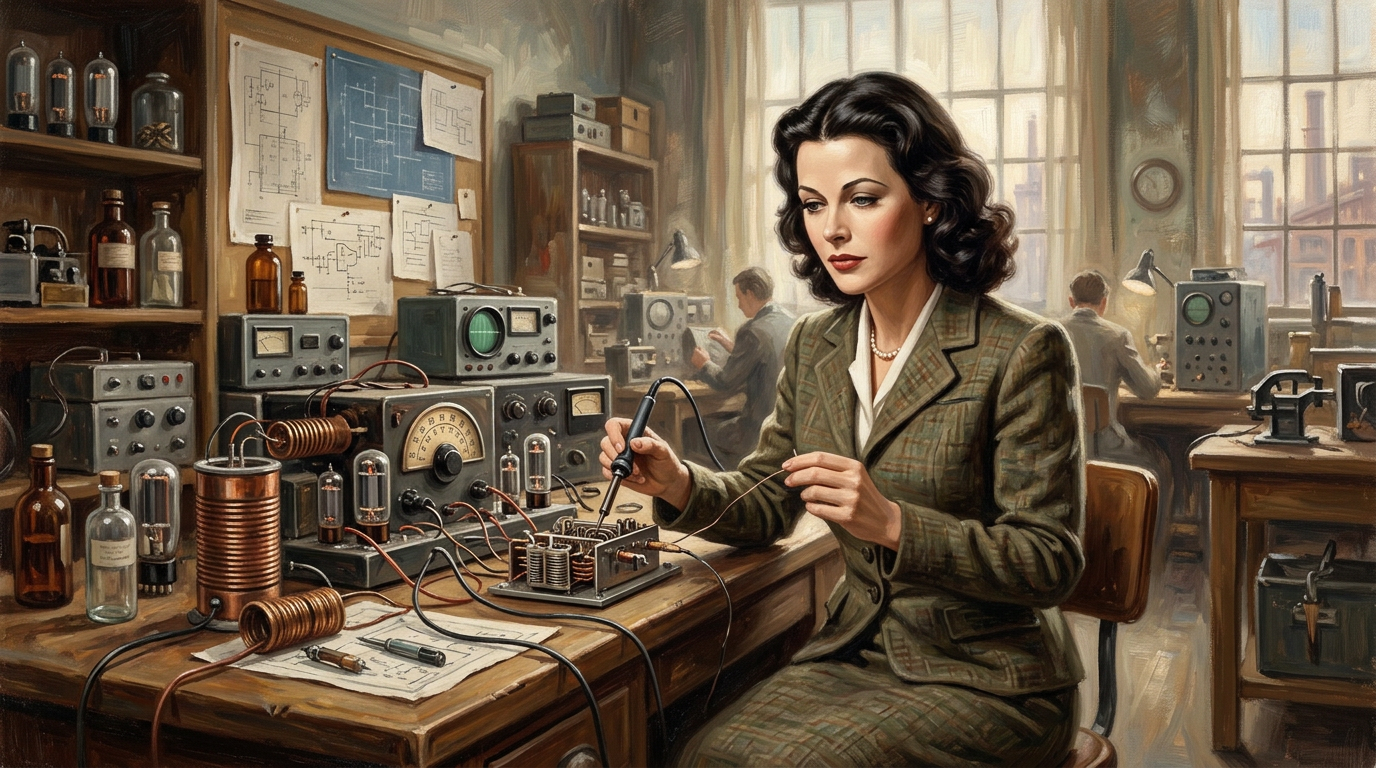
Hedy Lamarr
1914–2000 · Inventor and engineer
Hedy Lamarr was a Hollywood film star who also possessed a brilliant engineering mind, co-inventing a frequency-hopping communication system that anticipated Bluetooth, Wi-Fi, and GPS.
“The brains of people are more interesting than the looks, I think.”
Hedy Lamarr was a Hollywood film star who co-invented a frequency-hopping communication system in 1942 — the same idea that later made Bluetooth, Wi-Fi, and GPS possible.
Why is this scientist famous?
Co-inventing frequency-hopping spread spectrum technology, a foundation of modern wireless communication.
Hedy Lamarr was a Hollywood star who also invented a frequency-hopping technology to stop torpedoes from being jammed. That idea — rapidly switching between channels — became a foundation for Wi-Fi, Bluetooth, and GPS. Every time you connect to wireless earbuds or stream over Wi-Fi, you are using a idea she sketched out at a dinner party.
Hedy's story
From Silver Screen to Science
Born Hedwig Eva Maria Kiesler in Vienna, Lamarr became one of the most glamorous film stars of Hollywood's golden age, starring in films such as 'Algiers' and 'Samson and Delilah.' But behind the screen image was a restless, inventive mind. She set up a drafting table in her Hollywood home and spent her evenings working on engineering problems, from improved traffic lights to a dissolvable fizzy tablet that was meant to create a wartime soft drink.
The Torpedo Problem
During World War II, Lamarr learned that radio-controlled torpedoes could be easily jammed by the enemy, sending them off course. Working with the avant-garde composer George Antheil — who had expertise in synchronising player pianos — she devised a system in which the transmitter and receiver would rapidly and simultaneously hop between 88 different radio frequencies, making the signal nearly impossible to jam or intercept. They received U.S. Patent 2,292,387 in 1942 and donated it to the U.S. Navy.
A Patent Ahead of Its Time
The Navy did not use the technology during the war, and the patent expired in 1959. But the idea of frequency-hopping spread spectrum was later adopted for secure military communications and eventually became a cornerstone of civilian technologies including Bluetooth, Wi-Fi, CDMA mobile phones, and GPS. For decades, Lamarr received no recognition for her invention.
Late Recognition
In 1997, the Electronic Frontier Foundation gave Lamarr its Pioneer Award, and she became the first woman to receive the BULBIE Gnass Spirit of Achievement Award, sometimes called the Oscar of inventing. She was inducted into the National Inventors Hall of Fame in 2014. She died in 2000 at the age of 85, but her dual legacy as a screen icon and a hidden inventor continues to inspire.
What did they discover?
Frequency-Hopping Spread Spectrum
Co-invented a system in which a radio signal rapidly switches between 88 frequencies in synchrony, preventing jamming and interception — the foundation of modern spread-spectrum communication used in Bluetooth, Wi-Fi, and GPS.
Guided Torpedo Control
Designed a radio guidance system for Allied torpedoes that could not be easily jammed by enemy forces, addressing a critical wartime problem.
Amazing facts
She co-invented the frequency-hopping system with composer George Antheil, who contributed the idea of synchronising 88 frequencies like the 88 keys of a player piano.
The U.S. Patent was granted on 11 August 1942, but the Navy did not deploy the technology during the war.
Her patent expired in 1959, years before the technology became widely used — she earned no money from it.
She was inducted into the National Inventors Hall of Fame in 2014.
She reportedly learned about torpedoes from her first husband, an Austrian arms manufacturer.
She also devised an improved traffic light and a tablet that was meant to turn water into a wartime cola drink.
Timeline
Born in Vienna, Austria
Starred in the controversial film 'Ecstasy' in Europe
Moved to Hollywood and signed with MGM
Received U.S. Patent 2,292,387 for frequency-hopping spread spectrum
Received the Electronic Frontier Foundation Pioneer Award
Inducted into the National Inventors Hall of Fame posthumously
Died in Casselberry, Florida, age 85
Awards & honours
Related Super Scientists
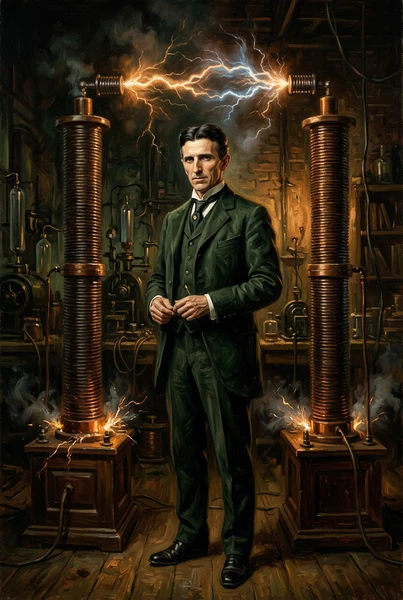
Nikola Tesla
1856–1943 · Inventor & Engineer
Pioneering alternating current (AC) electricity and numerous electrical inventions.
Grace Hopper
1906–1992 · Computer Scientist & Naval Admiral
Inventing the first compiler and making programming accessible with English-like languages.
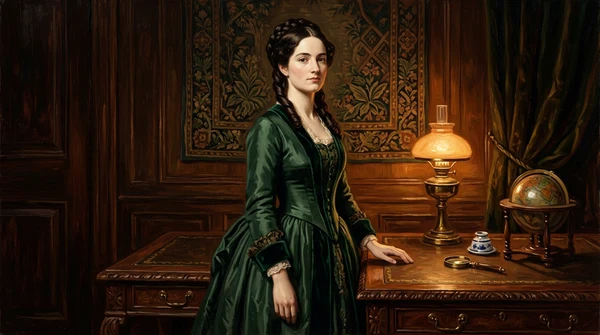
Ada Lovelace
1815–1852 · Mathematician
Writing the first computer algorithm, a century before electronic computers existed.
Sources & references
Books and educational kits about Hedy Lamarr coming soon