_(2).jpg)
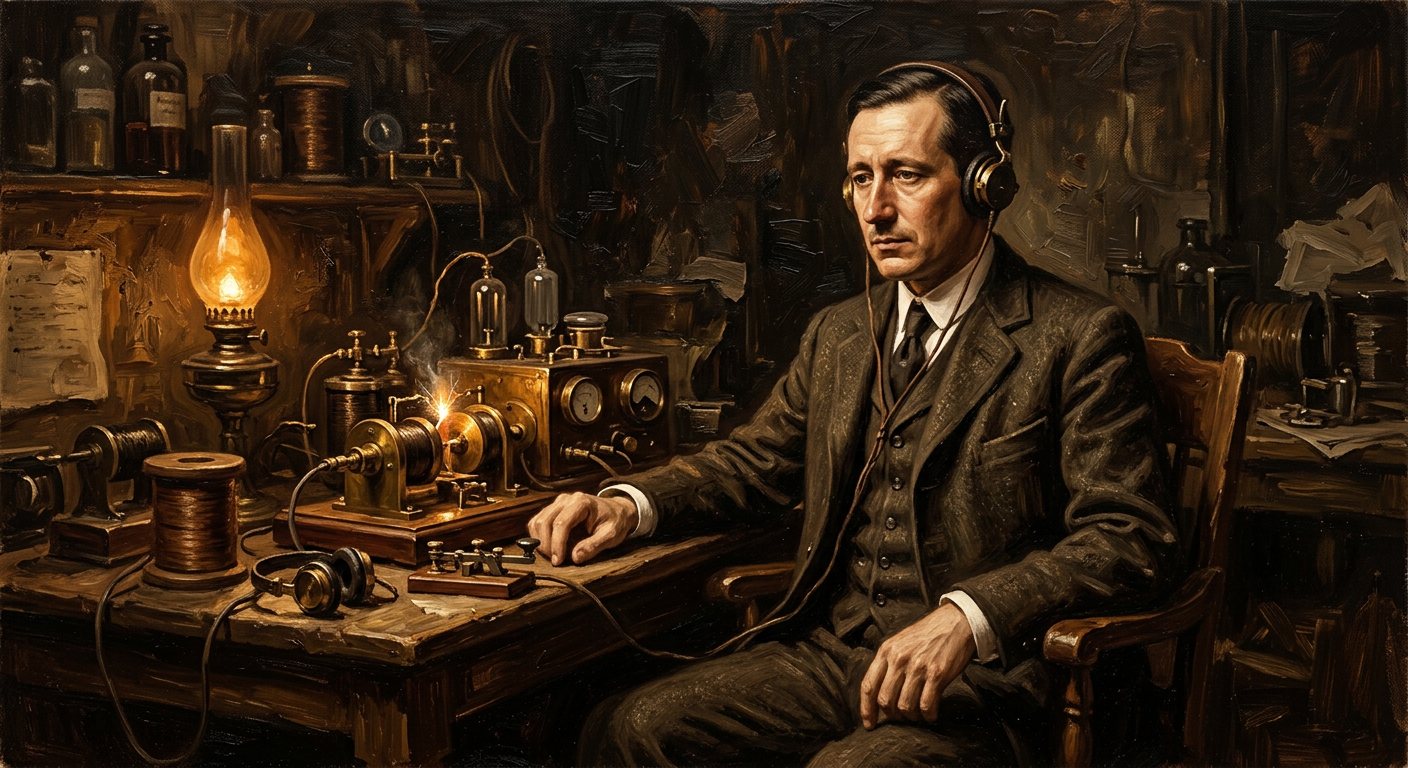
Guglielmo Marconi
1874–1937 · Electrical Engineer and Inventor
Guglielmo Marconi was an Italian inventor who proved that radio signals could cross oceans, turning wireless communication from a laboratory curiosity into a technology that connected the world.
“I have never thought of my work as a contest with anyone but myself.”
Marconi wireless distress signals helped save over 700 passengers from the sinking RMS Titanic in 1912.
Why is this scientist famous?
Developing the first practical wireless telegraphy system (radio) and sending the first transatlantic radio signal across the Atlantic Ocean.
Guglielmo's story
A Curious Boy in Bologna
Guglielmo Marconi was born in 1874 in Bologna, Italy, the second son of an Italian landowner and an Irish mother. He was not a star pupil. In fact, he struggled in school and never attended university. But he had a restless curiosity and a private tutor named Vincenzo Rosa who encouraged his fascination with physics. As a teenager, Marconi read about the experiments of Heinrich Hertz, who had shown that invisible electromagnetic waves could travel through the air. While other scientists saw these waves as a curiosity, Marconi saw something practical: a way to send messages without wires.
Experiments on the Family Estate
At the age of twenty, Marconi began building his own wireless transmitters and receivers in the attic of his father’s estate at Villa Griffone. He started by ringing a bell from across the room, then moved the receiver downstairs and made it fire a pistol. His father, initially unimpressed, eventually realised his son was onto something important. Marconi improved the range of his devices by grounding one end of the transmitter and raising the antenna higher. By 1895, he could send signals over a distance of more than two kilometres, even over hills. The Italian government showed little interest, so Marconi and his mother travelled to England, where he believed his invention would find more support.
Across the Atlantic
In England, Marconi patented his wireless system in 1896 and founded the Wireless Telegraph and Signal Company the following year. He steadily increased the range of his transmissions, sending signals across the English Channel in 1899. But his boldest dream was to send a signal across the Atlantic Ocean. Many physicists insisted it was impossible, believing radio waves travelled only in straight lines and would shoot off into space over the curve of the Earth. In December 1901, Marconi travelled to St John’s, Newfoundland, and raised a wire antenna on a kite in a howling gale. He listened through a telephone receiver and heard three faint clicks, the Morse code letter S, sent from Poldhu in Cornwall, 3,400 kilometres away. The age of global wireless communication had begun.
Legacy and the Titanic
Marconi’s invention proved its life-saving value in 1912, when the RMS Titanic struck an iceberg. The ship’s Marconi wireless operator sent distress signals that were picked up by other vessels, and more than 700 people were rescued who would otherwise have been lost. In 1909, Marconi had shared the Nobel Prize in Physics with German physicist Ferdinand Braun for their contributions to wireless telegraphy. He continued to develop shortwave radio, which became the basis of nearly all modern long-distance communication. Marconi died in Rome in 1937, and as a tribute, every radio station in the world observed two minutes of silence in his honour.
What did they discover?
First Wireless Telegraph
Marconi built the first practical system for sending Morse code through the air without wires, beginning the era of wireless communication.
Transatlantic Radio Signal
On 12 December 1901, Marconi received the first radio signal to cross the Atlantic, proving that radio waves could bend around the Earth and connecting continents without cables.
Maritime Safety Communication
Marconi wireless systems were installed on ships, enabling distress calls that saved hundreds of lives, most famously during the Titanic disaster in 1912.
Shortwave Radio Development
In the 1920s, Marconi pioneered shortwave wireless communication, which used higher frequencies and became the foundation of modern long-distance radio broadcasting.
Amazing facts
Marconi never attended university and was largely self-taught in physics and electrical engineering.
He received the first transatlantic radio signal using an antenna suspended from a kite during a gale in Newfoundland.
Every radio station in the world observed two minutes of silence when Marconi died in 1937.
Marconi installed wireless equipment on ships, which allowed the Titanic to send distress signals that saved over 700 lives.
He shared the 1909 Nobel Prize in Physics with Ferdinand Braun, but was only 35 years old at the time.
Marconi was granted the title of Marquess by the Italian king in 1929, making him a nobleman as well as an inventor.
Timeline
Born in Bologna, Italy
Successfully transmitted wireless signals over two kilometres at Villa Griffone
Patented his wireless telegraphy system in England
Founded the Wireless Telegraph and Signal Company in London
Transmitted wireless signals across the English Channel
Received the first transatlantic radio signal at St John’s, Newfoundland
Shared the Nobel Prize in Physics with Ferdinand Braun
Marconi wireless equipment helped save Titanic passengers through distress signals
Granted the title of Marquess by King Victor Emmanuel III
Died in Rome, age 63
Awards & honours
Related Super Scientists
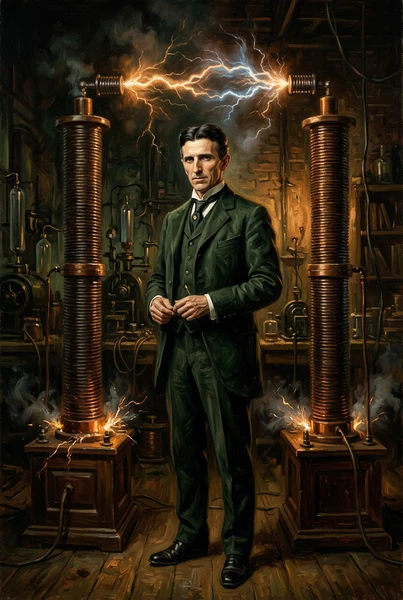
Nikola Tesla
1856–1943 · Inventor & Engineer
Pioneering alternating current (AC) electricity and numerous electrical inventions.
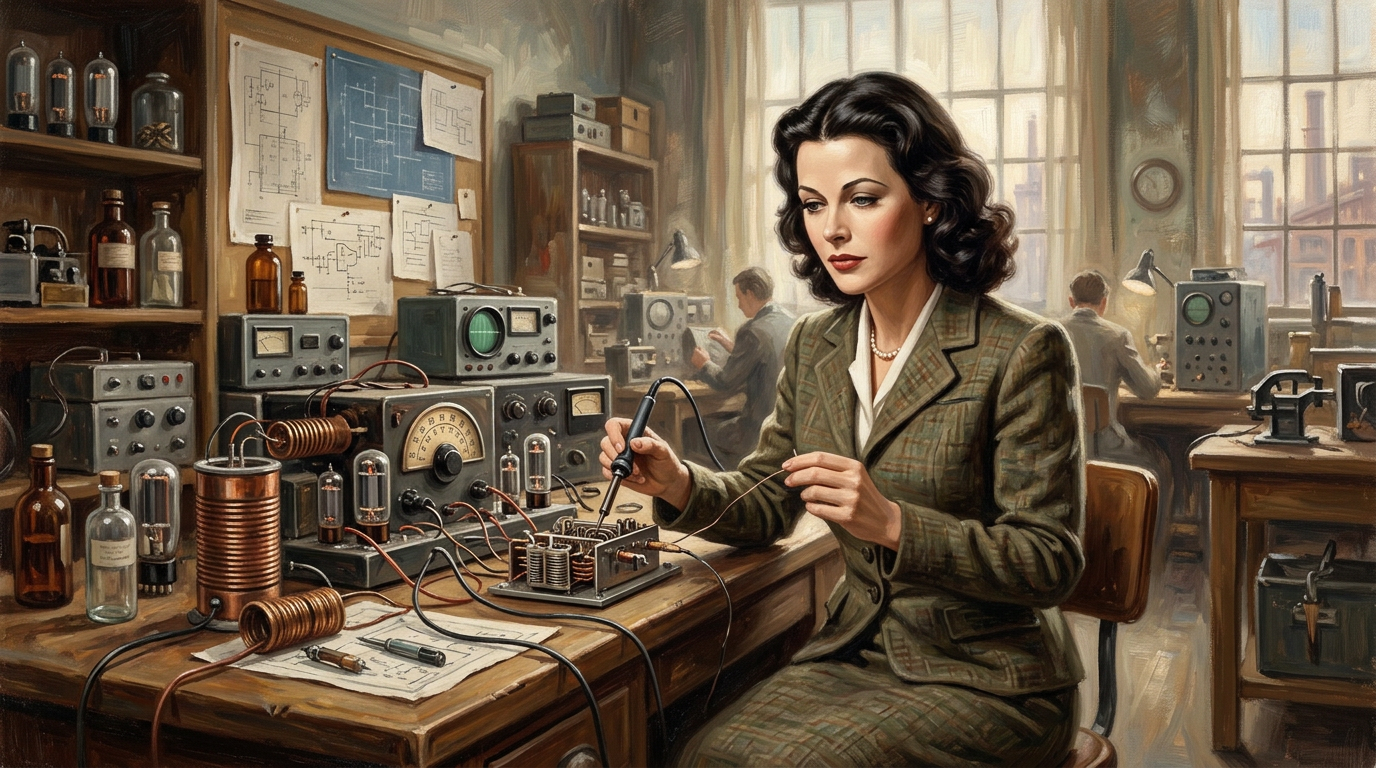
Hedy Lamarr
1914–2000 · Inventor and engineer
Co-inventing frequency-hopping spread spectrum technology, a foundation of modern wireless communication.
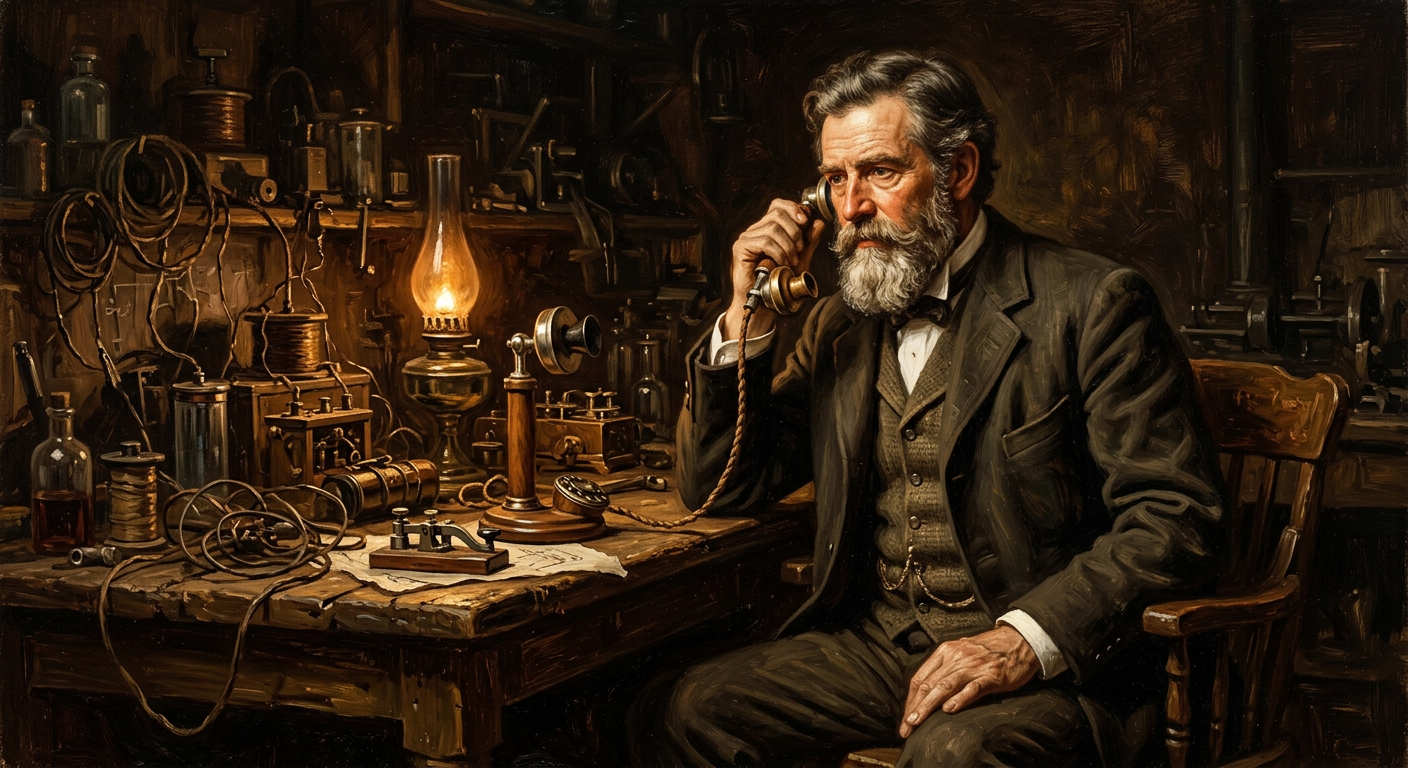
Alexander Graham Bell
1847–1922 · Inventor & Scientist
Inventing the telephone and founding the company that became AT&T.

Sources & references
Books and educational kits about Guglielmo Marconi coming soon