_(2).jpg)
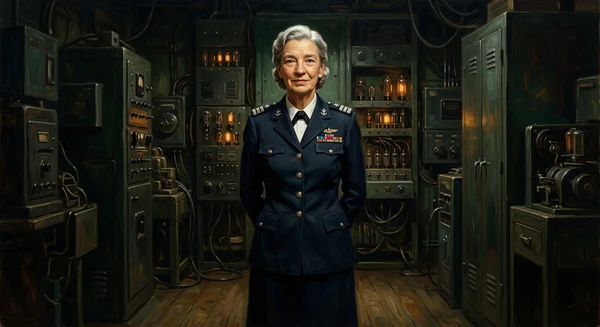
Grace Hopper
1906–1992 · Computer Scientist & Naval Admiral
Rear Admiral Grace Hopper taught computers to understand English, pioneering the compilers that make modern programming possible.
“The most dangerous phrase in the language is, "We've always done it this way."”
Grace Hopper coined the term "debugging" after finding an actual moth stuck in a relay in one of the earliest computers.
Why is this scientist famous?
Inventing the first compiler and making programming accessible with English-like languages.
Rear Admiral Grace Hopper wrote one of the first compilers — a program that translates human-readable code into machine instructions. She believed computers should understand people's language, not the other way around. Every coding language you might learn in school, from Python to JavaScript, carries forward her idea that programming should be accessible to everyone.
Grace's story
Early Life
Born in New York City, Grace Brewster Murray was a curious child who took apart alarm clocks to see how they worked — she had seven in pieces before she understood one. She earned a PhD in mathematics from Yale in 1934, one of the first women to do so, and taught at Vassar College.
World War II
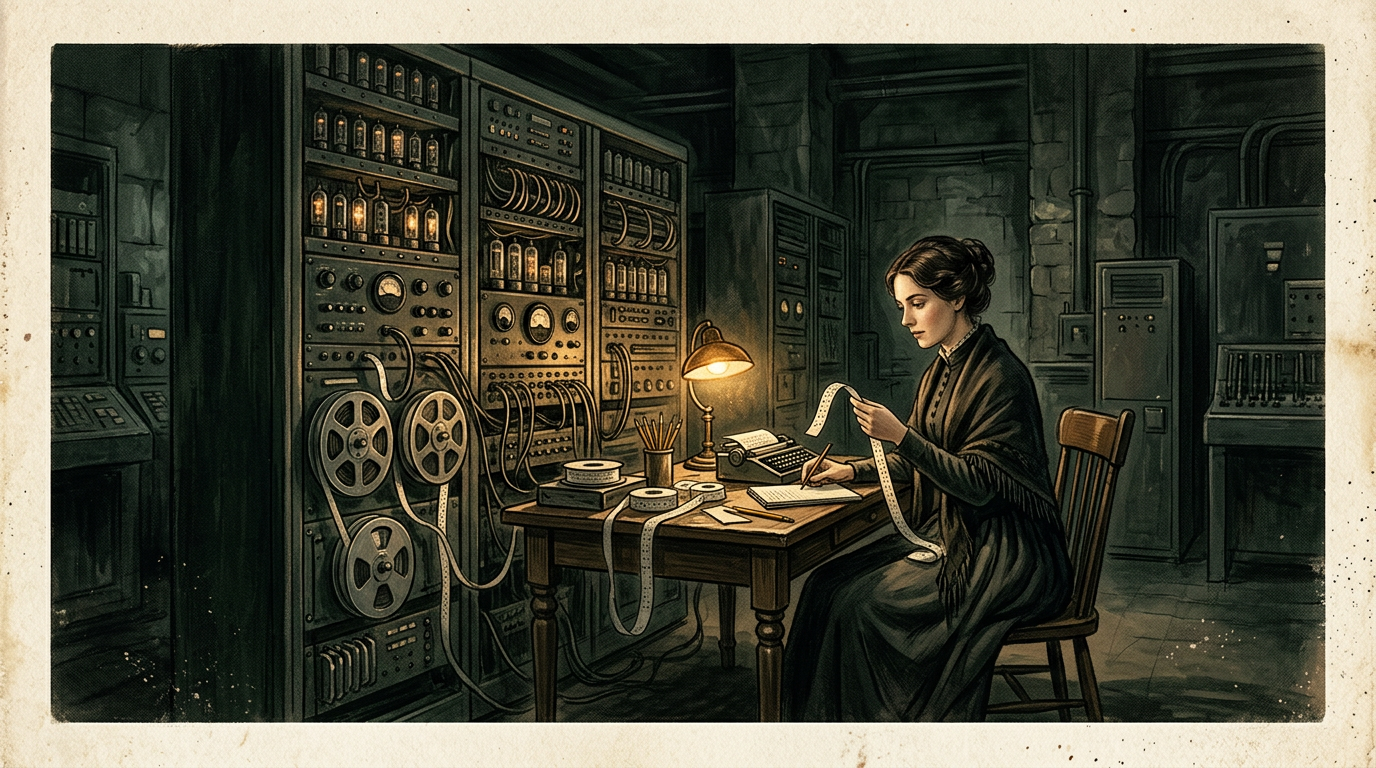
At 37, Hopper tried to join the Navy but was deemed too old and too light. She persisted, joined the WAVES, and was assigned to the Bureau of Ships Computation Project at Harvard, where she worked on the Mark I — one of the first programmable computers. She received the first computer "bug" — a literal moth trapped in a relay.
The Compiler
After the war, Hopper believed that computers could be programmed in English-like languages rather than machine code — an idea most of her colleagues dismissed. In 1952, she built the first compiler, a program that translates mathematical code into machine instructions. Later, she led the team that created COBOL, the first widely-used business programming language, which is still running today.
Legacy
Hopper remained in the Naval Reserve and returned to active duty multiple times, eventually becoming a rear admiral at age 79 — the oldest serving officer in the U.S. armed forces. She became a legendary teacher and speaker, famous for handing out "nanosecond" lengths of wire to show how fast data travels.
What did they discover?
The First Compiler
Built the A-0 compiler in 1952 — the first program that translated symbolic code into machine code, proving computers could "program themselves."
COBOL
Led the committee that created COBOL, the first English-like business programming language, still processing trillions of transactions daily.
Popularising the "Bug"
When a moth caused a malfunction in the Mark II computer, she taped it in her logbook with the note "first actual case of bug being found."
Amazing facts
She popularised the term "debugging" after a literal moth was found trapped in a computer relay.
She was the oldest serving officer in the U.S. Navy when she retired at 79.
She held a PhD in mathematics from Yale, earned in 1934.
She believed that programs should be written in English, not machine code — and was told by colleagues that she was crazy.
She used to hand out 11.8-inch pieces of wire to represent how far light travels in a nanosecond.
A U.S. Navy destroyer, a supercomputer, and a crater on the Moon are all named after her.
Timeline
Born in New York City
Earned PhD in mathematics from Yale
Joined the Navy and worked on the Mark I computer
Built the first compiler, the A-0
Led the committee that created COBOL
Retired from the Navy as a rear admiral at age 79
Died and was buried at Arlington National Cemetery
Awards & honours
Related Super Scientists
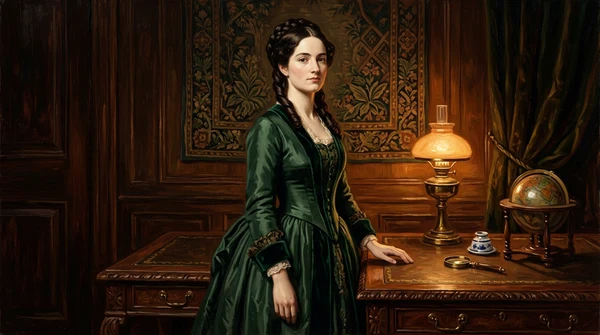
Ada Lovelace
1815–1852 · Mathematician
Writing the first computer algorithm, a century before electronic computers existed.
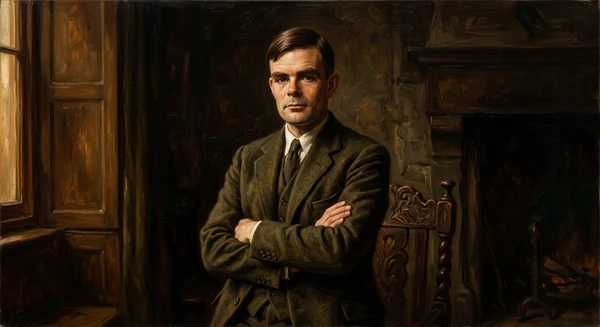
Alan Turing
1912–1954 · Mathematician & Computer Scientist
Breaking Nazi codes and founding the science of artificial intelligence.
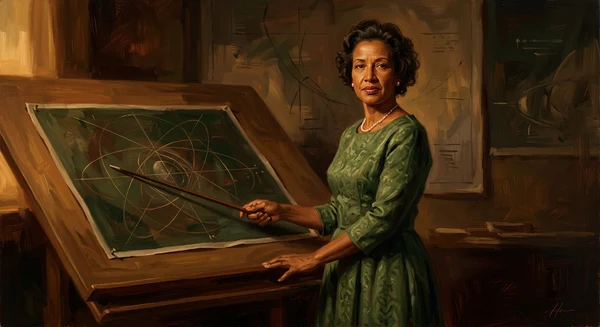
Katherine Johnson
1918–2020 · Mathematician
Calculating the trajectories that put the first Americans into space and on the Moon.
Articles about this scientist
Sources & references
Books and educational kits about Grace Hopper coming soon