_(2).jpg)
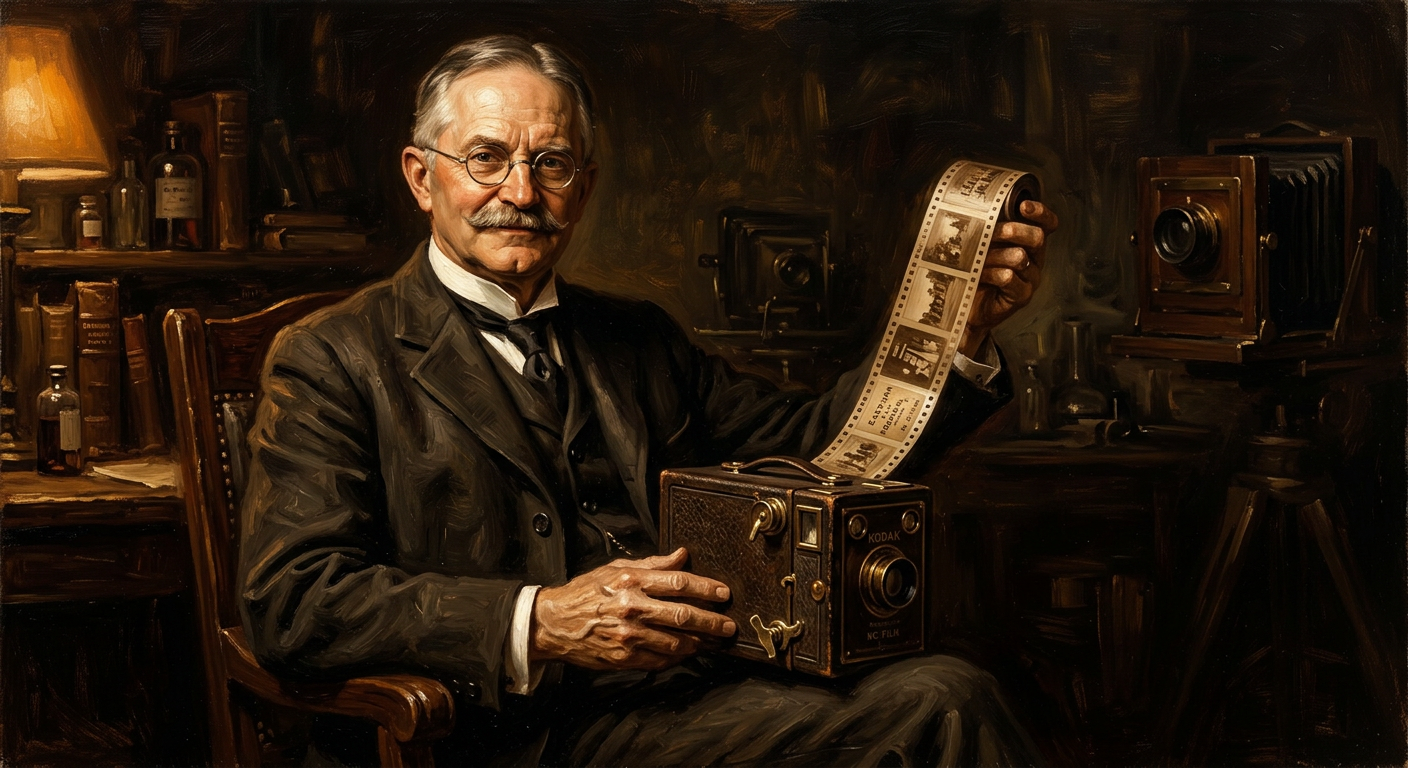
George Eastman
1854–1932 · Inventor and Entrepreneur
George Eastman was an American inventor who turned photography from a complicated profession into something anyone could do, creating the Kodak camera and the slogan you press the button, we do the rest.
“You press the button, we do the rest.”
Eastman gave away more than 100 million dollars of his personal fortune to charities, universities, and hospitals, most of it anonymously.
Why is this scientist famous?
Inventing roll film and the Kodak camera, which made photography accessible to ordinary people and laid the foundation for the motion picture industry.
George's story
A Boy Who Had to Grow Up Fast
George Eastman was born in 1854 in Waterville, a small village in upstate New York. His father ran a business college in nearby Rochester, but when George was eight, his father became seriously ill. The family moved to Rochester, and at fourteen, George had to leave school to work and support his mother and two older sisters. He took a job as an office boy for an insurance company at three dollars a week, then moved to a bank as a junior clerk. He was hardworking and ambitious, teaching himself accounting and saving every spare cent. Photography entered his life almost by accident. A colleague at the bank planned a trip to the Caribbean and suggested young George buy a camera to record the journey. The camera was enormous, the equipment was expensive, and the process was so messy and complicated that Eastman was appalled. There had to be a better way.
Experiments in a Sink
Eastman began experimenting with photography in his mother’s kitchen after work. The standard process of the day used glass plates coated with a wet chemical emulsion that had to be prepared, exposed, and developed before they dried, usually within minutes. It was cumbersome, heavy, and messy. Eastman became obsessed with finding a dry alternative. He read about a new British formula for dry plates and spent three years perfecting his own version in his mother’s sink. By 1880, he had patented a dry-plate coating machine and started a small business making and selling dry plates from a rented upstairs room in Rochester. The business grew, and in 1881 he left his bank job to focus on photography full time.
Roll Film and the Kodak Camera
Eastman’s next breakthrough was even bigger. Glass plates were fine for professionals, but Eastman wanted photography for everyone. He experimented with stripping the emulsion from paper after exposure, then perfected a way to coat a flexible roll of film that could be loaded into a simple camera. In 1888, he launched the first Kodak camera, preloaded with a hundred exposures. The slogan was revolutionary: you press the button, we do the rest. Customers took their pictures, mailed the entire camera back to Rochester, and received their prints and a reloaded camera in return. It was the birth of amateur photography. Suddenly, anyone could take photographs without knowing chemistry or carrying a darkroom. In 1889, Eastman introduced transparent roll film on a nitrocellulose base, which became the foundation not just for still photography but for the entire motion picture industry.
Philanthropy and a Tragic End
Eastman built the Eastman Kodak Company into one of the largest and most successful businesses in the world, but he never forgot the poverty of his youth. He gave away more than 100 million dollars, funding the Massachusetts Institute of Technology, the University of Rochester, the Eastman School of Music, and dental clinics for children in cities across Europe. He was a generous employer, too, introducing profit-sharing and retirement benefits for his workers long before these were common. But in his final years, Eastman suffered from a progressive spinal condition that left him in increasing pain and disability. On 14 March 1932, he took his own life with a single gunshot, leaving a note that read: to my friends, my work is done. Why wait? He was 77 years old.
What did they discover?
Roll Film
Eastman invented flexible roll film that replaced heavy glass plates, making cameras small, light, and easy to use, and laying the foundation for motion pictures.
The Kodak Camera
Launched in 1888, the first Kodak camera came preloaded with film for 100 exposures and could be mailed back for processing, making photography accessible to ordinary people for the first time.
Dry Plate Photography
Eastman perfected a dry-plate coating process that replaced the cumbersome wet-plate method, allowing photographers to prepare and develop images at their convenience.
Transparent Nitrocellulose Film
In 1889, Eastman introduced transparent film on a nitrocellulose base, which became the standard for both still photography and the emerging motion picture industry.
Amazing facts
Eastman never completed high school, having left school at fourteen to support his family after his father became ill.
He gave away more than 100 million dollars during his lifetime, funding universities, dental clinics, and music schools, mostly anonymously.
The name Kodak was invented by Eastman himself because he liked the letter K and wanted a word that was short, distinctive, and could not be mispronounced.
Eastman introduced profit-sharing and retirement benefits for his employees decades before most companies offered them.
Thomas Edison used Eastman’s transparent roll film to build his first motion picture camera, linking the two inventors in the creation of cinema.
Eastman’s final note read: To my friends, my work is done. Why wait?
Timeline
Born in Waterville, New York
Left school at fourteen to work as an office boy at an insurance company
Bought his first camera and began experimenting with photography
Patented a dry-plate coating machine and began selling dry plates
Founded the Eastman Dry Plate Company in Rochester, New York
Launched the first Kodak camera with the slogan you press the button, we do the rest
Introduced transparent nitrocellulose roll film, enabling the motion picture industry
Founded the Eastman Kodak Company
Began donating his fortune, funding dental clinics for children across Europe
Died in Rochester, New York, age 77
Awards & honours
Related Super Scientists
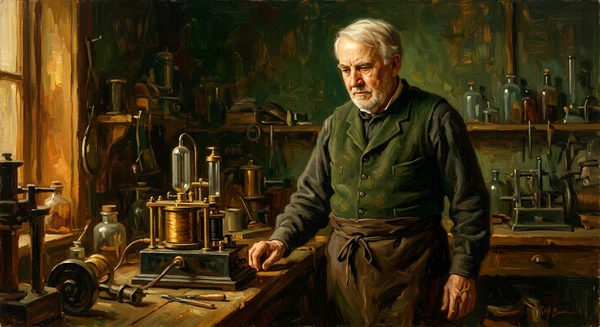
Thomas Edison
1847–1931 · Inventor & Businessman
Invented the practical incandescent light bulb, phonograph, and motion picture camera.
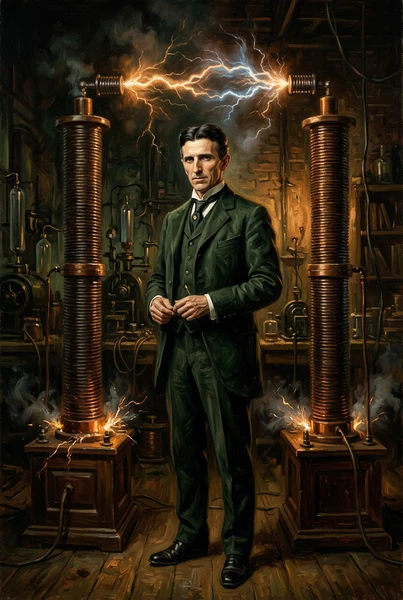
Nikola Tesla
1856–1943 · Inventor & Engineer
Pioneering alternating current (AC) electricity and numerous electrical inventions.
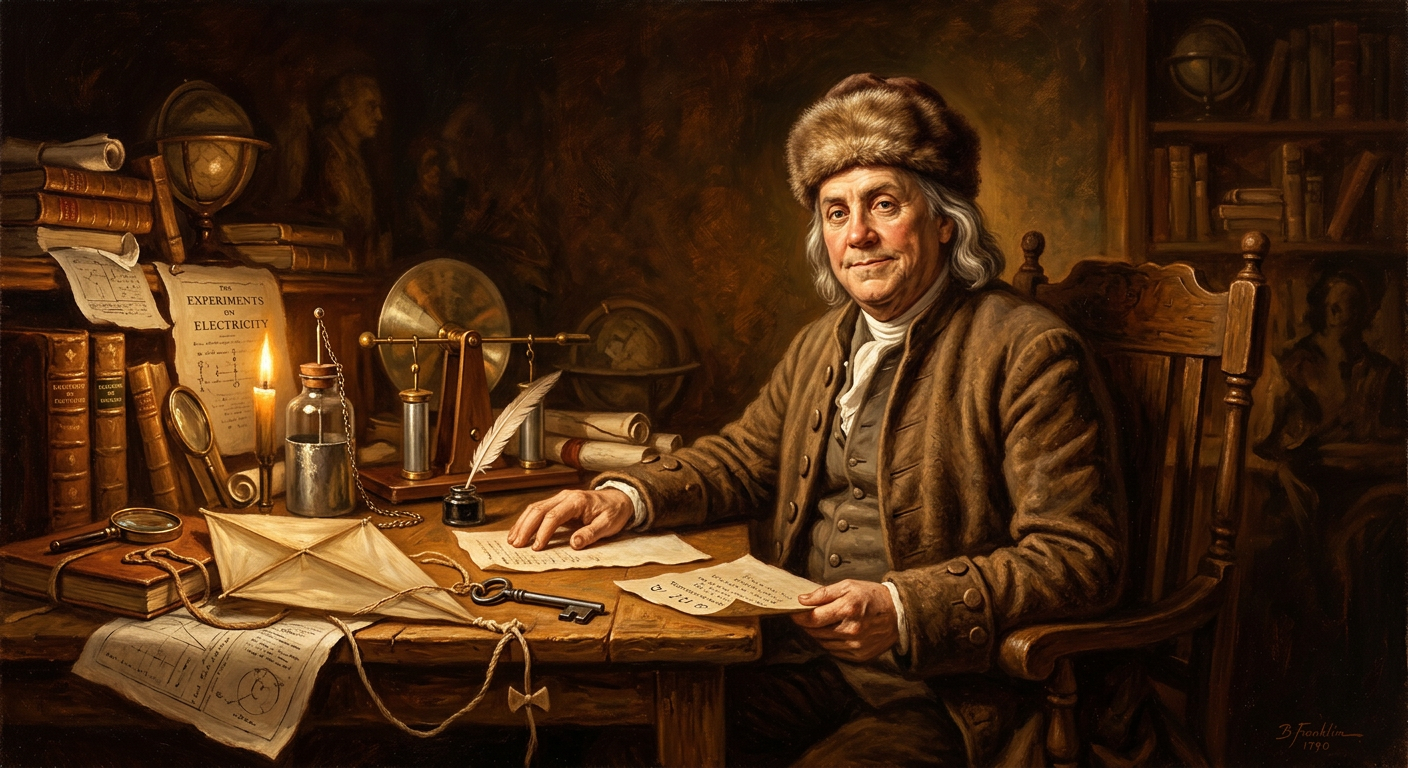
Benjamin Franklin
1706–1790 · Polymath: Scientist, Inventor, Statesman, and Printer
The American polymath who proved lightning is electricity, invented the lightning rod and bifocals, and helped draft the Declaration of Independence.
Sources & references
Books and educational kits about George Eastman coming soon