_(2).jpg)
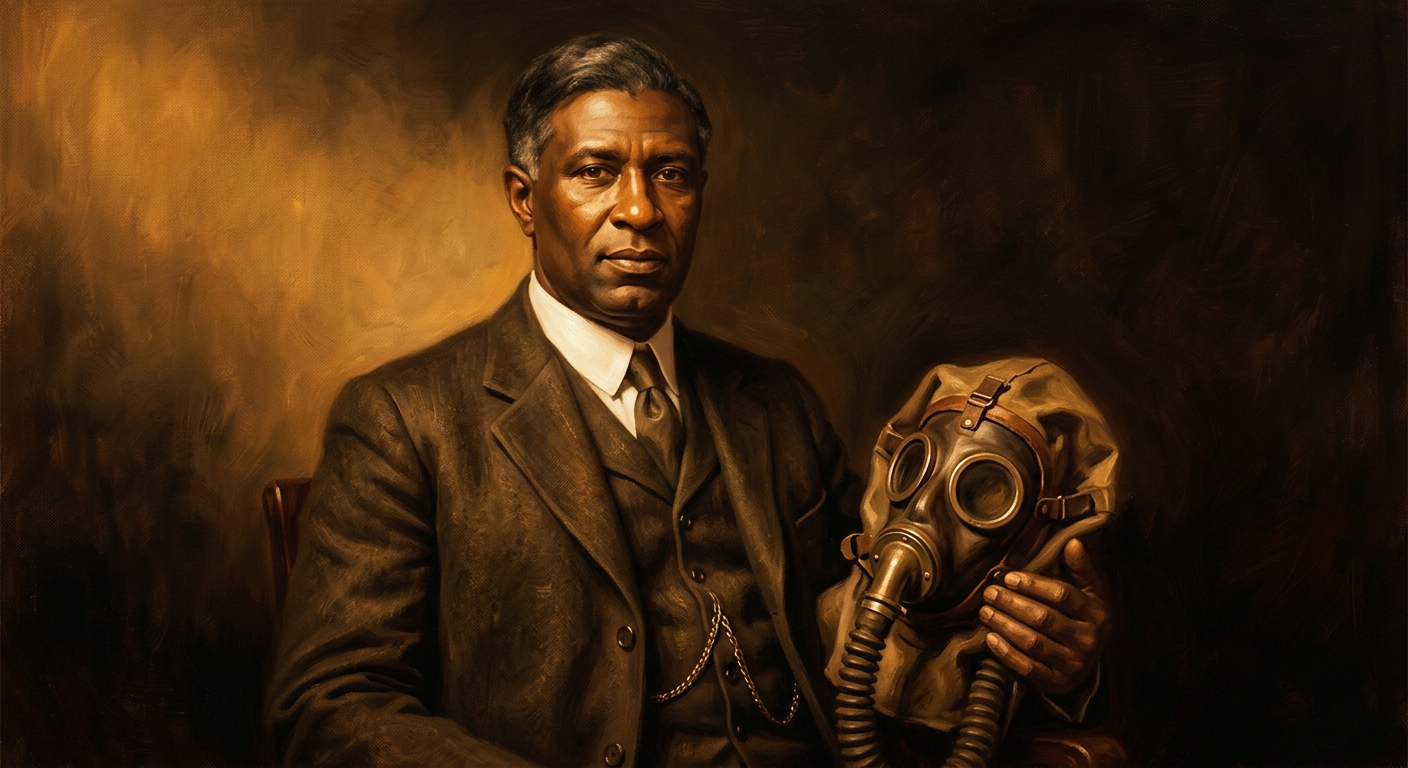
Garrett Morgan
1877–1963 · Inventor and Entrepreneur
A self-taught African American inventor from Cleveland, Ohio, Morgan saved workers from a tunnel disaster with his breathing device and made roads safer with his traffic signal.
“If you think you can do a thing, or if you think you can’t do a thing, you’re right.”
Morgan hired a white actor to pose as the inventor of his safety hood so that buyers would not know the real inventor was Black.
Why is this scientist famous?
Invented a pioneering safety hood that became the forerunner of the modern gas mask, and a three-position traffic signal that saved countless lives at dangerous intersections.
Garrett's story
Early Life in Kentucky
Garrett Augustus Morgan was born on March 4, 1877, in the small community of Claysville, Kentucky. His parents had both been born into slavery, and the family lived in a part of Kentucky where Black families faced constant discrimination and limited opportunity. As a young boy, Morgan attended school only sporadically and spent much of his childhood helping on the family farm. At fourteen, restless and hungry for a wider world, he left Kentucky for Cincinnati, Ohio, where he found work as a handyman. A year later he moved on to Cleveland, a growing industrial city where he hoped to build a real future.
Finding His Footing in Cleveland
In Cleveland, Morgan landed a job repairing sewing machines in a clothing factory. The work suited him: he had a natural mechanical mind, loved taking machines apart to see how they worked, and could often fix what others could not. Within a few years he had opened his own sewing-machine repair shop, a remarkable achievement for a young Black man in the early 1900s. Business grew steadily, and Morgan began to dream bigger. He noticed that the sewing-machine oil used in factories left workers’ hands and clothes stained, and he experimented with chemical mixtures until he created a hair-straightening cream that could also remove the oil. The product became so popular that he launched the G. A. Morgan Hair Refining Company, which grew into a thriving business and gave him the financial freedom to pursue invention full time.
The Safety Hood
Morgan had long been troubled by the dangers firefighters faced. Smoke inhalation killed countless men who entered burning buildings with no protection. After years of experimenting, he patented a “safety hood and smoke protector” in 1914 — a device that hung over the shoulders and used a wet sponge to filter out smoke and toxic gases while allowing the wearer to breathe. It was the first practical breathing device of its kind. Morgan demonstrated it across Ohio, sometimes deliberately entering smoke-filled tents to prove it worked. He sold the device to fire departments across the country, but prejudice meant he often had to hire a white salesperson to make the pitch. The hood’s reputation was built on one dramatic rescue above all others.
Hero of the Lake Erie Tunnel Disaster
On the night of July 25, 1916, an explosion ripped through a waterworks tunnel under construction beneath Lake Erie, trapping workers in a toxic, smoke-filled shaft. Rescue teams rushed in and collapsed one after another. Desperate officials called Garrett Morgan, whose safety hood was the only device that might work in the poisoned air. Morgan and his brother Frank drove to the site, strapped on their hoods, and descended into the tunnel. They emerged carrying unconscious men on their backs, returning again and again until several workers had been saved. The rescue made headlines nationwide and should have made Morgan a hero, but when newspapers revealed that the rescuer was Black, many orders for his device were cancelled. The same prejudice that had dogged him throughout his career denied him the recognition he deserved.
The Three-Way Traffic Signal
Cleveland’s streets in the 1920s were chaotic. Cars, horse-drawn wagons, bicycles, and pedestrians all competed for the same intersections, and accidents were common. After witnessing a particularly ugly collision between a carriage and an automobile, Morgan set to work on a solution. In 1923 he patented a three-position traffic signal: Stop, Go, and a third position — an all-way stop — that gave traffic already in the intersection time to clear before the next wave started. Earlier traffic signals had only two positions, and the abrupt switch from Go to Stop caused frequent crashes. Morgan’s warning interval was the key innovation, and it became a standard feature of traffic lights everywhere. He later sold the patent to General Electric for $40,000, a fortune at the time.
What did they discover?
Morgan Safety Hood (1914)
A breathing device that used a wet sponge to filter smoke and toxic gases, allowing firefighters and rescue workers to enter dangerous environments. It became the blueprint for the gas masks used in World War I.
Three-Position Traffic Signal (1923)
A traffic light with a third ‘warning’ position between Stop and Go, giving drivers time to clear the intersection. The warning interval is now built into every traffic light in the world.
Hair-Straightening Cream
While experimenting with a chemical to remove sewing-machine oil from fabrics, Morgan discovered it also straightened hair. He patented it and built a successful cosmetics company around it.
Amazing facts
Morgan called himself the ‘Black Edison’ — a nod to Thomas Edison, his contemporary and the most famous inventor in America.
He hired a white actor named ‘Big Chief Mason’ to demonstrate his safety hood at public events, concealing his own identity so buyers would not dismiss a Black inventor’s product.
The 1916 Lake Erie tunnel rescue was so dangerous that Morgan’s brother Frank fainted from exhaustion during the rescue but went back in after recovering.
Morgan’s traffic signal was hand-operated, with mechanical arms that popped up to show Stop and Go signs — quite different from today’s electric lights.
He was actively involved in Cleveland’s Black community, founding a newspaper called the Cleveland Call in 1920 and helping organise the Cleveland Association of Coloured Men.
In 2005, more than 40 years after his death, Morgan was inducted into the National Inventors Hall of Fame for both the safety hood and the traffic signal.
A school in Cleveland — the Garrett Morgan School of Engineering and Innovation — is named in his honour.
Cuyahoga County, Ohio declared March 4 as Garrett Morgan Day in 2024, on what would have been his 147th birthday.
Timeline
Born in Claysville, Kentucky
Left home at 14 for Cincinnati, then Cleveland, seeking work
Began repairing sewing machines in a Cleveland clothing factory
Opened his own sewing-machine repair shop
Launched the G. A. Morgan Hair Refining Company after inventing a hair-straightening cream
Patented the Morgan Safety Hood and Smoke Protector
Used his safety hood to rescue workers trapped in the Lake Erie tunnel disaster
Founded the Cleveland Call newspaper
Patented the three-position traffic signal
Sold the traffic signal patent to General Electric for $40,000
Developed glaucoma and began losing his sight
Died in Cleveland, Ohio, aged 86
Awards & honours
Related Super Scientists
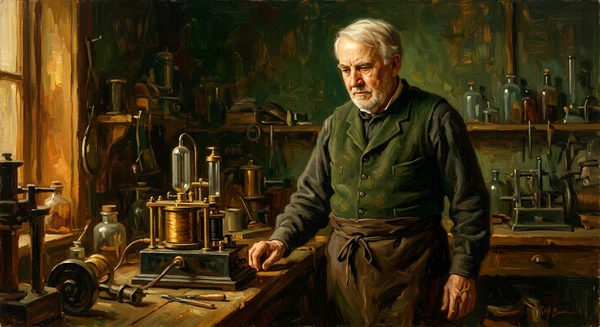
Thomas Edison
1847–1931 · Inventor & Businessman
Invented the practical incandescent light bulb, phonograph, and motion picture camera.
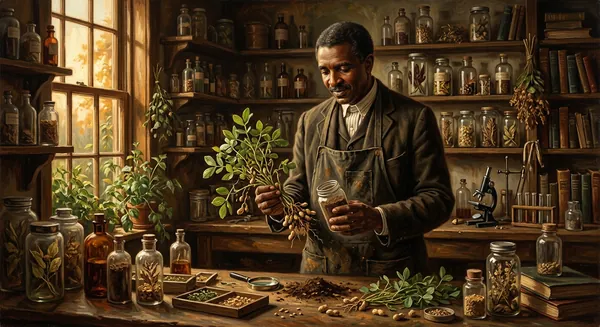
George Washington Carver
1864–1943 · Agricultural Scientist and Botanist
Transforming Southern agriculture by developing hundreds of products from peanuts and sweet potatoes, freeing farmers from dependence on cotton.
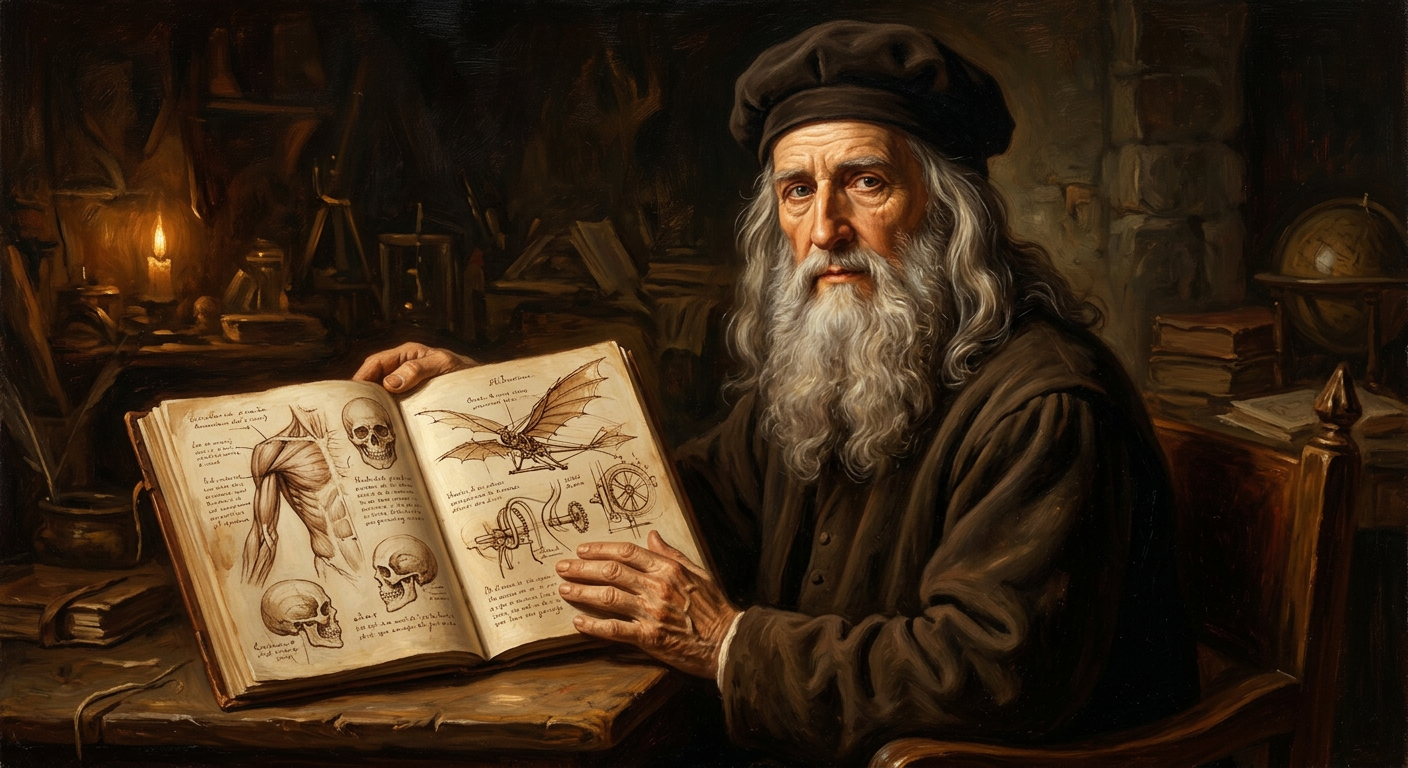
Leonardo da Vinci
1452–1519 · Polymath: Artist, Engineer, Anatomist, and Inventor
The quintessential Renaissance man whose notebooks overflow with visionary inventions, anatomical studies, and master paintings like the Mona Lisa.
Sources & references
Books and educational kits about Garrett Morgan coming soon