_(2).jpg)
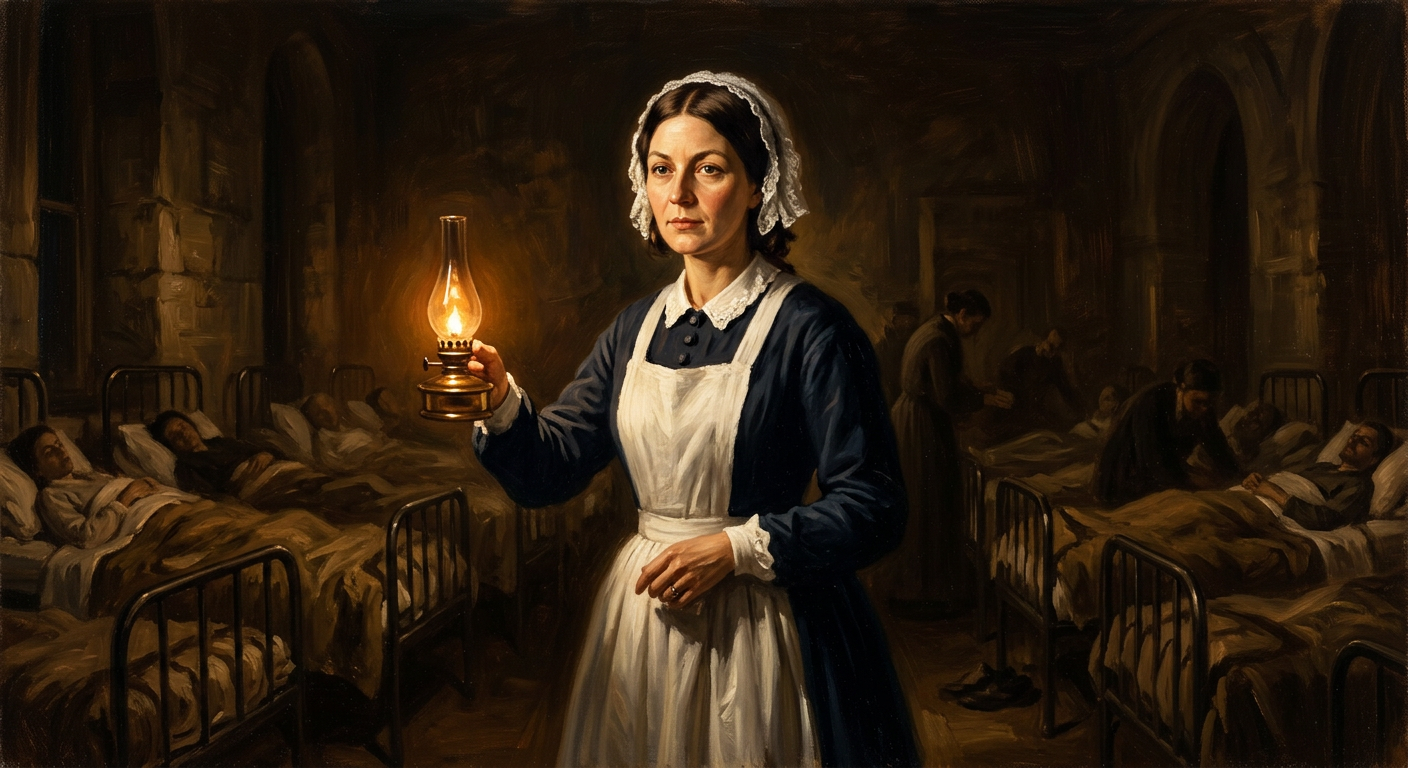
Florence Nightingale
1820–1910 · Nurse, Statistician, and Social Reformer
A Victorian woman from a wealthy family who defied convention to become a nurse — and then used data and statistics to prove that cleanliness, not just medicine, was the key to saving lives.
“I attribute my success to this: I never gave or took an excuse.”
Nightingale was a brilliant mathematician who invented a type of pie chart called the polar area diagram (also known as the Nightingale rose) to show that far more soldiers died from preventable diseases than from battle wounds.
Why is this scientist famous?
The founder of modern nursing who revolutionised hospital sanitation and used statistics to prove that clean water and hygiene save lives.
Nightingale saved lives not just with nursing, but with data. She used statistics and charts to prove that clean hospitals and sanitation dramatically reduced deaths. Her approach — using data to improve healthcare — is still how hospitals, public health officials, and governments make decisions that protect millions of people.
Florence's story
A Calling Against Convention
Florence Nightingale was born on 12 May 1820 in Florence, Italy, to a wealthy British family — she was named after the city of her birth. Her family moved back to England the following year, and Florence grew up on two grand estates in Derbyshire and Hampshire. Her father, a wealthy landowner, educated her personally in mathematics, philosophy, history, and languages. By 16, she believed God had called her to serve others through nursing. Her family was appalled. In Victorian England, nursing was considered a low, dirty job done by uneducated working-class women. A respectable young lady from a rich family simply did not become a nurse. Florence refused every suitor and every alternative career. She turned down a proposal from a wealthy and loving man named Richard Monckton Milnes, writing: ''I have a moral, an active nature, which requires satisfaction, and that I could not find in his life.''
What did they discover?
Modern Nursing
She established the first secular nursing school in the world at St Thomas'' Hospital in London in 1860, creating the model for professional nursing education that spread worldwide.
Hospital Sanitation Reform
By dramatically reducing death rates through cleanliness, ventilation, clean water, and proper nutrition, she proved that sanitation was as important as medical treatment — a revolutionary idea at the time.
Medical Statistics
She invented the polar area diagram (the Nightingale rose) to show that preventable diseases caused far more soldier deaths than battle wounds, using data to drive government reform of military healthcare.
Public Health Policy
Her statistical reports on mortality in the British army led to the formation of a Royal Commission on the Health of the Army, which transformed military and civilian hospital design and sanitation standards across the British Empire.
Amazing facts
She was named after the Italian city of Florence, where she was born — her older sister Parthenope was named after the Greek name for Naples, where she was born.
She was a brilliant mathematician who invented the polar area diagram (the Nightingale rose) to convince politicians that disease, not battle, was the real killer.
She reduced the death rate at Scutari hospital from 42% to 2% simply by cleaning the wards, providing clean water, and improving ventilation.
Her family strongly opposed her becoming a nurse — in Victorian England, nursing was considered a dirty, low-class job unfit for a wealthy woman.
She turned down a marriage proposal from a wealthy, loving man because she believed her calling to serve was more important.
She became the first woman elected to the Royal Statistical Society in 1858.
After the Crimean War she was bedridden for much of the rest of her life, possibly from brucellosis contracted in the Crimea, but continued to work and campaign for reform from her bed.
She kept a pet owl named Athena that she had rescued in Athens and carried in her pocket.
Timeline
Born in Florence, Italy, to a wealthy British family
Experienced what she described as a calling from God to devote her life to nursing
Trained as a nurse at the Institution of Protestant Deaconesses at Kaiserswerth in Germany
Became superintendent of the Institute for the Care of Sick Gentlewomen in London
Sent to Scutari, Turkey, with 38 nurses to care for soldiers in the Crimean War
Reduced the death rate at Scutari hospital from 42% to 2% through sanitation reforms
Elected the first female member of the Royal Statistical Society
Published Notes on Hospitals, applying statistical analysis to hospital design
Founded the Nightingale Training School for Nurses at St Thomas'' Hospital in London
Died in London at the age of 90
Awards & honours
Related Super Scientists
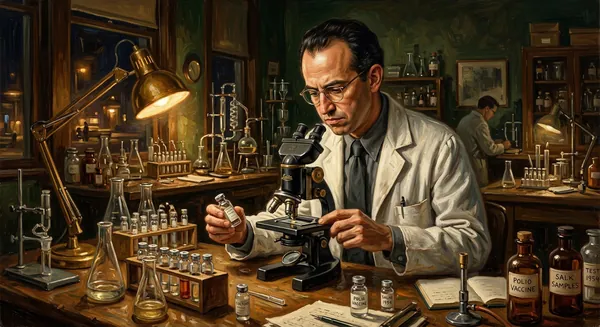
Jonas Salk
1914–1995 · Virologist and Medical Researcher
Developing the first safe and effective polio vaccine, which ended a disease that paralysed and killed children by the thousands.
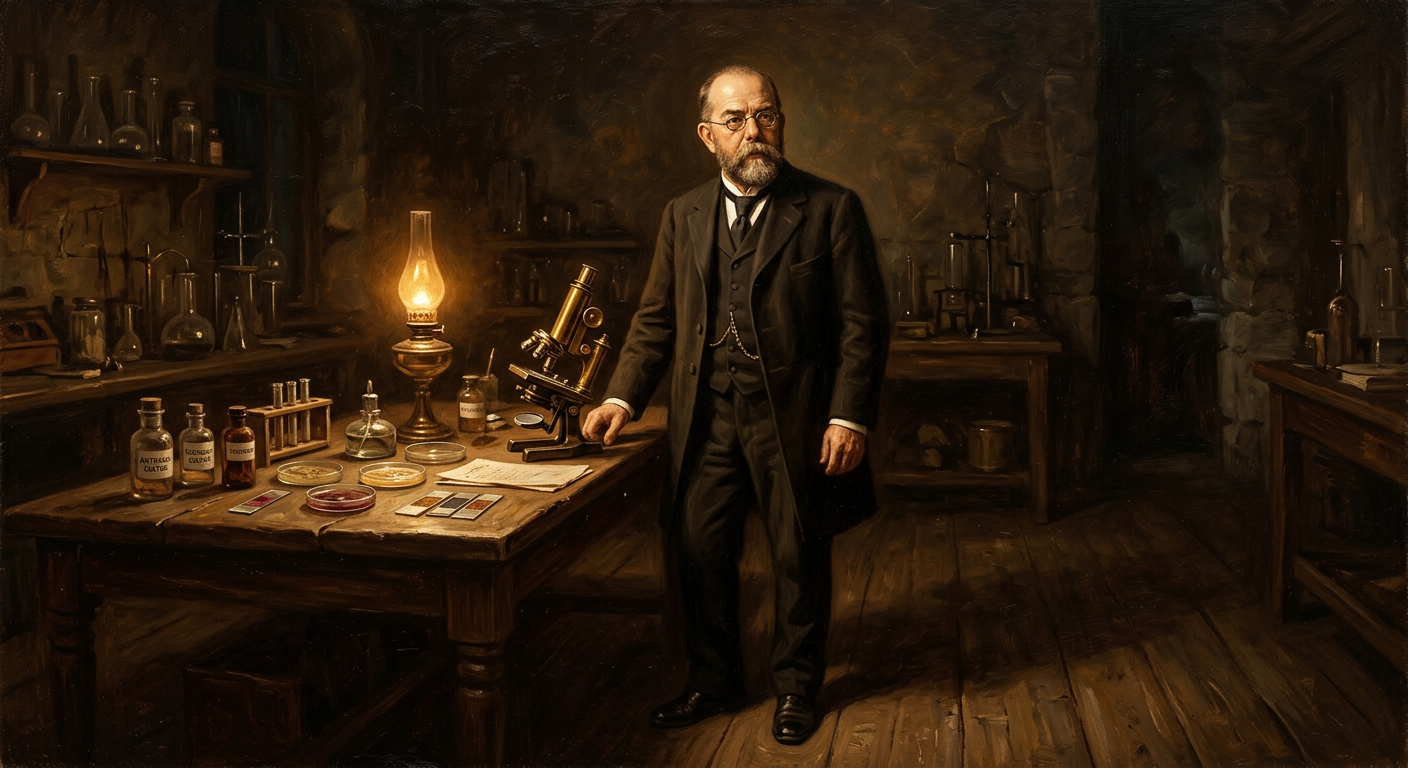
Robert Koch
1843–1910 · Physician and Microbiologist
Discovered the bacteria that cause anthrax, tuberculosis, and cholera, and laid the foundations of modern medical microbiology.
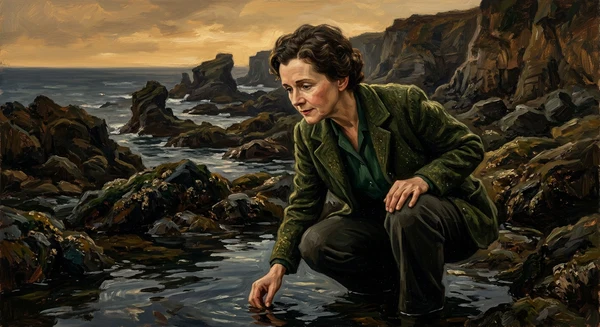
Rachel Carson
1907–1964 · Marine Biologist & Conservationist
Wrote Silent Spring, launching the global environmental movement.
Sources & references
Books and educational kits about Florence Nightingale coming soon