_(2).jpg)
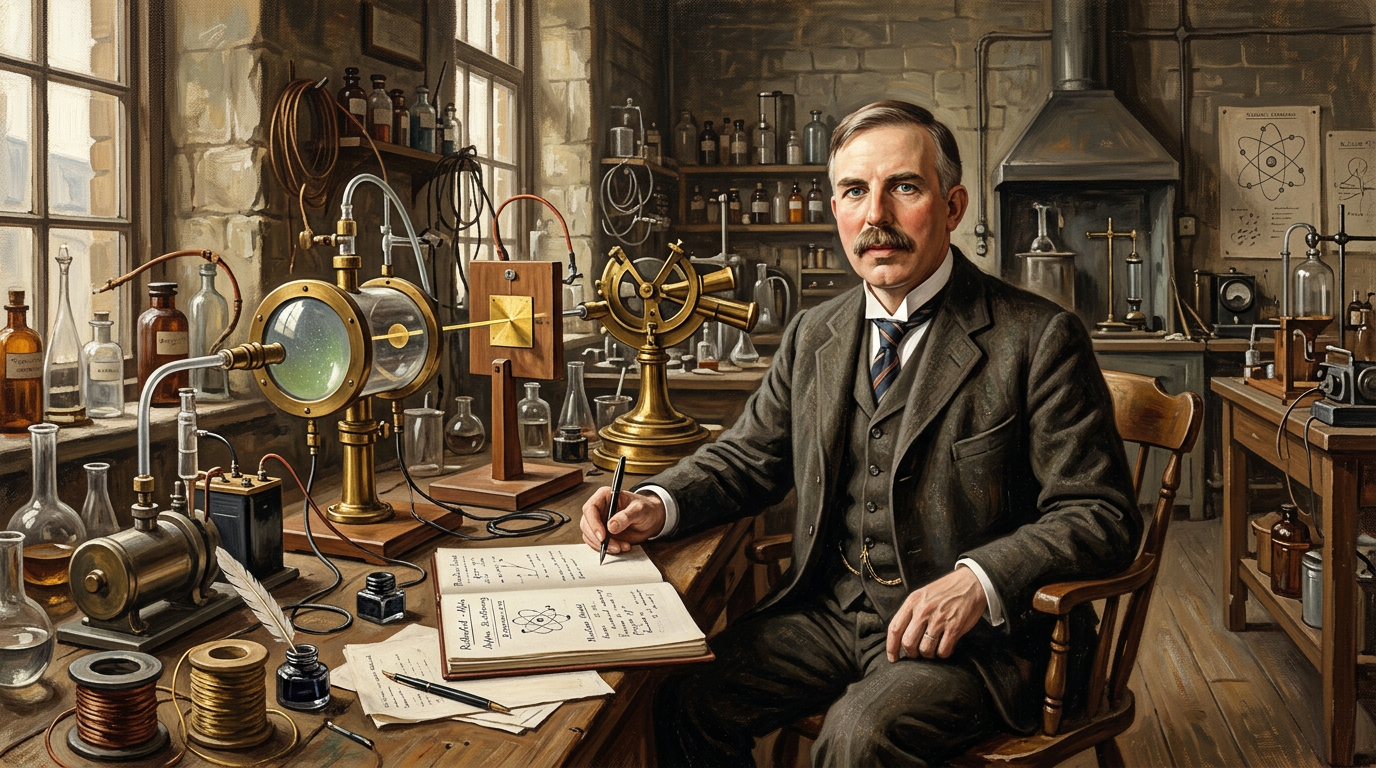
Ernest Rutherford
1871–1937 · Physicist
Ernest Rutherford was a New Zealand-born physicist whose experiments with radioactivity and alpha particles revealed that atoms have a tiny, dense nucleus — the foundation of all nuclear physics.
“All science is either physics or stamp collecting.”
Rutherford received the 1908 Nobel Prize in Chemistry, not physics — a fact he found ironic, since he once said all science is either physics or stamp collecting.
Why is this scientist famous?
Discovering the nuclear structure of the atom and pioneering the field of nuclear physics.
Rutherford discovered that atoms have a tiny, dense nucleus — the core that holds almost all an atom's mass. That discovery is the starting point for nuclear power, cancer radiation therapy, and our understanding of how elements are built. Every nuclear reactor and PET scan traces back to the question he asked about what lies inside the atom.
Ernest's story
Early Life
Born on a farm near Brightwater, New Zealand, Rutherford was the fourth of twelve children. He won a scholarship to Canterbury College in Christchurch, where he earned three degrees and began investigating radio waves. In 1895 he won a second scholarship to Cambridge University's Cavendish Laboratory, where he worked under J.J. Thomson, the discoverer of the electron.
Radioactivity and Half-Life
At McGill University in Montreal, Rutherford discovered that radioactive decay follows a predictable exponential law and coined the terms alpha and beta for two types of radiation. He showed that radioactivity involves the actual transmutation of one element into another, overturning the ancient belief that atoms are indivisible and unchangeable. For this work he received the 1908 Nobel Prize in Chemistry — a subject he famously said he had never studied.
The Nuclear Atom
In 1909, at the University of Manchester, Rutherford's students Hans Geiger and Ernest Marsden conducted the gold foil experiment, firing alpha particles at a thin sheet of gold. Most passed straight through, but a few bounced back at large angles. Rutherford later said it was as if he had fired a shell at tissue paper and it bounced back. He realised the atom must be mostly empty space with a tiny, dense, positively charged centre — the nucleus. In 1911 he proposed the nuclear model of the atom, replacing the old 'plum pudding' model and laying the groundwork for Bohr's quantum atom.
Legacy
Rutherford also achieved the first artificial nuclear reaction, splitting the nitrogen nucleus in 1917, and he mentored a remarkable generation of physicists including Niels Bohr, James Chadwick, and Otto Hahn. He was knighted in 1914, elevated to the peerage as Lord Rutherford in 1931, and is widely regarded as the father of nuclear physics. He died in Cambridge in 1937 and is buried in Westminster Abbey near Newton and Darwin.
What did they discover?
The Nuclear Atom
Through the gold foil experiment, Rutherford showed that the atom consists of a tiny, dense, positively charged nucleus surrounded by mostly empty space — replacing the plum pudding model and founding nuclear physics.
Radioactive Half-Life
Discovered that radioactive elements decay at a characteristic, predictable rate, and used this to measure the age of the Earth for the first time.
Alpha and Beta Radiation
Identified and named two distinct types of radiation emitted by radioactive materials, and showed that alpha particles are helium nuclei.
First Artificial Nuclear Reaction
In 1917, Rutherford split the nitrogen nucleus by bombarding it with alpha particles, the first time a human being had deliberately transmuted one element into another.
Amazing facts
He received the 1908 Nobel Prize in Chemistry, a subject he famously said he had never studied.
The gold foil experiment was actually performed by his students Geiger and Marsden — Rutherford interpreted the results.
Element 104, rutherfordium, is named in his honour.
He appeared on New Zealand's $100 banknote.
He mentored at least ten future Nobel laureates during his career.
He described his discovery of the nucleus as 'the most incredible event that has ever happened to me in my life.'
Timeline
Born near Brightwater, New Zealand
Won a scholarship to the Cavendish Laboratory at Cambridge
Discovered alpha and beta radiation at McGill University
Received the Nobel Prize in Chemistry for work on radioactivity
Proposed the nuclear model of the atom from the gold foil experiment
Achieved the first artificial nuclear reaction by splitting nitrogen
Became director of the Cavendish Laboratory at Cambridge
Died in Cambridge and was buried in Westminster Abbey
Awards & honours
Related Super Scientists
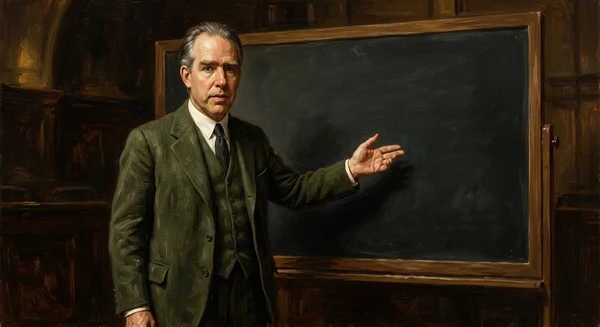
Niels Bohr
1885–1962 · Physicist
Developed the Bohr model of the atom and made foundational contributions to quantum mechanics.
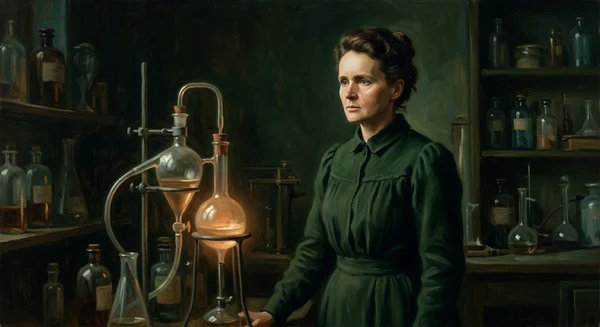
Marie Curie
1867–1934 · Physicist & Chemist
Discovering radioactivity and two new elements: radium and polonium.
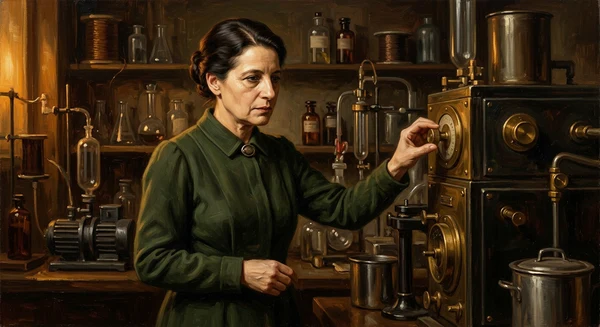
Lise Meitner
1878–1968 · Physicist
Co-discovered nuclear fission and explained how splitting atoms releases enormous energy.
Articles about this scientist
Sources & references
Books and educational kits about Ernest Rutherford coming soon