_(2).jpg)
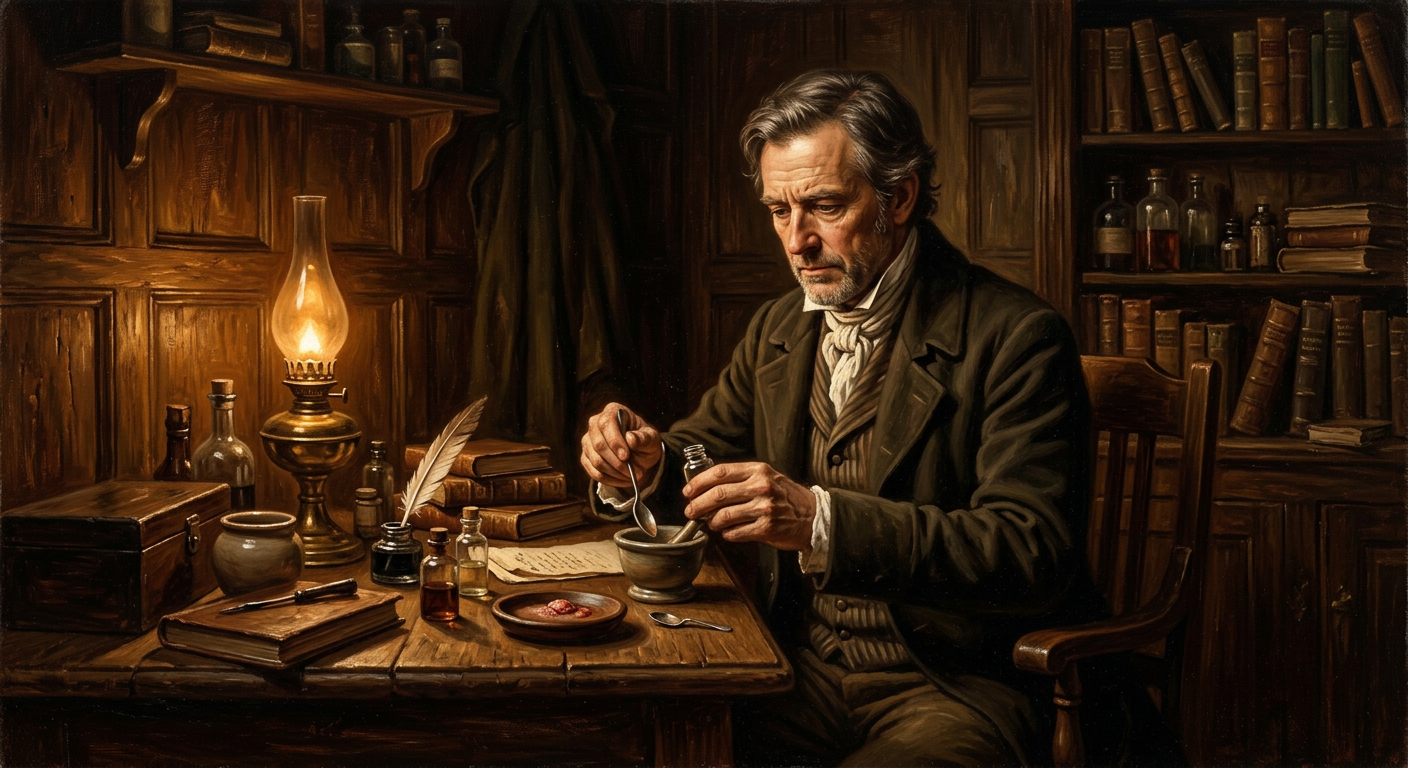
Edward Jenner
1749–1823 · Physician & Immunologist
Edward Jenner was an English country doctor who noticed that milkmaids never caught smallpox. His daring experiment with an eight-year-old boy proved that a harmless virus could protect against a deadly one — and changed medicine forever.
“The annihilation of the Small Pox, the most dreadful scourge of the human species, will be the final result of this practice.”
He kept a garden of hundreds of roses and wrote poetry, played the violin, and was a skilled balloonist — one of the first people in England to fly in a hot air balloon.
Why is this scientist famous?
Creating the world’s first vaccine, against smallpox, and founding the science of immunology.
Jenner invented vaccination by noticing that people who caught a mild disease called cowpox never caught deadly smallpox. That one observation led to the end of smallpox — one of the deadliest diseases in history — and launched every vaccine that protects you today, from your flu shot to the COVID-19 vaccine.
Edward's story
A Country Doctor’s Curiosity
Edward Jenner was born in Berkeley, a small market town in Gloucestershire, England, the son of the local vicar. Orphaned by age five, he was raised by an older brother and sent to grammar school nearby. As a boy he developed a deep love of nature, collecting fossils, observing birds, and sketching the countryside. At 13 he was apprenticed to a country surgeon, where he learned the practical medicine of the day — bloodletting, purging, and bone-setting. He later trained at St George’s Hospital in London under the great surgeon John Hunter, who became his mentor and lifelong friend.
The Milkmaids’ Secret
Smallpox was one of the most terrifying diseases in human history — it killed around 400,000 people a year in Europe alone, and left survivors blind or deeply scarred. In Gloucestershire, Jenner heard a recurring rumour: milkmaids who had caught cowpox, a mild disease from cows, never seemed to catch smallpox. The observation was folk wisdom, but Jenner’s genius was to take it seriously. John Hunter had taught him to test his ideas with experiments, not just speculate. For years he observed, questioned, and waited for the right opportunity to test whether cowpox truly protected against smallpox.
The Experiment That Changed the World
On 14 May 1796, Jenner carried out one of the most famous experiments in medical history. He took matter from a cowpox sore on the hand of a milkmaid named Sarah Nelmes and scratched it into the arm of an eight-year-old boy named James Phipps, the son of his gardener. The boy developed a mild fever and a small sore, but recovered within days. Weeks later, Jenner deliberately exposed Phipps to smallpox — a terrifying step. The boy did not get sick. Jenner repeated the experiment on other children, including his own infant son, with the same result. He called the procedure ‘vaccination,’ from the Latin word for cow, ‘vacca.’
Scepticism and Triumph
Jenner’s paper describing vaccination was rejected by the Royal Society, who told him he should not ‘risk his reputation’ by presenting something so unconventional. He published the work himself in 1798 as a small booklet called ‘An Inquiry into the Causes and Effects of the Variolae Vaccinae.’ The medical establishment mocked him — a famous cartoon showed people sprouting cow parts after being vaccinated. But the results were undeniable. Within a few years, vaccination was being practised across Europe and America. Napoleon, despite being at war with England, had his own troops vaccinated and called Jenner ‘one of the greatest benefactors of mankind.’
Later Years and Legacy
Jenner refused to patent his vaccine, insisting it should be freely available to all. He continued his medical practice in Berkeley, seeing patients for free and vaccinating anyone who came to his door. He served as a physician to King George IV but preferred country life to the London court. He died of a stroke in 1823, aged 73, in the same house where he was born. His work had already saved countless lives — smallpox vaccination spread so widely that by 1980, the World Health Organization declared smallpox eradicated, the only human disease ever deliberately eliminated. Jenner never lived to see that day, but every modern vaccine — from polio to COVID-19 — traces its lineage back to his experiment with a milkmaid and a brave little boy.
What did they discover?
The First Vaccine
Jenner proved that inoculation with cowpox — a mild animal disease — could protect against smallpox, one of history’s deadliest killers. He coined the word ‘vaccination’ from ‘vacca,’ the Latin for cow.
Proof That One Virus Could Protect Against Another
His experiment with James Phipps established the principle of cross-protection: a harmless virus can train the immune system to fight a deadly one. This is the foundation of all modern vaccinology.
Free and Open Distribution
Jenner refused to patent his vaccine and supplied it free of charge, ensuring it spread rapidly around the world rather than being restricted to those who could pay.
Amazing facts
He was one of the first people in England to fly in a hot air balloon, ascending in 1784 just a year after the Montgolfier brothers’ first flights in France.
He was an accomplished violinist and wrote poetry throughout his life, once composing a verse about the song of the cuckoo.
His house in Berkeley had a garden with over 300 varieties of rose, and he was a keen naturalist who studied hedgehogs and the migration of birds.
He vaccinated his own 11-month-old son to test whether the protection could be given to infants — a bold and controversial step.
Napoleon Bonaparte, despite being at war with England, ordered his entire army vaccinated and released English prisoners at Jenner’s request.
The word ‘vaccine’ comes from ‘vacca,’ the Latin word for cow, because Jenner’s first vaccine came from cowpox.
Timeline
Born in Berkeley, Gloucestershire, England
Apprenticed to a country surgeon in nearby Sodbury
Moved to London to study under surgeon John Hunter at St George’s Hospital
Returned to Berkeley to practise as a country doctor
Performed the first successful vaccination on eight-year-old James Phipps
Published ‘An Inquiry into the Causes and Effects of the Variolae Vaccinae’
The Royal Jennerian Society was founded to promote free vaccination
Elected a member of the Royal Society of Göttingen
Died in Berkeley, age 73
Awards & honours
Related Super Scientists
Jonas Salk
1914–1995 · Virologist and Medical Researcher
Developing the first safe and effective polio vaccine, which ended a disease that paralysed and killed children by the thousands.
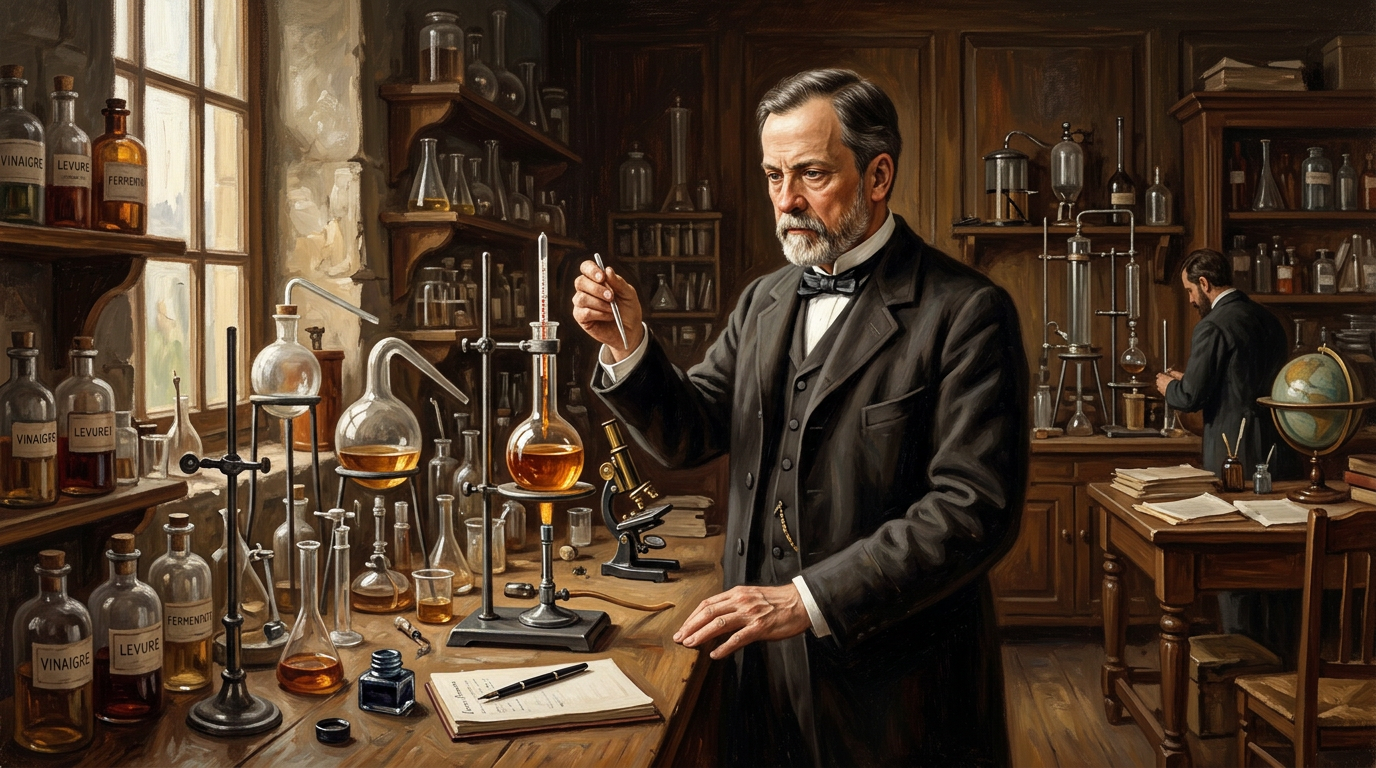
Louis Pasteur
1822–1895 · Chemist and microbiologist
Proving that germs cause disease, developing pasteurisation, and creating the first rabies vaccine.
Sources & references
Books and educational kits about Edward Jenner coming soon