_(2).jpg)
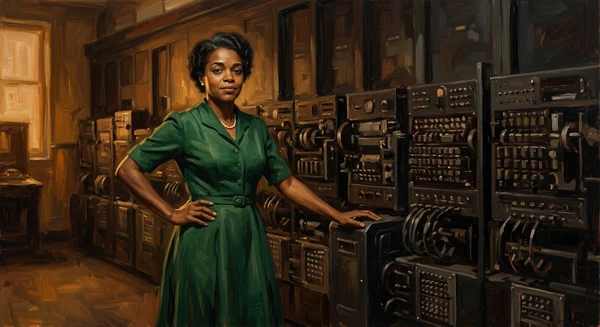
Dorothy Vaughan
1910–2008 · Mathematician & Computer Programmer
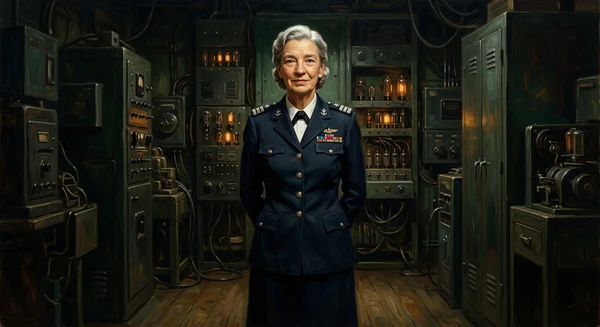
Dorothy Vaughan was a mathematician at NASA who became the agency's first Black supervisor. She taught herself and her team the FORTRAN programming language, helping pave the way from human "computers" to electronic computing.
“I changed what I could change and moved on from what I could not.”
Vaughan was NASA's first Black manager — and when she saw electronic computers coming, she taught herself FORTRAN so she wouldn't be replaced, then taught her entire team to program too.
Why is this scientist famous?
NASA's first Black supervisor and a pioneer of FORTRAN programming.
Dorothy Vaughan was one of NASA's first Black supervisors and taught herself computer programming so she would not be replaced by machines — instead, she led the transition to them. Her story, and those of her fellow "human computers," shows how staying curious and adaptable can open doors that others try to keep closed.
Dorothy's story
Early Life
Born in 1910 in Kansas City, Missouri, Vaughan graduated from high school at 15 and earned a mathematics degree from Wilberforce University at 19. She taught high school math during the Great Depression — one of the few careers open to Black women with math degrees.
West Area Computers
In 1943, Vaughan joined NACA (later NASA) at Langley Research Center as a "human computer" — one of the Black women who performed mathematical calculations by hand. In 1949, she was promoted to supervise the West Area Computing unit, becoming NASA's first Black supervisor. She fought for equal pay and promotions for her team.
Embracing Electronic Computing
When NASA installed its first IBM electronic computers in the 1950s, Vaughan recognised that human computers would soon be replaced. She taught herself FORTRAN — one of the first programming languages — and then trained her team to program the new machines. This transition saved her team's jobs and made them some of the earliest programmers at NASA.
Legacy
Vaughan worked at Langley for 28 years. She was a quiet pioneer whose contributions were largely unknown until the 2016 book and film Hidden Figures brought her story to millions. She died in 2008 at age 98, just before her story became famous. She paved the way for future generations of women and people of colour in computing and space science.
What did they discover?
NASA's First Black Supervisor
Became the first Black supervisor at NASA (then NACA) in 1949, leading the West Area Computing unit and advocating for her team.
Early FORTRAN Programming
Taught herself and her team FORTRAN, making the transition from human computing to electronic computing and becoming one of NASA's earliest programmers.
Amazing facts
She was NASA's first Black supervisor — but was not allowed to use the same bathroom as white colleagues.
She taught herself FORTRAN from a manual, then trained her entire team to program IBM computers.
She was played by Octavia Spencer in the 2016 film Hidden Figures.
She graduated from college at age 19 with a mathematics degree.
She worked at NASA for 28 years, from 1943 to 1971.
Her West Area Computing team included Katherine Johnson, who calculated trajectories for the first American space flights.
Timeline
Born in Kansas City, Missouri on September 20
Earned her mathematics degree from Wilberforce University at age 19
Joined NACA (later NASA) as a human computer at Langley Research Center
Became supervisor of the West Area Computing unit — NASA's first Black supervisor
NACA became NASA; Vaughan joined the new electronic computing division
Taught herself FORTRAN and trained her team to program IBM computers
Retired from NASA after 28 years
Died in Hampton, Virginia on November 10, age 98
Portrayed by Octavia Spencer in the film Hidden Figures
Awards & honours
Related Super Scientists
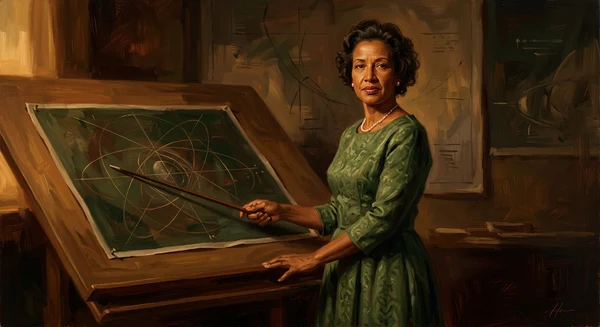
Katherine Johnson
1918–2020 · Mathematician
Calculating the trajectories that put the first Americans into space and on the Moon.
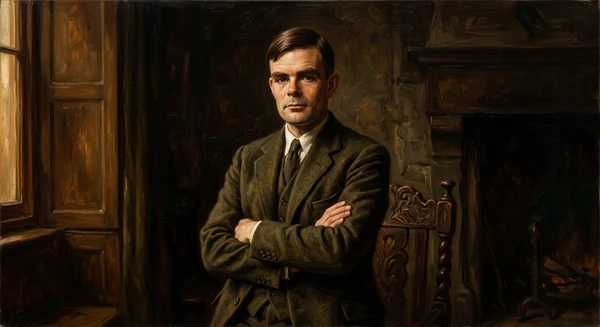
Alan Turing
1912–1954 · Mathematician & Computer Scientist
Breaking Nazi codes and founding the science of artificial intelligence.
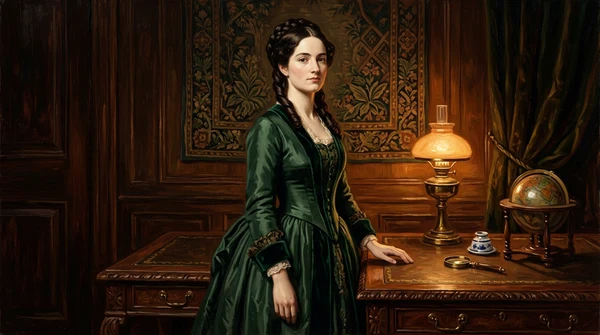
Ada Lovelace
1815–1852 · Mathematician
Writing the first computer algorithm, a century before electronic computers existed.
Sources & references
Books and educational kits about Dorothy Vaughan coming soon