_(2).jpg)
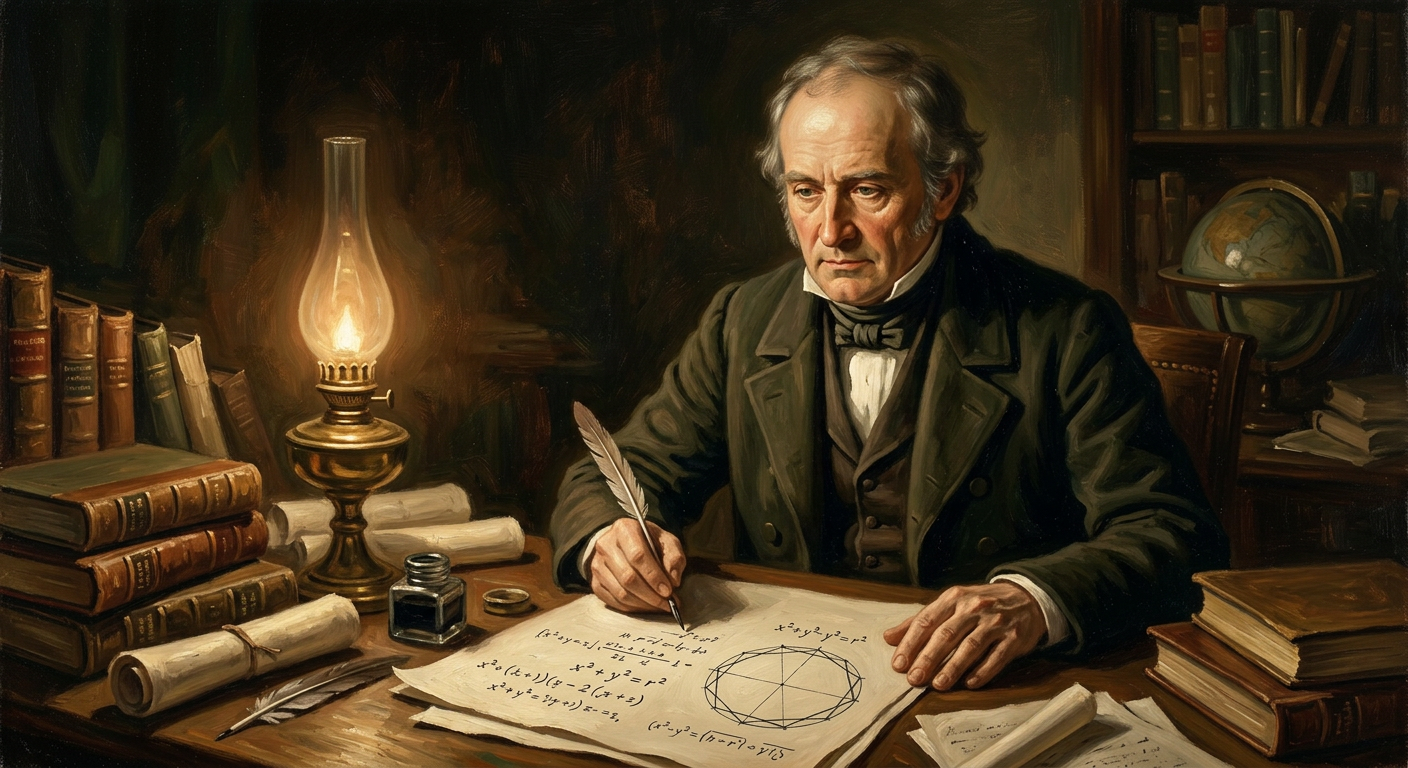
Carl Friedrich Gauss
1777–1855 · Mathematician & Physicist
Carl Friedrich Gauss was a German mathematician of astonishing range and depth, whose work transformed number theory, geometry, statistics, and astronomy. Known as the Prince of Mathematicians, he made his first major discovery at 15 and kept producing brilliant insights until his death at 77.
“Mathematics is the queen of the sciences and number theory is the queen of mathematics.”
He discovered a method for constructing a regular 17-sided polygon using only a ruler and compass — the first such advance in 2,000 years — and asked for it to be carved on his tombstone.
Why is this scientist famous?
Making groundbreaking contributions to number theory, geometry, astronomy, and statistics — often called the ‘Prince of Mathematicians.’
Gauss is called the "prince of mathematics" because his work shows up everywhere — from the way your phone corrects GPS errors to how scientists spot patterns in data. If you have ever used a bell curve to understand test scores or probabilities, you have used his ideas. He showed that maths is not just numbers, but a way to describe how the world behaves.
Carl's story
A Prodigy in Brunswick
Carl Friedrich Gauss was born in 1777 in Brunswick, Germany, to poor, uneducated parents. His father worked as a gardener, bricklayer, and canal tender; his mother could barely read. But from the earliest age, Gauss showed signs of extraordinary ability. The famous story goes that at age three he corrected his father’s arithmetic when he was calculating wages for his workers. At seven, his teacher set the class the task of adding all the numbers from 1 to 100, expecting to keep them busy for an hour. Gauss produced the answer — 5,050 — in seconds, having spotted that pairing the numbers from opposite ends always gave 101, and there were 50 such pairs.
The Duke’s Protégé
Gauss’s talent was spotted by the Duke of Brunswick, who became his patron and paid for his education — first at the local gymnasium, then at the Collegium Carolinum, and finally at the University of Göttingen. At 15, Gauss made his first major discovery: a method for constructing a regular 17-sided polygon using only a ruler and compass, a problem that had stumped mathematicians for 2,000 years since the ancient Greeks. He was so excited that he decided to abandon his plan to study languages and devote himself to mathematics instead.
Number Theory and the Disquisitiones
In 1801, at just 24, Gauss published ‘Disquisitiones Arithmeticae,’ a landmark book that laid the foundations of modern number theory. It introduced modular arithmetic, proved the fundamental theorem of arithmetic (that every number can be uniquely broken into prime factors), and solved problems that had been open for centuries. The book was so dense and advanced that many mathematicians of the day could not understand it. Gauss’s motto was ‘Pauca sed matura’ — ‘Few but ripe’ — meaning he would publish only polished, complete work, which led him to sit on many discoveries for years.
Astronomy and the Lost Planet
In 1801, the astronomer Giuseppe Piazzi discovered a new celestial body, Ceres, but it disappeared behind the sun before its orbit could be determined. Gauss took the sparse observational data and calculated the orbit using his new method of least squares, predicting where Ceres would reappear. When astronomers pointed their telescopes at his predicted position, there it was. This feat made Gauss famous across Europe and he was appointed director of the Göttingen Observatory, a post he held for the rest of his life.
The Prince of Mathematicians
Gauss’s range was breathtaking. In statistics, he developed the normal distribution, now called the Gaussian distribution. In geometry, he proved that a curved surface’s properties could be measured independently of the space around it — a discovery that laid the groundwork for Einstein’s general relativity decades later. In physics, he worked on magnetism and electricity with his friend Wilhelm Weber, and the unit of magnetic flux is named the gauss in his honour. He also pioneered non-Euclidean geometry, discovering that Euclid’s parallel postulate might not hold — but, characteristically, he sat on this explosive finding to avoid controversy.
Legacy
Gauss died in Göttingen in 1855, aged 77, having shaped mathematics more than anyone since Newton. He was nicknamed the ‘Prince of Mathematicians’ (Princeps Mathematicorum) in his lifetime, and the title has stuck. He trained a generation of leading mathematicians, including Bernhard Riemann and Richard Dedekind. His notebooks, opened after his death, revealed that he had anticipated discoveries later credited to others — non-Euclidean geometry, quaternions, and even elements of topology — sometimes decades earlier, but had not published them because they were not yet ‘ripe.’ He remains the benchmark by which mathematical greatness is measured.
What did they discover?
Constructing the Regular 17-Gon
At 18, Gauss proved that a regular polygon with 17 sides can be constructed with only a ruler and compass — the first such discovery in 2,000 years. He considered this his greatest achievement and asked for it to be carved on his tombstone.
Disquisitiones Arithmeticae
His 1801 book laid the foundations of modern number theory, introducing modular arithmetic, proving the fundamental theorem of arithmetic, and solving problems that had been open for centuries.
Predicting the Orbit of Ceres
Using his new least-squares method, Gauss calculated the orbit of the newly discovered asteroid Ceres from sparse data, enabling astronomers to find it again after it was lost behind the sun.
The Gaussian (Normal) Distribution
He developed the bell-shaped normal distribution that underlies modern statistics, used everywhere from scientific measurement to grading curves.
Theorema Egregium
His ‘remarkable theorem’ proved that a surface’s curvature can be measured entirely from within the surface, without reference to the surrounding space — the mathematical foundation that Einstein later used for general relativity.
Non-Euclidean Geometry
Gauss secretly discovered that Euclid’s parallel postulate could be denied without contradiction, anticipating Lobachevsky and Bolyai by decades, but chose not to publish to avoid controversy.
Amazing facts
At age three, he corrected his father’s wage calculations for his workers — the first recorded sign of his mathematical genius.
When his teacher asked the class to add the numbers 1 to 100, seven-year-old Gauss answered 5,050 in seconds by pairing numbers from opposite ends.
He kept a secret diary of his mathematical discoveries in tiny handwriting, many of which anticipated work later credited to others.
He discovered non-Euclidean geometry years before Lobachevsky and Bolyai but never published it, writing to a friend that he feared ‘the clamour of the Boeotians’ — a term for narrow-minded critics.
The unit of magnetic flux density is named the ‘gauss’ in his honour, reflecting his work on magnetism with Wilhelm Weber.
He invented the heliotrope, a device that uses mirrors to reflect sunlight over long distances for surveying.
He taught himself Russian in his sixties and corresponded with mathematicians in St Petersburg, though he never visited Russia.
He turned down a prestigious offer to move to Berlin, preferring to stay in his quiet observatory in Göttingen for his entire career.
His personal motto was ‘Pauca sed matura’ — ‘Few but ripe’ — meaning he would only publish work that was completely finished.
His brain was preserved after his death and studied by scientists, who found it had unusually dense convolutions in the cerebral cortex.
Timeline
Born in Brunswick, Germany
Corrected his father’s arithmetic at age seven
Entered the University of Göttingen, funded by the Duke of Brunswick
Discovered how to construct the regular 17-gon with ruler and compass
Published ‘Disquisitiones Arithmeticae’ and predicted the orbit of Ceres
Appointed director of the Göttingen Observatory
Began a geodetic survey of the Kingdom of Hanover
Invented the first electromagnetic telegraph with Wilhelm Weber
Celebrated his 50th anniversary at Göttingen with international acclaim
Died in Göttingen, age 77
Awards & honours
Related Super Scientists
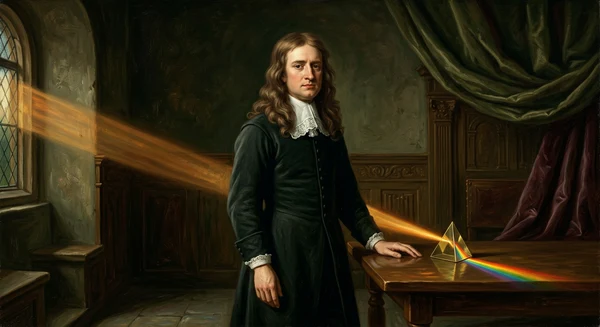
Isaac Newton
1643–1727 · Physicist & Mathematician
Formulating the laws of motion and universal gravitation.
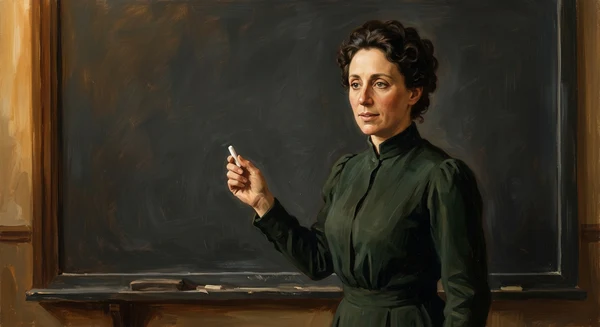
Emmy Noether
1882–1935 · Mathematician
Proved Noether's theorem, linking symmetry and conservation laws — a foundation of modern physics.
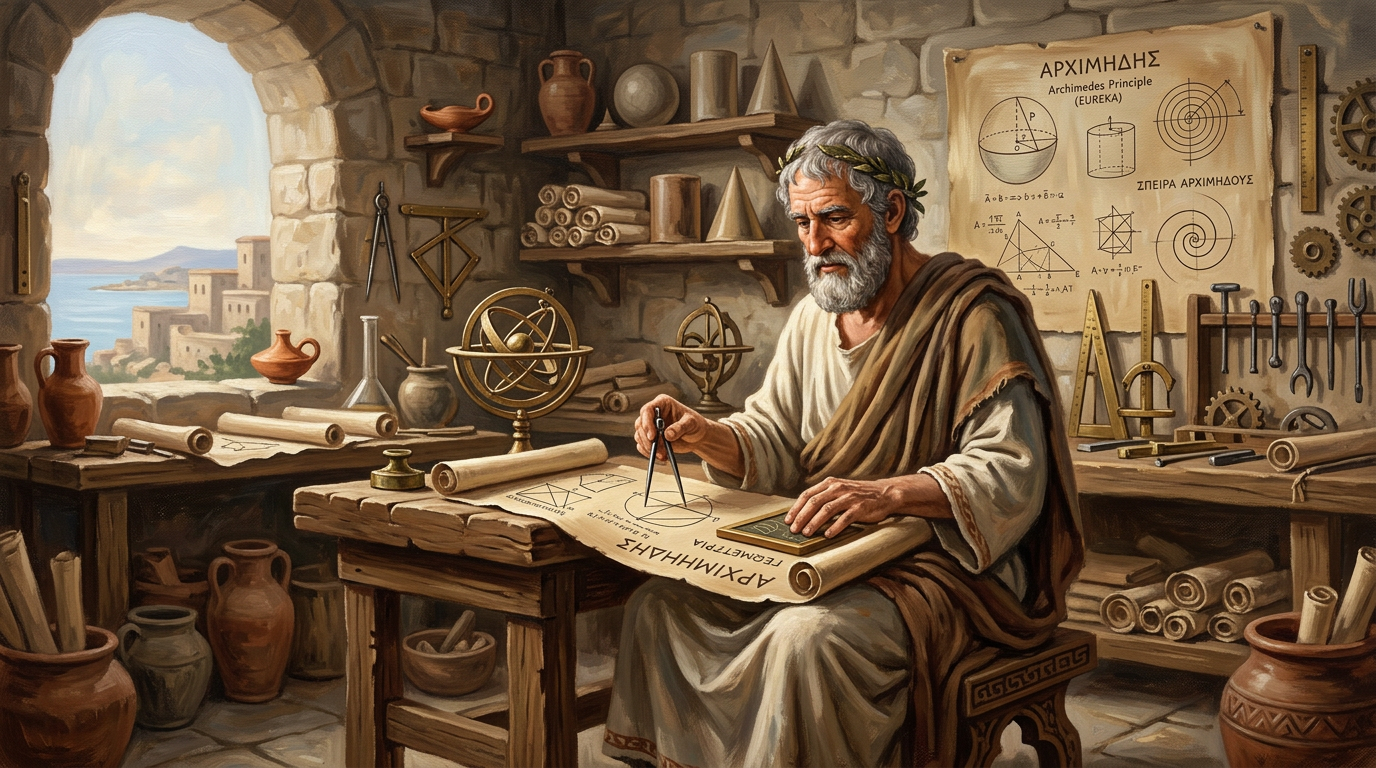
Archimedes
-287–-212 · Mathematician and inventor
Discovering the principles of buoyancy, the lever, and pioneering mathematical methods that anticipated calculus.
Sources & references
Books and educational kits about Carl Friedrich Gauss coming soon