_(2).jpg)
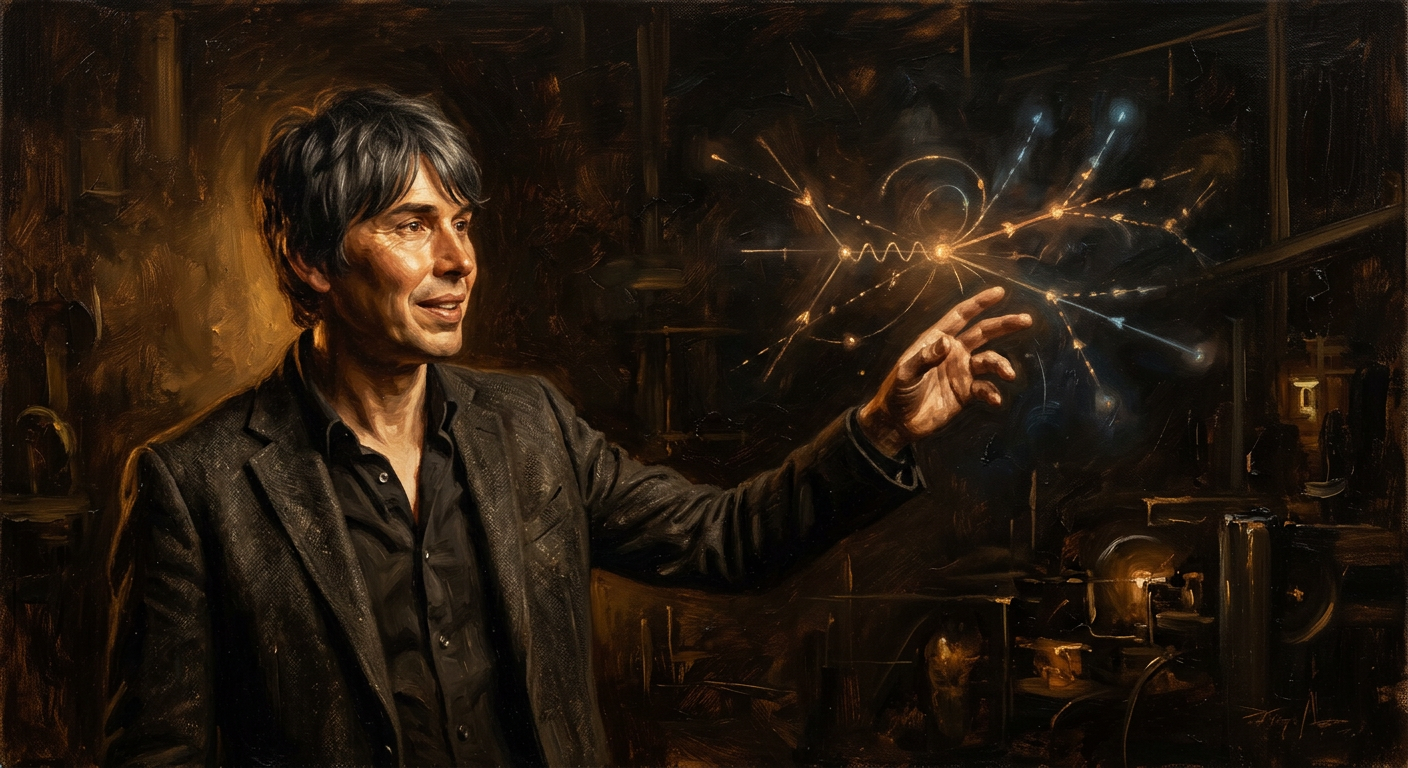
Brian Cox
1968–present · Particle Physicist
A particle physicist at the University of Manchester who became a household name through his BBC science programmes.
“We are the cosmos made conscious and life is the means by which the universe understands itself.”
Before his physics career took off, Cox played keyboards in the 1990s pop band D:Ream, whose song “Things Can Only Get Better” topped the UK charts.
Why is this scientist famous?
A particle physicist who became one of Britain’s best-loved science broadcasters, bringing physics to millions on television.
Brian's story
From Oldham to the Stars
Brian Cox was born in 1968 in Oldham, Greater Manchester, the son of a banker father who worked at the local Yorkshire Bank. As a teenager at Hulme Grammar School, he was not an obvious future scientist — he was more interested in music and dancing than in equations. He got a D in his maths A-level on his first attempt. But he was also fascinated by the stars, and a copy of Carl Sagan’s book Cosmos, given to him by a teacher, sparked something deep. He read physics books voraciously, taught himself the maths he had missed, and eventually enrolled at the University of Manchester to study physics — a subject he chose, he later admitted, partly because it seemed the hardest thing he could do. It was there, in the laboratories and lecture halls of Manchester, that his talent for understanding the fundamental rules of the universe began to shine.
Rock Star to Physicist
Before he finished his degree, Cox had already had a taste of fame of a very different kind. In the early 1990s, while still an undergraduate, he joined the pop band D:Ream as a keyboard player. The band’s single “Things Can Only Get Better” topped the UK charts in 1993 and was later used as the Labour Party’s 1997 election campaign song. Cox toured with the band, appeared on Top of the Pops, and played at gigs across Britain. But the pull of physics proved stronger than the lure of pop stardom. He left the band, completed his degree, and went on to earn a PhD in particle physics at Manchester. His doctoral research involved experiments at the DESY laboratory in Hamburg, studying the fundamental particles that make up the universe. He was never going back to music full-time — but he would soon find that his performing instincts were exactly what science communication needed.
The Collider and the Camera
Cox became a research physicist at the University of Manchester and joined the ATLAS experiment at CERN’s Large Hadron Collider — the enormous particle accelerator on the Swiss-French border that smashes protons together at nearly the speed of light to recreate conditions from the birth of the universe. He worked on the detector’s sensitive electronics and contributed to the search for the Higgs boson, the particle that gives other particles their mass. But alongside his research, Cox began appearing on radio and television, explaining physics with a clarity and enthusiasm that captivated audiences. His breakthrough came with the BBC series Wonders of the Solar System in 2010, followed by Wonders of the Universe and Wonders of Life. Filmed in stunning locations from Iceland to Nepal, these programmes brought the scale and beauty of the cosmos into millions of living rooms. Cox became one of the few scientists in Britain recognisable to people who had no particular interest in science.
Making Physics Feel Like Magic
Cox has continued to produce popular science series, including The Planets, Human Universe, and Universe, and he co-authored several bestselling books with the physicist Andrew Cohen. He has been a vocal advocate for science funding and education, arguing that curiosity-driven research is one of the greatest investments a society can make. He was awarded an OBE in 2010 for services to science. He still works at the University of Manchester and at CERN, and he still tours — not with a band this time, but with a live science show that fills arenas. His gift is the ability to make vast, abstract ideas — the size of the universe, the nature of time, the behaviour of subatomic particles — feel personal, urgent, and beautiful. For a generation of children growing up in Britain, Brian Cox is the face of physics, and for many of them, the reason they first looked up at the night sky and wanted to understand it.
What did they discover?
Work on the ATLAS Experiment at CERN
Cox contributed to the ATLAS detector at the Large Hadron Collider, one of the experiments that confirmed the existence of the Higgs boson in 2012 — a particle predicted decades earlier that gives other particles their mass.
Wonders of the Solar System
His 2010 BBC television series brought the planets and the physics of the solar system to a mass audience, making him one of Britain’s most recognisable science communicators.
Advocacy for Science Education
Through television, books, arena tours, and public lectures, Cox has become a leading advocate for curiosity-driven science research and education, reaching audiences who would never otherwise encounter particle physics.
Amazing facts
Cox got a D in his maths A-level on his first attempt and had to retake it.
He played keyboards on D:Ream’s “Things Can Only Get Better”, which reached number one in the UK charts in 1993.
The same song was later used as the Labour Party’s 1997 election campaign theme.
He appeared on Top of the Pops before he appeared on any science programme.
He was awarded an OBE in 2010 for services to science.
His live science arena tours sell out venues normally reserved for rock bands.
Timeline
Born in Oldham, Greater Manchester
Joins the pop band D:Ream as keyboard player while studying physics at the University of Manchester
D:Ream’s “Things Can Only Get Better” reaches number one in the UK singles chart
Completes his PhD in particle physics at the University of Manchester
Becomes a member of the ATLAS experiment team at CERN’s Large Hadron Collider
Presents the BBC series Wonders of the Solar System, becoming a household name in Britain
Awarded an OBE for services to science
The ATLAS experiment at CERN confirms the discovery of the Higgs boson
Begins his first UK arena tour, bringing live science shows to tens of thousands of people
Awards & honours
Related Super Scientists
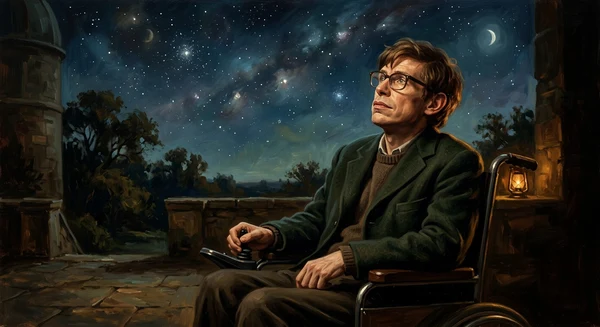
Stephen Hawking
1942–2018 · Theoretical Physicist & Cosmologist
Discovering that black holes emit radiation and writing "A Brief History of Time."
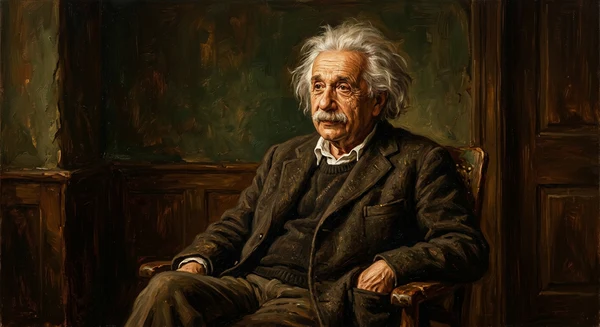
Albert Einstein
1879–1955 · Theoretical Physicist
Developing the theory of relativity and the equation E=mc².
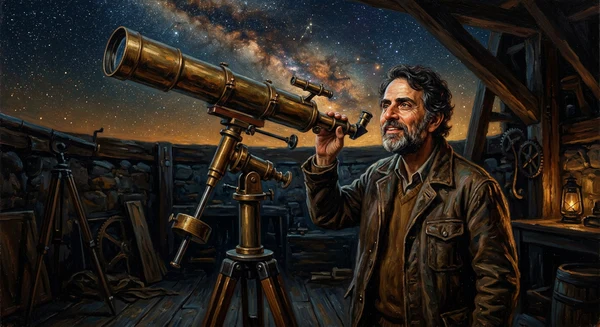
Carl Sagan
1934–1996 · Astronomer & Science Communicator
Created the Voyager Golden Record, wrote Cosmos, and inspired millions to love science.
Sources & references
Books and educational kits about Brian Cox coming soon