_(2).jpg)
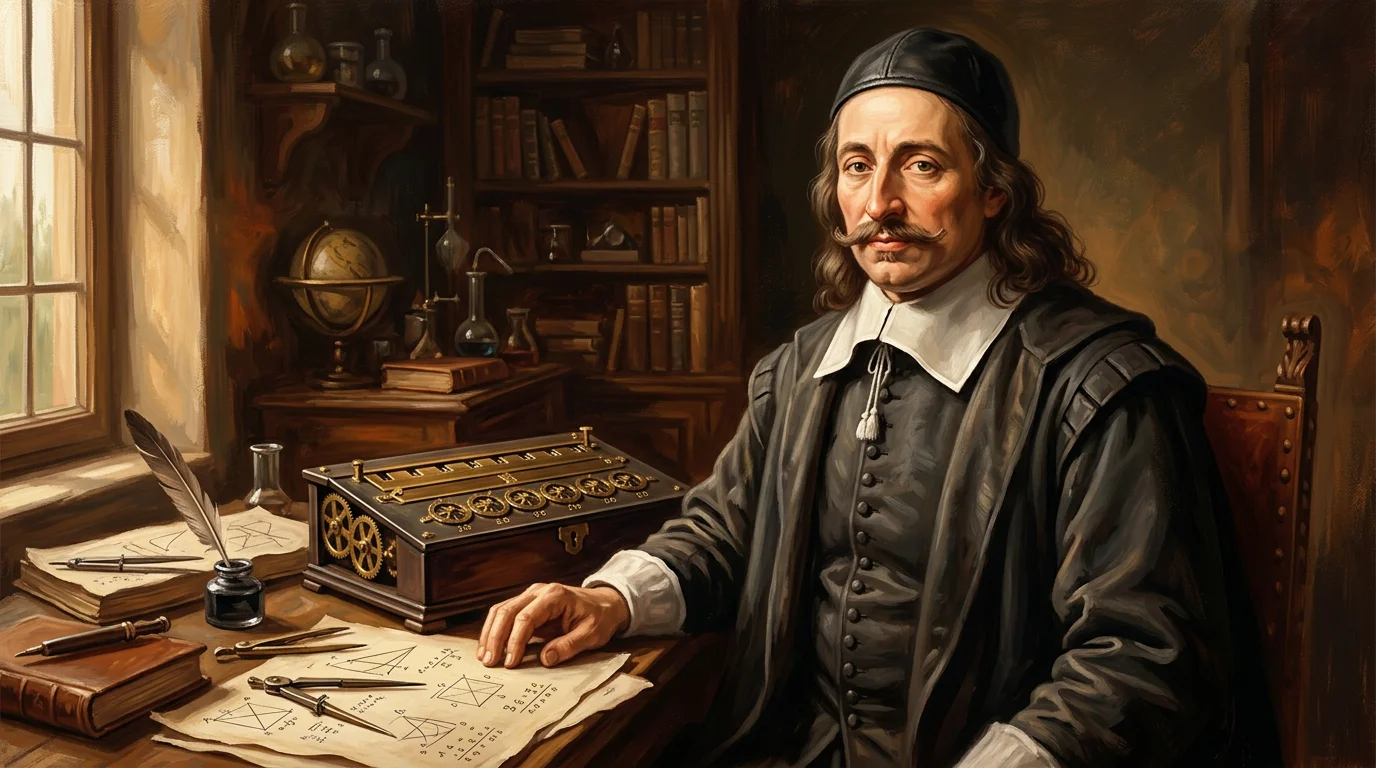
Blaise Pascal
1623–1662 · Mathematician and Physicist
A French prodigy who made breakthroughs in mathematics, physics, and computing before devoting his final years to philosophy and religion.
“The heart has its reasons which reason knows not.”
Pascal invented the mechanical calculator at age 19 to help his father collect taxes — it could add and subtract but not multiply, yet it is considered one of the earliest computing machines ever built.
Why is this scientist famous?
Pascal's Triangle, foundational work on probability theory, experiments proving that air has pressure, and the Pascaline — one of the first mechanical calculators.
Blaise's story
A Prodigy in Paris
Blaise Pascal was born in Clermont-Ferrand, France, the son of Étienne Pascal, a mathematician and local government official. His mother died when he was three, and his father took personal charge of his education. Concerned that mathematics might distract from the study of languages, Étienne forbade Blaise from studying geometry before the age of 12. But the boy was fascinated by the forbidden subject and began working out geometrical theorems on his own, discovering on his own that the angles of a triangle add up to 180 degrees. Astonished, his father relented and gave him a copy of Euclid. By 16, Pascal was presenting original mathematical work to the leading scholars of Paris.
The Pascaline
In 1642, at the age of just 19, Pascal designed and built a mechanical calculator to help his father, who had been appointed a tax commissioner in Rouen. The device, called the Pascaline, could add and subtract numbers directly and perform multiplication and division through repeated addition. It used a series of toothed wheels that carried from one digit to the next — the same principle used in mechanical calculators for the next 300 years. Pascal built several versions of the machine and spent considerable money trying to perfect and market it, but the hand-crafted metal gears were too expensive for commercial success. Nevertheless, the Pascaline stands as one of the first mechanical computing devices in history.
Experiments with Pressure
In the late 1640s Pascal turned his attention to physics, conducting a brilliant series of experiments on air pressure and vacuums. At the time, most scientists still followed Aristotle's view that a vacuum could not exist. Pascal proved them wrong. He showed that a barometer's mercury column is held up by the weight of the air, not by nature's 'abhorrence of a vacuum', and he designed an ingenious experiment to prove it. He had his brother-in-law carry a barometer up the Puy de Dôme, a mountain near Clermont, and found the mercury level dropped steadily with altitude — exactly as predicted if air pressure decreased with height. This single experiment established that the atmosphere has weight and that pressure falls with altitude.
Mathematics and Probability
Pascal made major contributions to mathematics throughout his life. He built on the work of earlier mathematicians to formalise the arrangement of binomial coefficients now known as Pascal's Triangle, a tool used in algebra, combinatorics, and probability. In 1654, after a correspondence with Pierre de Fermat about a gambling problem, the two men effectively founded the modern theory of probability. Their work on how to fairly divide the stakes in an interrupted game of chance laid the mathematical foundation for insurance, risk analysis, and statistics — fields that now underpin vast sectors of the modern economy.
The Pensées
Following a profound religious experience in 1654, Pascal abandoned science and mathematics almost entirely and devoted himself to philosophy and religion. He became associated with the Jansenist movement, a reform-minded Catholic sect centred at the Abbey of Port-Royal near Paris. He began writing a massive work defending Christianity against sceptics, which he never completed. His collected notes were published after his death as the 'Pensées' (Thoughts), now considered a masterpiece of French literature. In it he explored the human condition with psychological insight that was centuries ahead of its time, arguing that reason alone could not answer life's deepest questions.
Legacy
Pascal died in Paris in 1662 at the age of just 39, his health broken by years of illness. In his short life he had made pioneering contributions to three distinct fields — mathematics, physics, and computing — and then produced one of the most influential works in Western philosophy. The programming language Pascal, developed in the 1970s, was named in his honour. The SI unit of pressure, the pascal, also bears his name. Few scientists have left their mark on so many different areas of human knowledge in so short a life.
What did they discover?
The Pascaline
Built in 1642 when Pascal was just 19, the Pascaline was one of the first mechanical calculators in history. It could add and subtract using a system of interlocking gears, and used the carry mechanism that would underpin all mechanical calculators for the next three centuries.
Pascal's Triangle
Formalised the triangular arrangement of binomial coefficients, a powerful mathematical tool used in algebra, probability, and combinatorics. Though known to earlier mathematicians in Asia, Pascal's treatment was the most complete and influential in Western mathematics.
Probability Theory
Through his 1654 correspondence with Pierre de Fermat about gambling problems, Pascal co-founded the modern theory of probability. Their work laid the mathematical foundations for statistics, insurance, and risk analysis.
Atmospheric Pressure Experiments
Proved that air has weight and that pressure decreases with altitude by having a barometer carried up the Puy de Dôme mountain. This established the existence of atmospheric pressure and disproved the ancient belief that nature abhors a vacuum.
The Pensées
His unfinished philosophical masterpiece, published after his death in 1662, explored faith, reason, and the human condition. It remains one of the most influential works in Western philosophy and literature.
Amazing facts
Pascal's father forbade him from studying mathematics before age 12, so the boy secretly worked out that the angles of a triangle add up to 180 degrees on his own.
He invented the Pascaline mechanical calculator at 19 to help his father collect taxes — it could add and subtract but was too expensive to sell commercially.
Pascal had his brother-in-law carry a barometer up the Puy de Dôme mountain to prove that air pressure decreases with altitude — one of the most elegant experiments in physics history.
Pascal's correspondence with Pierre de Fermat about a gambling problem accidentally founded the entire modern theory of probability.
After a religious vision in 1654, Pascal abandoned science and mathematics for the remaining eight years of his life to write philosophy.
The programming language Pascal, created in the 1970s, was named in his honour, as was the SI unit of pressure, the pascal.
Pascal suffered from poor health throughout his life and died at just 39, having still managed to revolutionise three separate fields.
His Pensées, published after his death from unfinished notes, contains the famous 'Pascal's Wager' argument about the rationality of belief in God.
Timeline
Born in Clermont-Ferrand, France
Secretly discovered that the angles of a triangle sum to 180 degrees, despite being forbidden from studying mathematics
Invented the Pascaline, one of the first mechanical calculators, to help his father with tax calculations
Conducted experiments demonstrating that a vacuum could exist, challenging Aristotelian physics
Had his brother-in-law carry a barometer up the Puy de Dôme, proving air pressure decreases with altitude
Corresponded with Pierre de Fermat on gambling problems, co-founding probability theory
Experienced a profound religious vision and abandoned science for philosophy and religion
Published the first of his Provincial Letters, a celebrated work of religious polemic
Died in Paris, aged 39
Awards & honours
Related Super Scientists
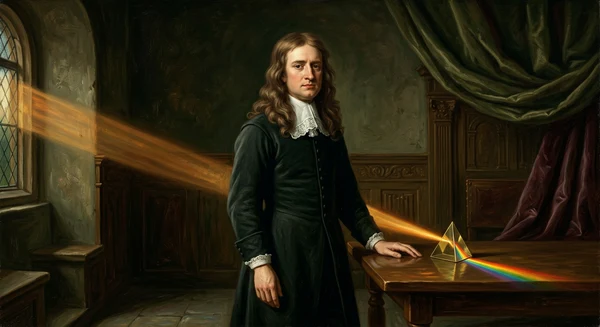
Isaac Newton
1643–1727 · Physicist & Mathematician
Formulating the laws of motion and universal gravitation.
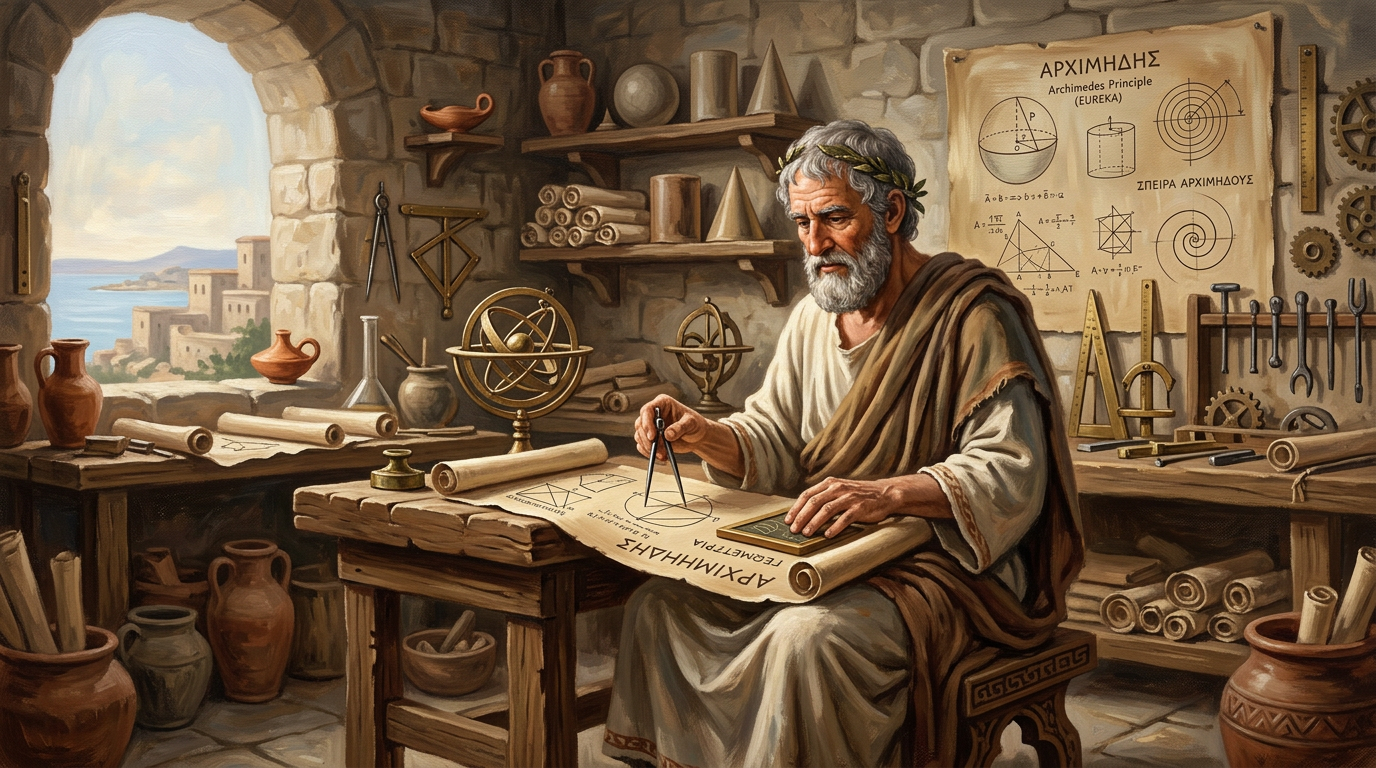
Archimedes
-287–-212 · Mathematician and inventor
Discovering the principles of buoyancy, the lever, and pioneering mathematical methods that anticipated calculus.
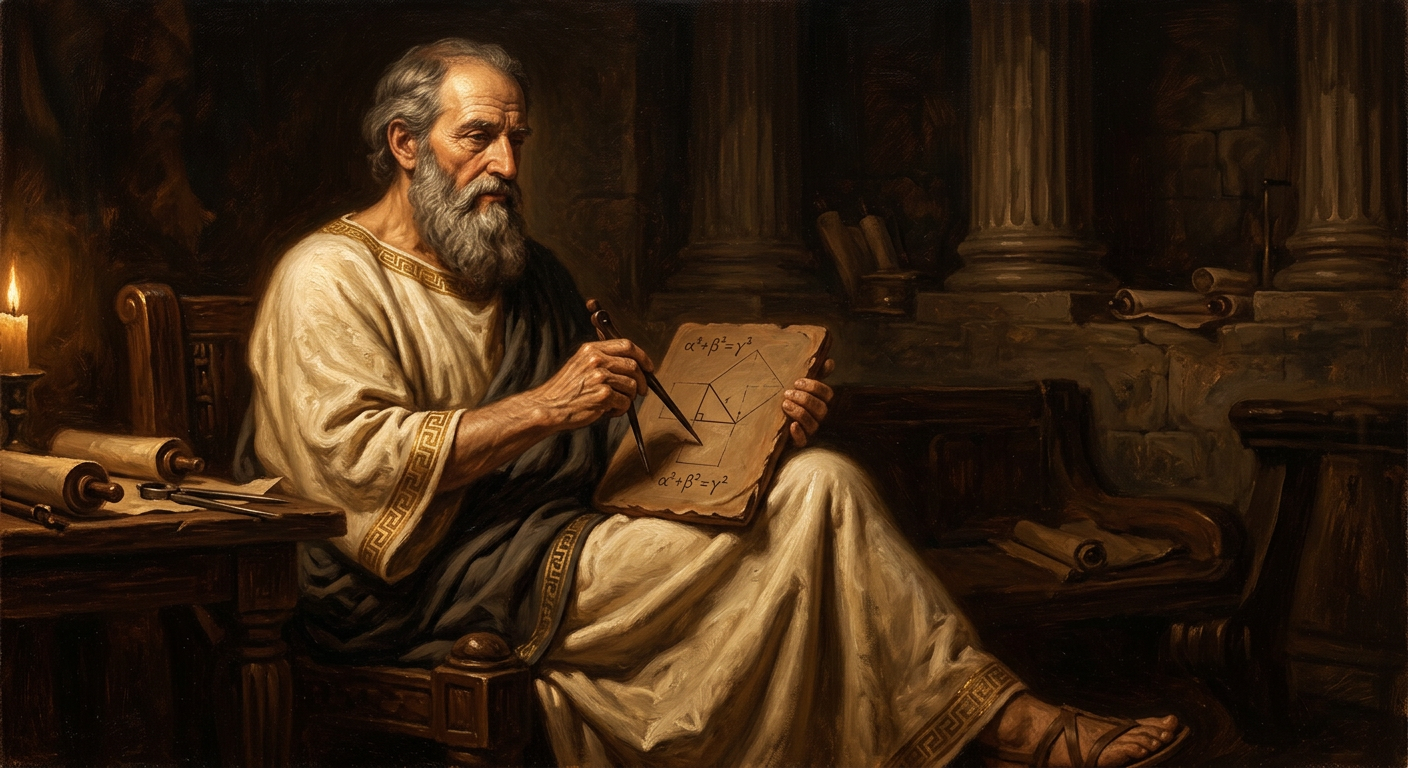
Pythagoras
-570–-495 · Mathematician and Philosopher
The ancient Greek philosopher and mathematician whose theorem about right-angled triangles is taught in every school — and who founded a mystical brotherhood of numbers.
Sources & references
Books and educational kits about Blaise Pascal coming soon