_(2).jpg)
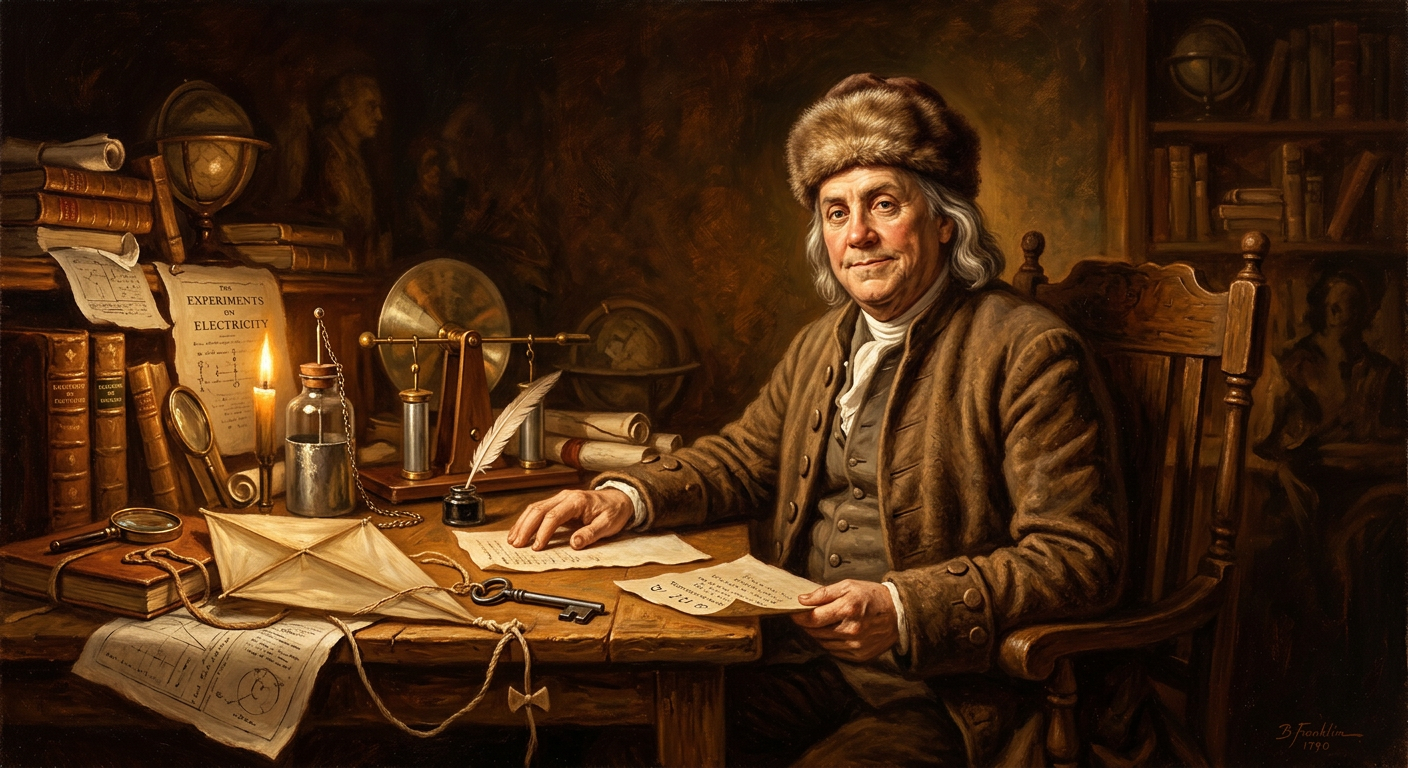
Benjamin Franklin
1706–1790 · Polymath: Scientist, Inventor, Statesman, and Printer
A self-made printer's apprentice who rose to become one of America's greatest scientists and founding fathers — a man who flew a kite in a thunderstorm and helped birth a nation.
“Tell me and I forget. Teach me and I may remember. Involve me and I learn.”
Franklin was the first person to use the terms 'battery', 'charge', 'conductor', and 'positive' and 'negative' in their electrical sense — the vocabulary of electricity that we still use today.
Why is this scientist famous?
The American polymath who proved lightning is electricity, invented the lightning rod and bifocals, and helped draft the Declaration of Independence.
Franklin's kite experiment proved lightning is electricity, leading to lightning rods that still protect buildings today. His curiosity about electricity paved the way for the lights, chargers, and batteries you use every day. He also invented bifocals and the lightning rod — practical tools that made everyday life safer and clearer.
Benjamin's story
A Printer''s Apprentice
Benjamin Franklin was born on 17 January 1706 in Boston, Massachusetts, the tenth son of a tallow chandler who had emigrated from England. His family was large and poor — there were 16 children, and Benjamin''s father could only afford two years of schooling. At 12, Franklin was apprenticed to his older brother James, a printer. He learned to set type, run a press, and write. When James refused to publish his younger brother''s work, 16-year-old Benjamin invented a pseudonym — Silence Dogood, a middle-aged widow — and slipped her letters under the printing house door. They became the most popular feature in the paper. When James discovered the trick, the brothers quarrelled, and Benjamin ran away to Philadelphia with barely a penny in his pocket.
The Self-Made Man
In Philadelphia, Franklin built a printing empire from nothing. By his early twenties, he owned his own shop, published the Pennsylvania Gazette, and wrote Poor Richard''s Almanack under the pseudonym Richard Saunders. The Almanack was a sensation — filled with weather predictions, astronomical data, and pithy wisdom like ''A penny saved is a penny earned.'' It sold 10,000 copies a year, making it the most popular publication in colonial America. By 42, Franklin was wealthy enough to retire from business and devote himself to what he called his ''favourite study'': science.
Kite and Key
Franklin''s most famous experiment came in June 1752. He had theorised that lightning was simply a massive electrical spark, but he needed proof. On a stormy afternoon in Philadelphia, he flew a kite made of a silk handkerchief and cedar crossbars, with a metal key tied to the end of the wet string. As thunder rumbled, he moved his knuckle toward the key — and felt a sharp electric shock. Sparks flew from the key. Lightning was electricity. The experiment made Franklin an international celebrity. The Royal Society of London awarded him its Copley Medal, the 18th century''s equivalent of the Nobel Prize, and elected him a Fellow.
The Lightning Rod
Franklin did not just discover the electrical nature of lightning — he did something about it. He invented the lightning rod: a pointed metal strip mounted on the roof of a building and connected by a wire to the ground. The rod would safely conduct lightning''s charge into the earth, protecting the building from fire. It was one of the most immediately useful inventions in history. Churches, whose tall spires had been favourite lightning targets for centuries, were among the first to install them. Franklin refused to patent the lightning rod — he believed scientific inventions should be freely shared for the public good.
Founding Father
Franklin''s scientific fame gave him extraordinary diplomatic power. He lived in London for many years as a representative of the American colonies, and later in Paris, where his fame as a scientist and his charm made him the most popular American in France. He persuaded the French to support the American Revolution with money, troops, and naval power — support that proved decisive in defeating Britain. He returned home to help draft the Declaration of Independence in 1776, then the Treaty of Paris in 1783, and finally the United States Constitution in 1787. He is the only person to have signed all four of America''s founding documents.
The End of a Remarkable Life
Franklin died on 17 April 1790 at the age of 84. His funeral in Philadelphia was attended by an estimated 20,000 people — the largest gathering the city had ever seen. In France, the National Assembly mourned him for three days. He had been a printer, a scientist, an inventor, a diplomat, a philosopher, a musician, and a revolutionary. He invented the lightning rod, bifocals, the Franklin stove, a glass armonica that Mozart composed music for, and a urinary catheter. He mapped the Gulf Stream, founded the University of Pennsylvania, established America''s first public library, and created its first volunteer fire department. His face is on the $100 bill — a fitting tribute for a man who started with almost nothing.
What did they discover?
Proving Lightning is Electricity
His 1752 kite experiment demonstrated that lightning is an electrical discharge, unifying the study of atmospheric phenomena with laboratory electricity and earning him the Royal Society''s Copley Medal.
The Lightning Rod
He invented the pointed metal lightning rod that safely channels electrical strikes into the ground, saving countless buildings from fire. He refused to patent it, believing inventions should serve the public freely.
Founding the Science of Electricity
He developed the single-fluid theory of electricity and coined the terms ''battery'', ''charge'', ''conductor'', ''positive'', and ''negative'' — the vocabulary that still defines the field today.
Bifocals and the Franklin Stove
He invented bifocal glasses (two lenses in one frame, so he could read and see far without switching pairs) and the Franklin stove, a fuel-efficient heating device that warmed homes using a fraction of the wood.
Mapping the Gulf Stream
He made detailed temperature measurements and charts of the Gulf Stream, the warm ocean current flowing up the American coast, reducing sailing times between America and Europe by weeks.
The Glass Armonica
He invented a musical instrument consisting of glass bowls of varying sizes mounted on a spinning spindle, played by touching the rims with wet fingers. Mozart and Beethoven both composed music for it.
Amazing facts
Franklin coined the electrical terms ''battery'', ''charge'', ''conductor'', ''positive'', and ''negative'' — the vocabulary of electricity still used today.
He had only two years of formal schooling and was largely self-taught, yet received honorary degrees from Harvard, Yale, Oxford, and the University of St Andrews.
He ran away from his apprenticeship in Boston at 17 and arrived in Philadelphia with one loaf of bread and almost no money.
He invented bifocals because he was tired of switching between reading glasses and distance glasses.
He refused to patent any of his inventions, including the lightning rod, believing that scientific inventions should be freely shared for the public good.
He is the only person to have signed all four of America''s founding documents: the Declaration of Independence, the Treaty of Alliance with France, the Treaty of Paris, and the Constitution.
He organised America''s first volunteer fire department, founded its first public library, and established the University of Pennsylvania — all before turning 40.
His glass armonica so impressed Mozart that the composer wrote a quintet and a solo piece specifically for the instrument.
He mapped the Gulf Stream by taking temperature measurements during his crossings of the Atlantic, reducing the journey from America to Europe by up to two weeks.
His face has been on the $100 bill since 1914 — a fitting tribute for a man who started life with almost nothing.
Timeline
Born in Boston, Massachusetts, the tenth son of a tallow chandler
Apprenticed to his brother James, a printer, in Boston
Ran away to Philadelphia with almost no money, finding work as a printer
Purchased the Pennsylvania Gazette and began building his printing empire
Published the first edition of Poor Richard''s Almanack under the pseudonym Richard Saunders
Founded the American Philosophical Society to promote scientific inquiry
Published Experiments and Observations on Electricity, outlining his electrical theories
Conducted the famous kite experiment in Philadelphia, proving lightning is electricity
Awarded the Royal Society''s Copley Medal for his electrical research and elected a Fellow
Signed the Declaration of Independence and sailed to France to seek support for the Revolution
Signed the Treaty of Paris, ending the American Revolutionary War
Signed the United States Constitution at the Constitutional Convention
Died in Philadelphia at age 84; 20,000 people attended his funeral
Awards & honours
Related Super Scientists
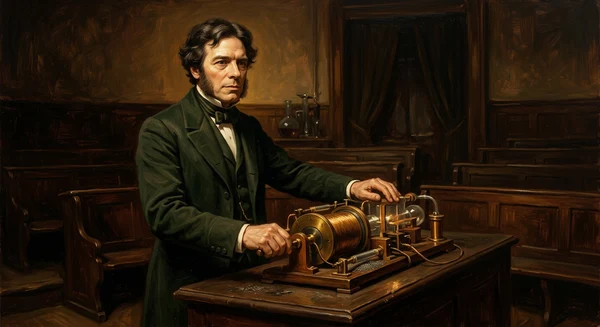
Michael Faraday
1791–1867 · Physicist & Chemist
Discovered electromagnetic induction and built the first electric motor and generator.
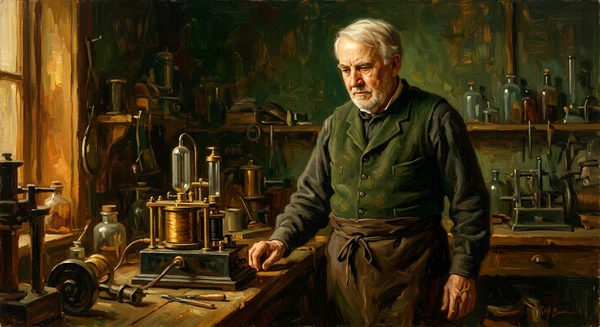
Thomas Edison
1847–1931 · Inventor & Businessman
Invented the practical incandescent light bulb, phonograph, and motion picture camera.
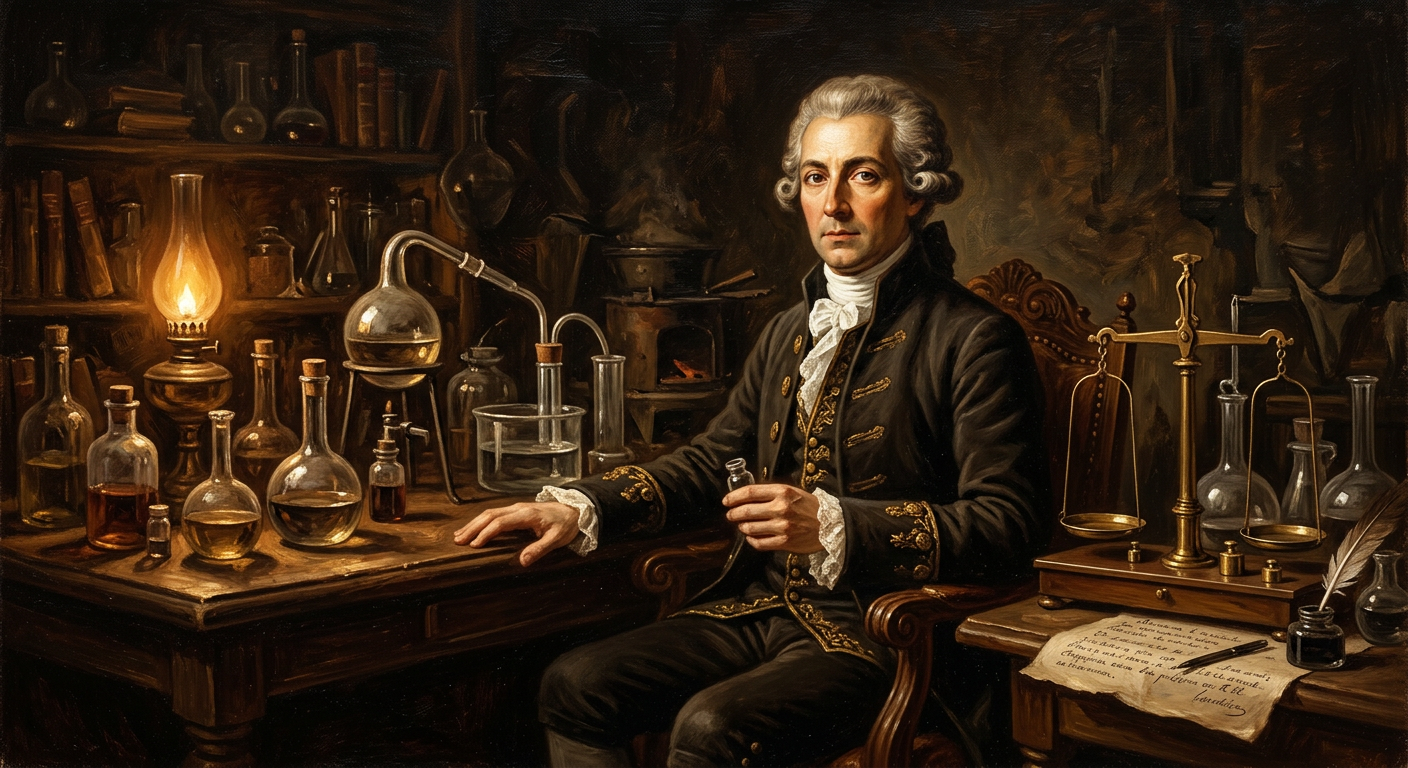
Antoine Lavoisier
1743–1794 · Chemist
The father of modern chemistry who overturned the phlogiston theory and established the law of conservation of mass.
Sources & references
Books and educational kits about Benjamin Franklin coming soon