_(2).jpg)
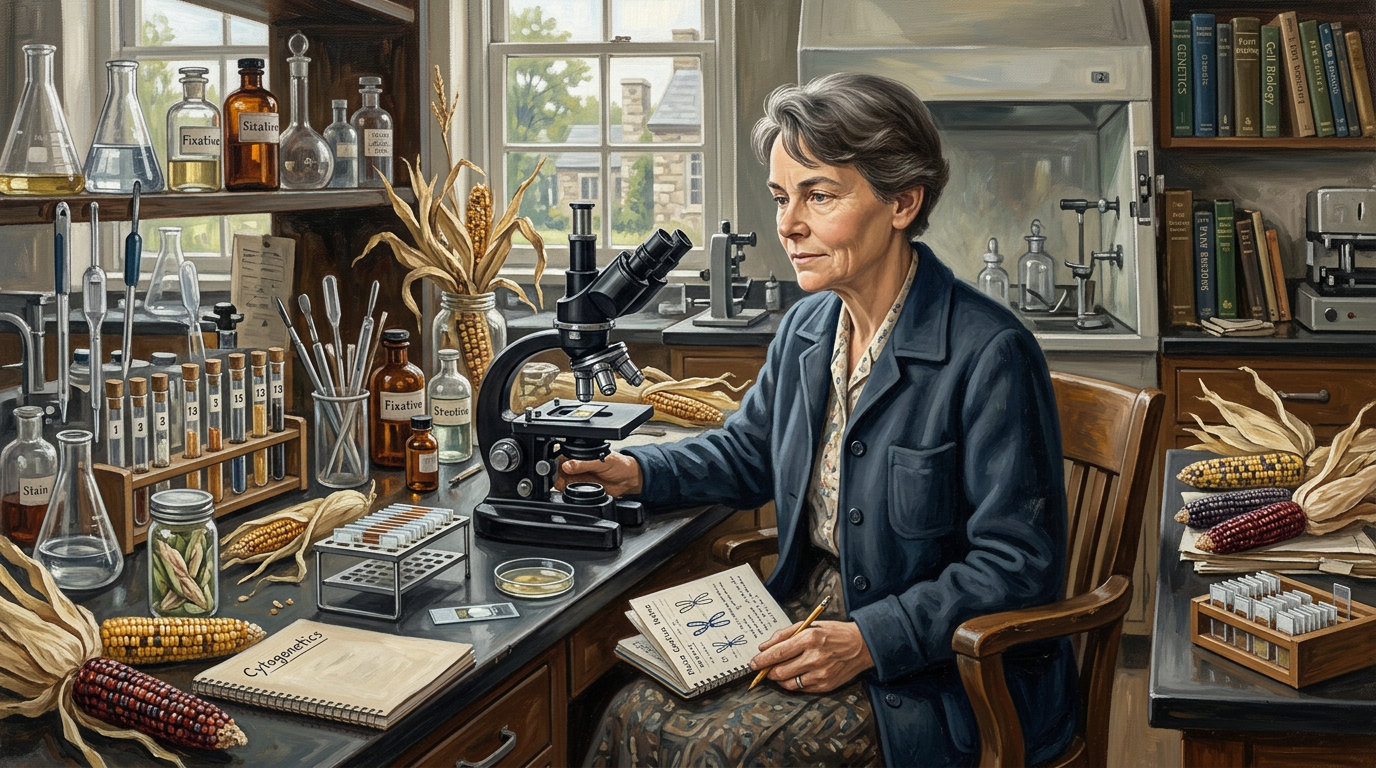
Barbara McClintock
1902–1992 · Geneticist
Barbara McClintock was a visionary geneticist whose painstaking work with maize revealed that genes are not fixed but can move, a discovery so far ahead of its time it took decades to be accepted.
“If you know you are on the right track, you can afford to be ignored.”
Barbara McClintock discovered jumping genes in the 1940s, but the discovery was so far ahead of its time that it took over 30 years — and a Nobel Prize — for the scientific world to recognise its importance.
Why is this scientist famous?
Discovering transposable elements — jumping genes — that can move within the genome.
McClintock discovered that genes can jump around — they are not stuck in one place. Her work helps scientists understand how bacteria become resistant to antibiotics and how crops can be bred to survive drought and disease. If you have heard of "genetic flexibility," you have her to thank for first seeing it.
Barbara's story
Early Life
Born in Hartford, Connecticut, McClintock grew up with a deep independent streak and a love of the outdoors. She studied botany at Cornell University, where she earned a PhD in 1927 and quickly gained a reputation for her extraordinary skill in identifying and mapping maize chromosomes under the microscope.
The Maize Experiments
Working with Indian corn at Cold Spring Harbor Laboratory, McClintintock spent years tracking how kernel colours changed — patterns that could only be explained if genes were moving. In the 1940s she discovered 'controlling elements' that could jump between positions on a chromosome, switching other genes on and off. She published her findings in 1950, but the scientific community largely ignored or dismissed them.
Vindication
It was not until the 1960s and 70s, when jumping elements were found in bacteria, yeast, and other organisms, that the significance of her work became clear. Transposable elements are now known to exist in virtually all living things, influencing gene regulation, disease, and evolution. In 1983, at the age of 81, McClintock received the Nobel Prize in Physiology or Medicine — the first woman to win an unshared Nobel in that category.
Legacy
McClintock continued working at Cold Spring Harbor until her death in 1992. She is remembered not only for a discovery decades ahead of its time, but for a career built on patience, precision, and an unshakeable confidence in evidence over popularity. Her work showed that the genome is not a static blueprint but a dynamic, responsive system.
What did they discover?
Transposable Elements
Discovered that genes can move from one location to another within chromosomes — 'jumping genes' — a finding that overturned the assumption that genes are fixed in place.
Genetic Control Mechanisms
Found that certain elements can regulate other genes, turning them on or off — anticipating the modern field of epigenetics.
Chromosome Mapping in Maize
Developed techniques to identify and map individual maize chromosomes, linking visible traits like kernel colour to specific genetic changes.
Amazing facts
She earned her PhD from Cornell in 1927 and was elected to the National Academy of Sciences in 1944.
Her 1950 paper on jumping genes was met with silence and scepticism for over a decade.
She was the first woman to receive an unshared Nobel Prize in Physiology or Medicine.
She worked at Cold Spring Harbor Laboratory for over 50 years.
Her discovery was vindicated when transposable elements were found in bacteria in the 1960s.
She was known for working alone in a small field of maize, tending each plant by hand.
Timeline
Born in Hartford, Connecticut
Earned a PhD in botany from Cornell University
Published proof that genes are located on chromosomes
Elected to the National Academy of Sciences
Reported the discovery of transposable elements in maize
Awarded the Nobel Prize in Physiology or Medicine
Died in Huntington, New York, age 90
Awards & honours
Related Super Scientists

Gregor Mendel
1822–1884 · Biologist & Augustinian Friar
Discovered the fundamental laws of genetic inheritance by studying pea plants.
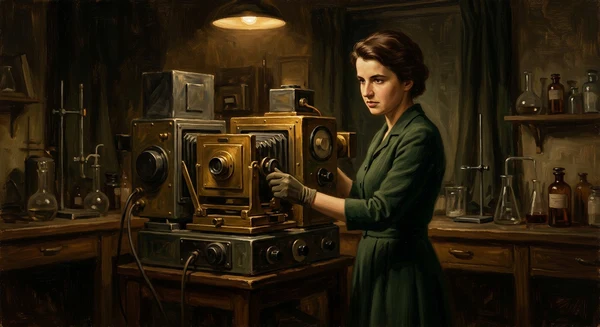
Rosalind Franklin
1920–1958 · Chemist & X-ray Crystallographer
Taking the photograph that revealed the double-helix structure of DNA.
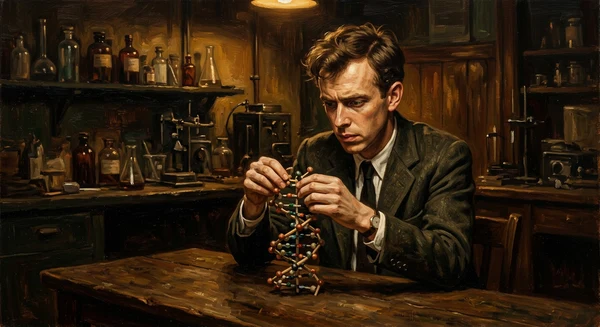
James Watson
1928–present · Molecular Biologist & Geneticist
Co-discovered the double-helix structure of DNA.
Articles about this scientist
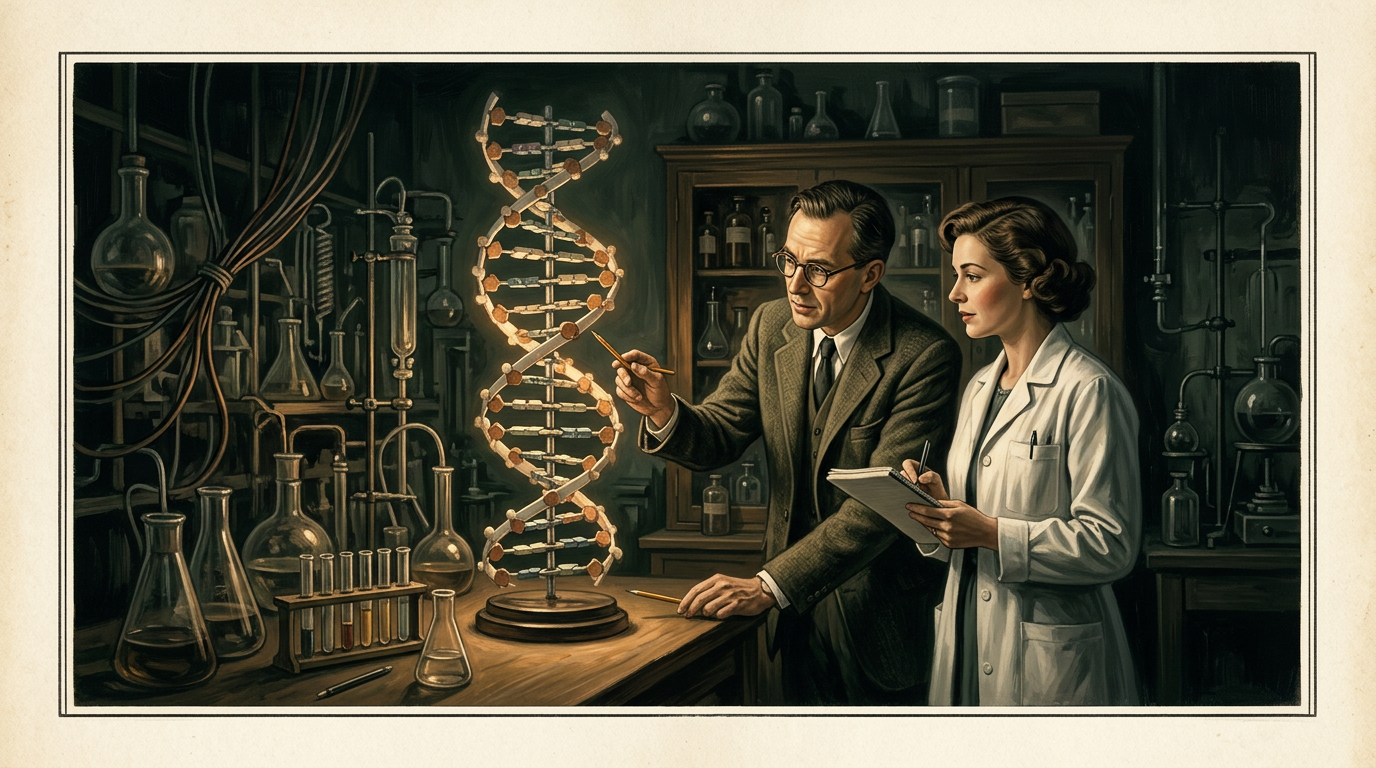
The Double Helix
The discovery of DNA's structure in 1953 is one of the most important breakthroughs of the 20th century. But behind the Nobel Prize lies a story of competition and a woman left uncredited.
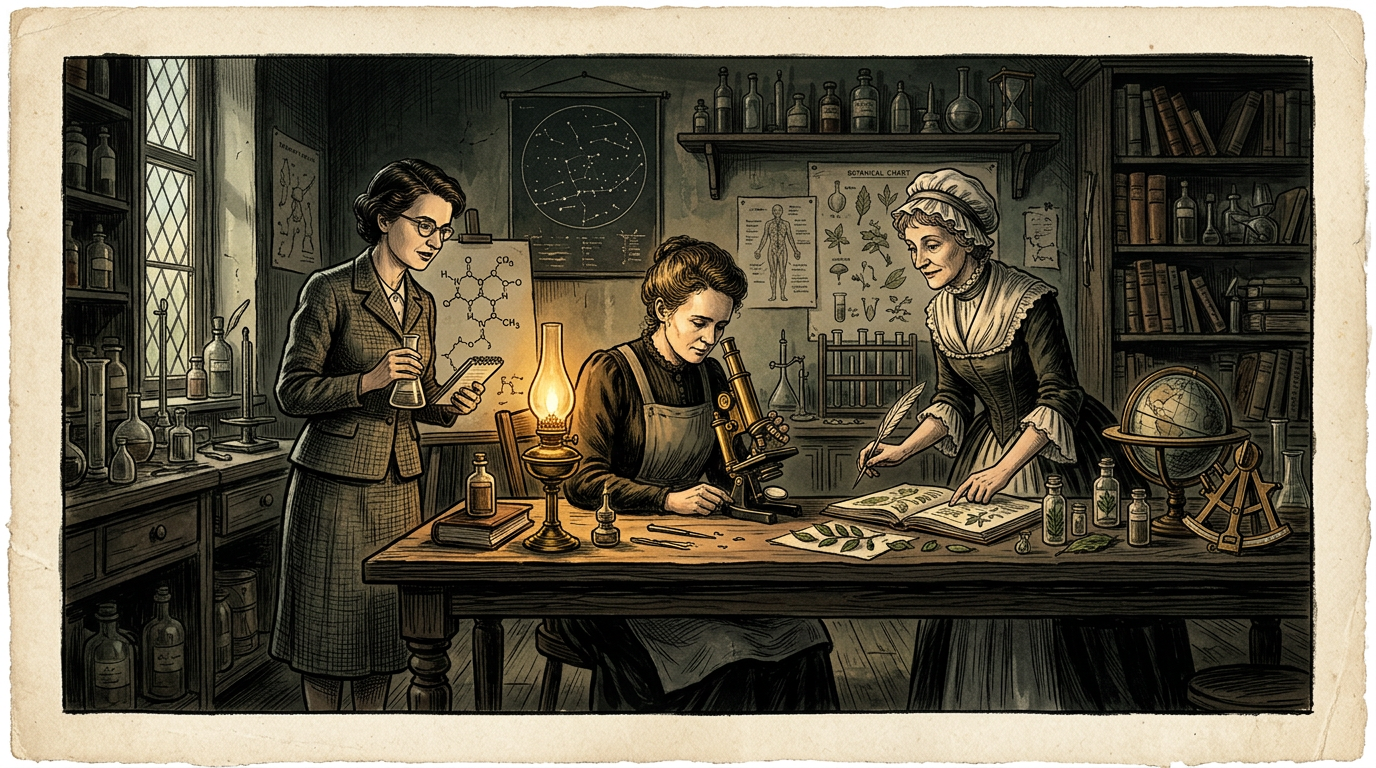
Women Who Changed Science
Throughout history, women in science have faced exclusion, dismissal, and erasure. Yet their discoveries have been transformative. This article celebrates the women whose brilliance could not be held back by the barriers of their time.
Sources & references
Books and educational kits about Barbara McClintock coming soon