_(2).jpg)
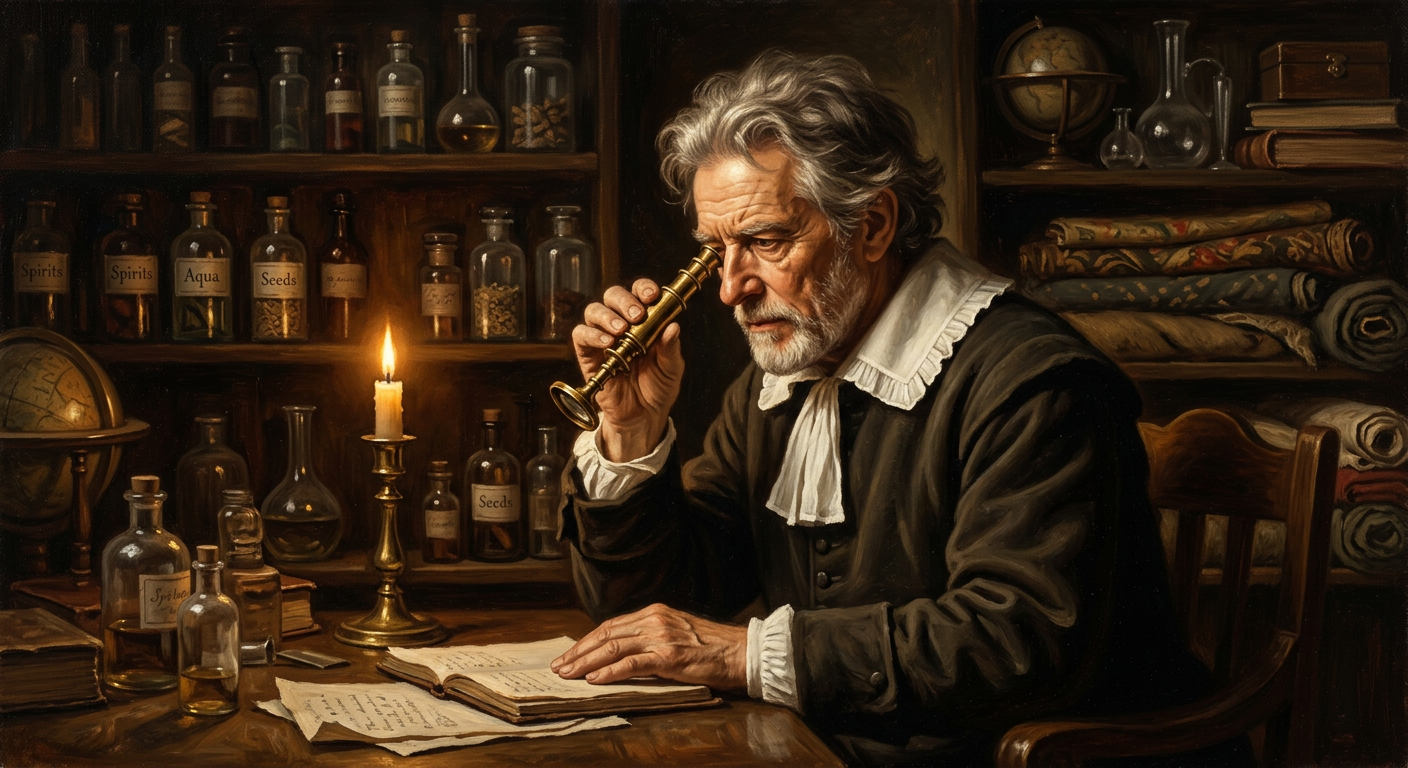
Antonie van Leeuwenhoek
1632–1723 · Biologist
A Dutch shopkeeper with no scientific training who made his own microscopes and discovered a hidden world of tiny living creatures.
“My work, which I've done for a long time, was not pursued in order to gain the praise I now enjoy, but chiefly from a craving after knowledge, which I notice resides in me more than in most other men.”
Leeuwenhoek made more than 500 microscopes in his lifetime, but fewer than a dozen have survived to the present day.
Why is this scientist famous?
First person to see and describe microorganisms — tiny living creatures invisible to the naked eye.
Antonie's story
The Draper’s Gift
Antonie van Leeuwenhoek was born in 1632 in the Dutch city of Delft, the son of a basket-maker. He received no formal scientific education. After his father died, he was sent to Amsterdam to learn the drapery trade, and by 1654 he had returned to Delft, opened his own shop, and married his first wife, Barbara. He sold fabric, ribbons, and buttons, and served in various municipal roles — land-surveyor, city wine assayer, and chamberlain to the sheriffs. A draper’s life might have been all that history remembered of him. But Leeuwenhoek had a habit that set him apart: he liked to examine the threads of his cloth very closely, and for that he needed magnifying glasses. Not satisfied with what he could buy, he taught himself to grind tiny lenses of astonishing quality, some no bigger than a pinhead, that could magnify objects nearly three hundred times. With these simple but powerful single-lens microscopes, he began looking at everything he could find — pond water, tooth scrapings, blood, semen, rainwater from a gutter. What he found would change our understanding of life itself.
A World No One Knew Existed
In 1674, Leeuwenhoek looked at a drop of greenish pond water and saw something that no human being had ever seen before: tiny creatures, swimming and wriggling, far too small to see with the naked eye. He called them “animalcules” — little animals. Some were round, some were rod-shaped, some had tiny tails they lashed about to swim. He had discovered what we now call microorganisms: bacteria, protozoa, and other single-celled life. Over the following years he went on to see red blood cells, sperm cells, and the microscopic structure of muscle fibres. He observed the bacteria in the plaque between his own teeth — and was astonished to find that they stopped moving when he drank hot coffee. He described what he saw in meticulous letters to the Royal Society in London, which were often met with scepticism. The Society sent a team to Delft to verify his claims, and they confirmed everything. In 1680, Leeuwenhoek was elected a Fellow of the Royal Society, an extraordinary honour for a man with no university education who could read only Dutch.
The Lenses That Changed Science
Leeuwenhoek never shared his method for making lenses, and he never sold a microscope. He guarded his techniques so carefully that after his death, no one could replicate his best instruments for more than a century. Each microscope was a tiny thing — a brass or silver plate barely two inches long, with a single lens mounted in it and a pin to hold the specimen. Yet what he achieved with them was extraordinary. His letters to the Royal Society — more than 500 in total, written in Dutch and translated by a friend — became some of the most important scientific documents of the seventeenth century. He lived to be ninety, working almost to the very end, and by the time of his death he had opened an entirely new branch of science: microbiology. Every time a child learns about bacteria today, it traces back to a fabric merchant in Delft who peered through a pinhead-sized lens and gasped at what he saw.
The Last Letter
Leeuwenhoek’s final letter to the Royal Society was written in 1723, shortly before his death at the age of ninety. In it he described an infection on his own lips and the microorganisms he found there — still working, still observing, even as his body was failing. He had outlived two wives and several of his children. His daughter Maria, who had cared for him in his later years, burned some of his papers after his death, perhaps at his request. The microscopes that survived were carefully preserved, but most were lost over the following centuries. Today, only about eleven of his original microscopes are known to exist, preserved in museums. They are small enough to hold in the palm of a hand, yet with them, one man in Delft discovered a universe of life that no one before him had ever imagined.
What did they discover?
Discovery of Microorganisms
Leeuwenhoek was the first human being to observe and describe single-celled organisms — bacteria, protozoa, and other microscopic life — opening the field of microbiology.
Observation of Red Blood Cells
He was among the first to see red blood cells and to note their different sizes in humans and other animals, providing early insight into the structure of blood.
Sperm Cells Described
Leeuwenhoek was the first to observe and describe sperm cells, which he called “animalcules”, contributing to early understanding of reproduction.
Bacteria in Dental Plaque
He discovered bacteria living in the plaque between his own teeth, noting that they stopped moving after he drank hot coffee — one of the earliest recorded observations of heat killing microbes.
Amazing facts
Leeuwenhoek could read and write only Dutch; all his letters to the Royal Society had to be translated into English or Latin.
His microscopes were not compound instruments like modern ones — each used a single tiny lens, some no bigger than a pinhead.
He served as city wine assayer for Delft, testing the quality of imported beer and wine.
He sent more than 500 letters to the Royal Society over fifty years, describing everything he observed.
His daughter Maria burned some of his papers after his death, possibly at his own request.
Only about eleven of his original 500+ microscopes are known to survive today, held in museum collections.
Timeline
Born in Delft, Dutch Republic
Returns to Delft after training as a draper in Amsterdam and opens his own fabric shop
Begins making his own single-lens microscopes to examine cloth threads
First observes microorganisms (“animalcules”) in pond water
Describes bacteria in dental plaque for the first time
Elected Fellow of the Royal Society despite having no university education
First to describe sperm cells in detail
Receives a visit from Peter the Great of Russia, who is curious about his microscopes
Dies in Delft, aged ninety
Awards & honours
Related Super Scientists
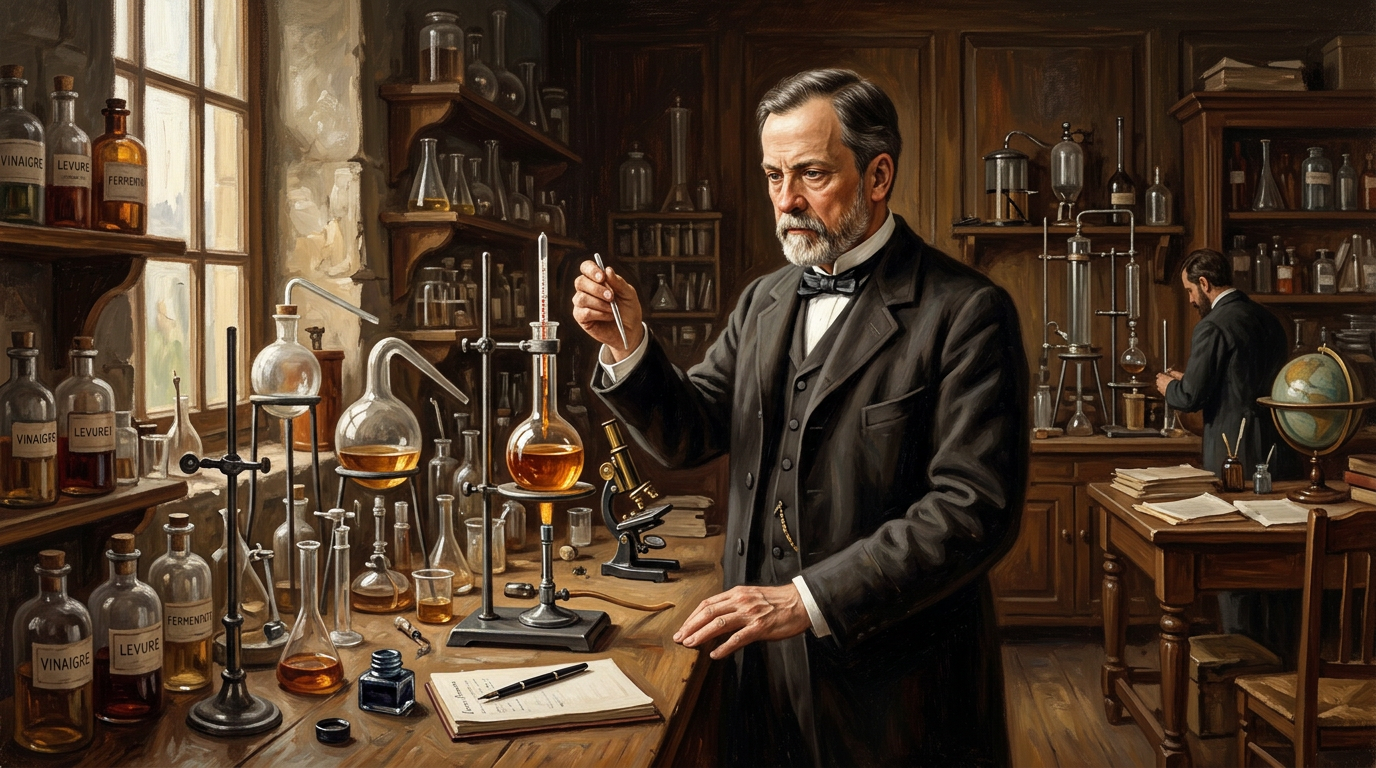
Louis Pasteur
1822–1895 · Chemist and microbiologist
Proving that germs cause disease, developing pasteurisation, and creating the first rabies vaccine.
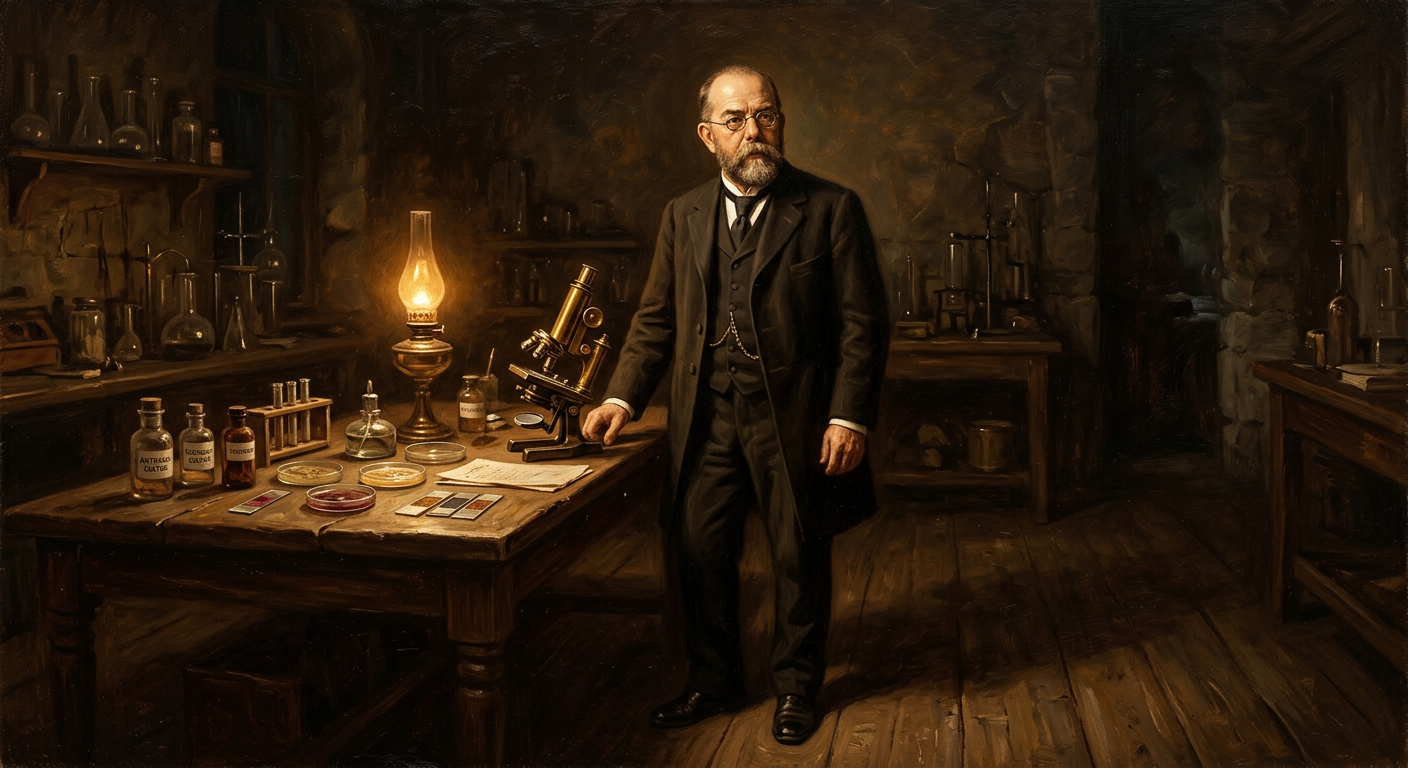
Robert Koch
1843–1910 · Physician and Microbiologist
Discovered the bacteria that cause anthrax, tuberculosis, and cholera, and laid the foundations of modern medical microbiology.
Charles Darwin
1809–1882 · Naturalist & Biologist
Proposing the theory of evolution by natural selection.
Sources & references
Books and educational kits about Antonie van Leeuwenhoek coming soon