_(2).jpg)
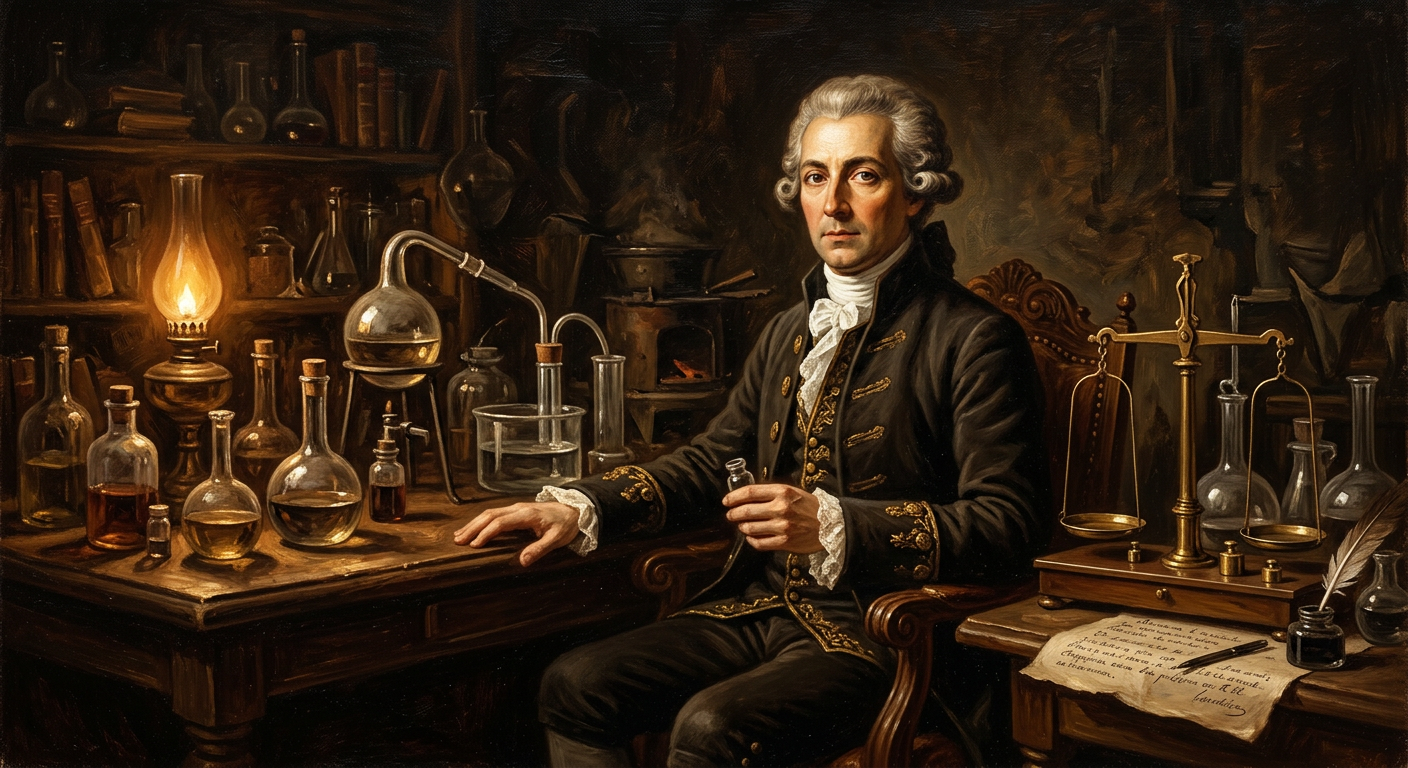
Antoine Lavoisier
1743–1794 · Chemist
A French nobleman who transformed chemistry from alchemy into a rigorous science — and lost his head to the guillotine in the Revolution he tried to reform.
“In nature nothing is created, nothing is lost, everything changes.”
Lavoisier was also a tax collector (a fermier général), which funded his scientific work but ultimately sent him to the guillotine during the French Revolution's Reign of Terror.
Why is this scientist famous?
The father of modern chemistry who overturned the phlogiston theory and established the law of conservation of mass.
Lavoisier taught us that matter is never truly created or destroyed — it just changes form. That idea is why we can balance chemical equations in science class, understand how our bodies turn food into energy, and track carbon through the climate. Every chemistry lesson today builds on the rules he wrote down.
Antoine's story
Early Life and Education
Antoine-Laurent Lavoisier was born in Paris on 26 August 1743 into a wealthy bourgeois family. His mother died when he was five, and he was raised by a doting aunt. He attended the Collège Mazarin, one of Paris''s finest schools, where he studied mathematics, astronomy, botany, and chemistry under some of the best teachers in France. Even as a young man, Lavoisier showed a passion for precise measurement — a trait that would define his entire career. After graduating, he studied law to please his father, but science kept pulling him back.
The Farm-General and Scientific Freedom
At 26, Lavoisier bought a share in the Ferme Générale, a private company that collected taxes for the French crown. It was a controversial system, but it made him wealthy enough to pursue science full time. He married Marie-Anne Paulze, who was only 13 at the time, but she became his most trusted collaborator. She translated scientific papers from English, illustrated his experiments with meticulous drawings, and hosted salons where Europe''s leading scientists debated the latest ideas. Together, they ran what amounted to a private research laboratory.
Killing Phlogiston
For a century, chemists believed that combustible objects contained a mysterious substance called phlogiston, which escaped when something burned. Lavoisier dismantled this theory with a series of elegant experiments. He burned substances inside sealed glass containers and weighed everything before and after — the air, the ash, the smoke. The total mass never changed. What was actually happening, he showed, was that burning objects combined with a gas in the air. He named this gas oxygen. Suddenly, combustion, rusting, and respiration were all the same process: a reaction with oxygen. Chemistry had its first unified theory.
Conservation of Mass
Lavoisier''s most enduring insight was deceptively simple: in a chemical reaction, matter is neither created nor destroyed, only rearranged. He demonstrated this by boiling water for 101 days in a sealed apparatus and showing that the total weight never changed. This principle — the law of conservation of mass — became the bedrock of all modern chemistry. It meant that chemistry was no longer about mysterious transformations but about measurable, predictable rearrangements of matter. He expressed it beautifully: in nature, nothing is created, nothing is lost, everything changes.
Revolution and the Guillotine
Lavoisier was a reformer who believed in using science to improve society. He redesigned street lighting in Paris, helped establish the metric system, and pushed for agricultural reform. But his role as a tax collector made him a target when the French Revolution turned radical. In 1794, during the Reign of Terror, he was arrested along with all former members of the Ferme Générale. The judge who condemned him reportedly said, ''The Republic has no need of savants.'' Lavoisier was guillotined on 8 May 1794. The mathematician Lagrange lamented the next day: ''It took them only an instant to cut off his head, and a hundred years may not produce another like it.''
What did they discover?
Overthrow of the Phlogiston Theory
By demonstrating that combustion is a reaction with oxygen rather than the release of a mysterious substance, Lavoisier demolished a theory that had dominated chemistry for a century and replaced it with a quantitative, evidence-based framework.
Naming Oxygen and Hydrogen
In 1778 he recognised and named oxygen, and in 1783 he identified hydrogen as an element. These names replaced older, misleading terms and gave chemistry a clear vocabulary for the first time.
Law of Conservation of Mass
His sealed-vessel experiments proved that the total mass of reactants equals the total mass of products, establishing the foundational principle that matter is neither created nor destroyed in chemical reactions.
Modern Chemical Nomenclature
With three colleagues he published the Méthode de nomenclature chimique in 1787, creating a systematic naming system for chemical compounds that is still the basis of how we name substances today.
Amazing facts
Lavoisier boiled water in a sealed container for 101 straight days to prove that matter cannot be created from nothing.
His wife Marie-Anne was 13 when they married, but she became one of science''s great collaborators — translating English papers, editing his textbook, and drawing every illustration.
He built an ice calorimeter that melted ice around a guinea pig to measure the heat produced by animal respiration, proving that breathing is essentially a slow form of combustion.
He served on the commission that debunked Anton Mesmer''s claims about animal magnetism, helping to design a controlled, blind experiment — one of the first in history.
His personal income from tax farming funded his laboratory, his experiments, and his reform projects, but it was also the reason he was executed.
He helped launch the metric system, arguing that a universal, rational system of weights and measures would benefit all of humanity.
Timeline
Born in Paris, France
Graduated from the Collège Mazarin with a law degree but turned to science
Bought a share in the Ferme Générale tax company, funding his scientific career
Married Marie-Anne Paulze, who became his lifelong scientific collaborator
Identified and named oxygen, overturning the phlogiston theory of combustion
Recognised hydrogen as an element and demonstrated that water is a compound
Co-published the Méthode de nomenclature chimique, creating modern chemical naming
Published Traité Élémentaire de Chimie, the first modern chemistry textbook
Arrested during the Reign of Terror as a former tax collector
Guillotined in Paris during the Reign of Terror
Awards & honours
Related Super Scientists
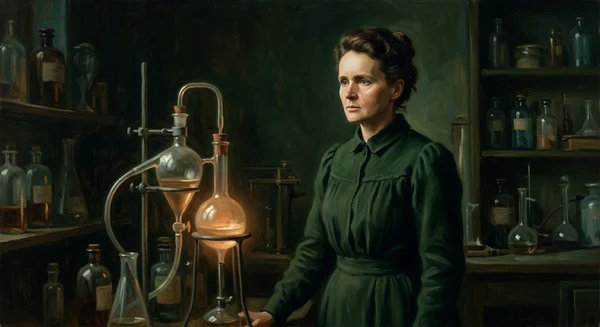
Marie Curie
1867–1934 · Physicist & Chemist
Discovering radioactivity and two new elements: radium and polonium.
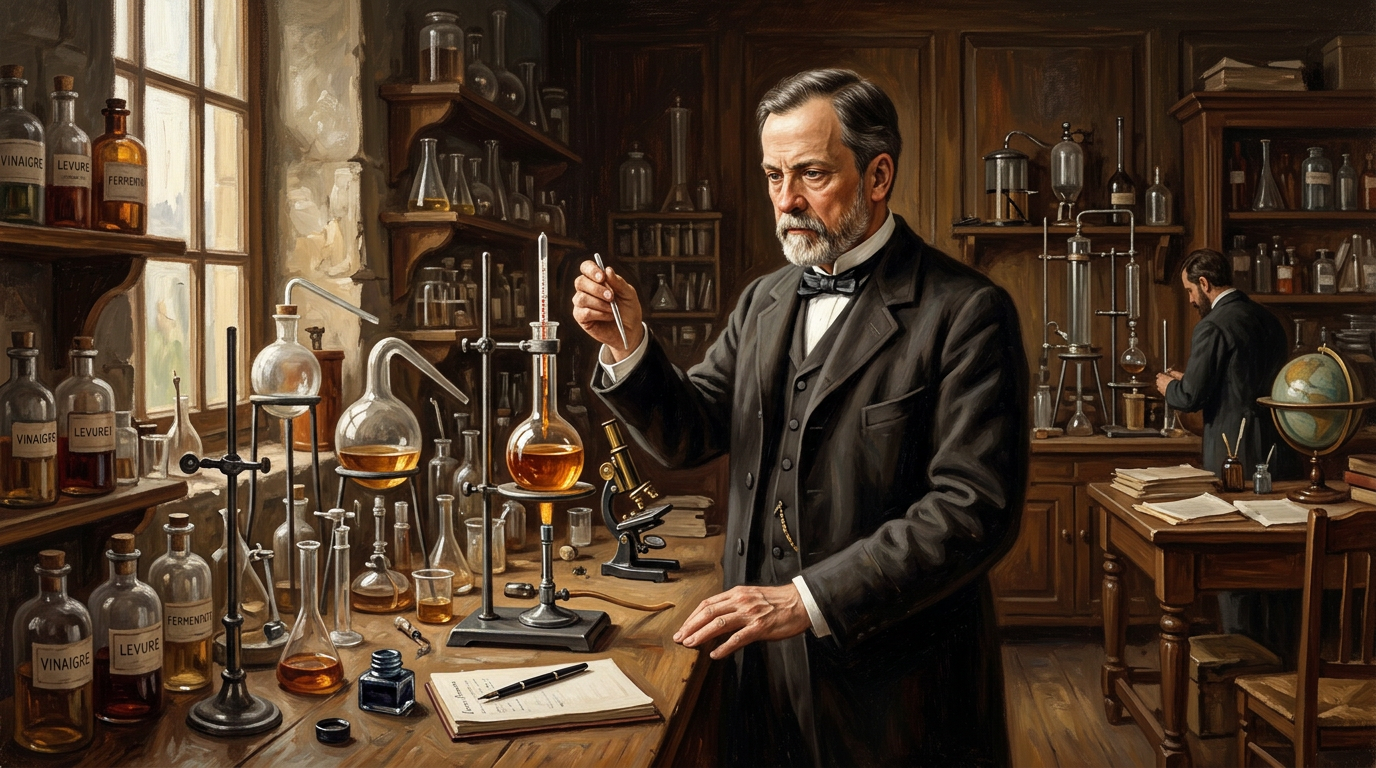
Louis Pasteur
1822–1895 · Chemist and microbiologist
Proving that germs cause disease, developing pasteurisation, and creating the first rabies vaccine.
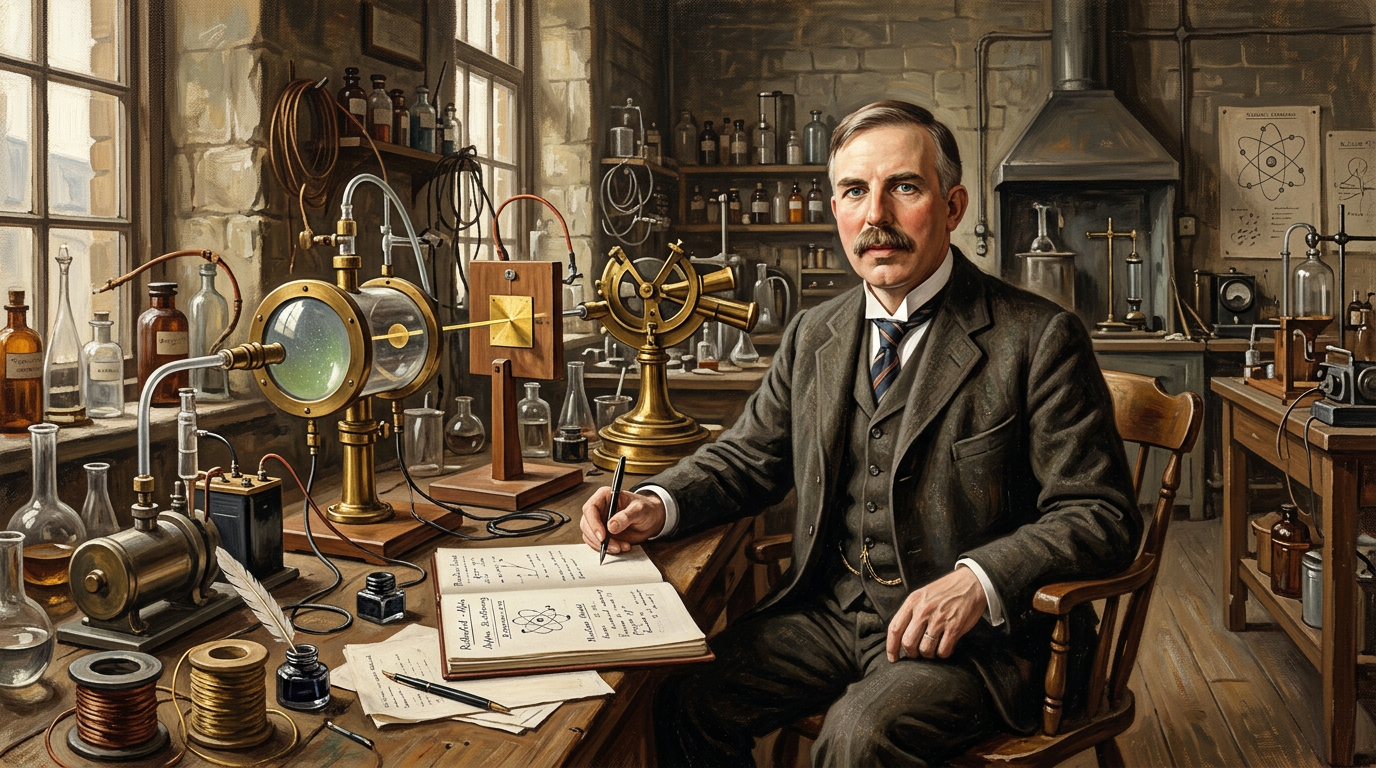
Ernest Rutherford
1871–1937 · Physicist
Discovering the nuclear structure of the atom and pioneering the field of nuclear physics.
Articles about this scientist
Sources & references
Books and educational kits about Antoine Lavoisier coming soon