_(2).jpg)
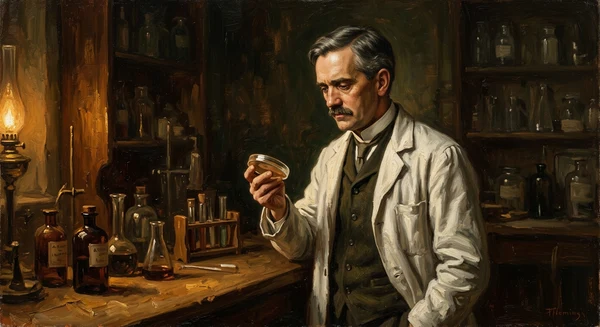
Alexander Fleming
1881–1955 · Bacteriologist
Alexander Fleming was a Scottish bacteriologist who discovered penicillin — the first antibiotic. By accident, he found that a mold had killed bacteria in a petri dish, and this discovery has since saved an estimated 200 million lives.
“When I woke up just after dawn on September 28, 1928, I certainly didn't plan to revolutionize all medicine by discovering the world's first antibiotic, but I suppose that was exactly what I did.”
Fleming discovered penicillin by accident — he left a petri dish uncovered, mold blew in, and he noticed the mold had killed the bacteria around it. That messy lab accident changed medicine forever.
Why is this scientist famous?
Discovered penicillin, the world's first antibiotic, saving hundreds of millions of lives.
If you have ever taken an antibiotic for an ear infection, strep throat, or a cut that got infected, you have Alexander Fleming to thank. His discovery of penicillin turned infections that used to be deadly into treatable illnesses. Antibiotics have saved more lives than almost any other medical discovery in history.
Alexander's story
Early Life
Born in 1881 at Lochfield Farm in Ayrshire, Scotland, Fleming was the son of a farmer. He moved to London as a teenager and worked in a shipping office before studying medicine at St. Mary's Hospital Medical School on a scholarship. He served as a battlefield doctor in World War I, where he saw countless soldiers die of infected wounds.
Lysozyme
Before penicillin, Fleming discovered lysozyme in 1921 — an enzyme in tears, saliva, and mucus that kills some bacteria. He discovered it when a drop of his own nose mucus fell onto a bacterial culture and killed it. Though lysozyme only worked on harmless bacteria, it proved that the body has natural antibacterial defences.
The Accidental Discovery
In September 1928, Fleming returned from vacation to find that a petri dish of staphylococcus bacteria had been left uncovered and contaminated by a blue-green mold. Around the mold was a clear ring where no bacteria grew. He identified the mold as Penicillium notatum and realized it was producing a substance that killed bacteria. He called it penicillin.
Mass Production and the Nobel Prize
Fleming struggled to produce penicillin in large quantities. It wasn't until World War II that Howard Florey and Ernst Chain succeeded in mass-producing it, saving thousands of wounded soldiers. Fleming, Florey, and Chain shared the 1945 Nobel Prize in Physiology or Medicine. Penicillin revolutionised medicine and has since saved an estimated 200 million lives.
What did they discover?
Penicillin
Discovered the world's first antibiotic by accident in 1928, when mold contaminated a petri dish and killed bacteria. Penicillin has since saved approximately 200 million lives.
Lysozyme
Discovered a natural antibacterial enzyme in tears, saliva, and mucus in 1921, proving that the human body has its own defences against bacteria.
Amazing facts
He discovered penicillin because he accidentally left a petri dish uncovered while on vacation.
He also discovered lysozyme — when a drop from his own runny nose fell onto a bacterial culture.
He shared the 1945 Nobel Prize with Howard Florey and Ernst Chain, who figured out how to mass-produce penicillin.
His discovery has saved an estimated 200 million lives — more than almost any other medical breakthrough.
He was a skilled painter and used bacteria to create "germ paintings" — artworks made with living bacteria.
His first name was actually Hugh, not Alexander — he went by his middle name, Alexander.
Timeline
Born at Lochfield Farm, Ayrshire, Scotland on August 6
Qualified as a doctor from St. Mary's Hospital Medical School, London
Served as a battlefield doctor in France during World War I
Discovered lysozyme, a natural antibacterial enzyme
Discovered penicillin when mold contaminated a petri dish on September 28
Published his findings on penicillin, but the discovery was largely ignored at first
Florey and Chain demonstrated penicillin's effectiveness in treating infections
Penicillin mass production began, saving thousands of Allied soldiers
Shared the Nobel Prize in Physiology or Medicine with Florey and Chain
Died in London on March 11, age 73
Awards & honours
Related Super Scientists
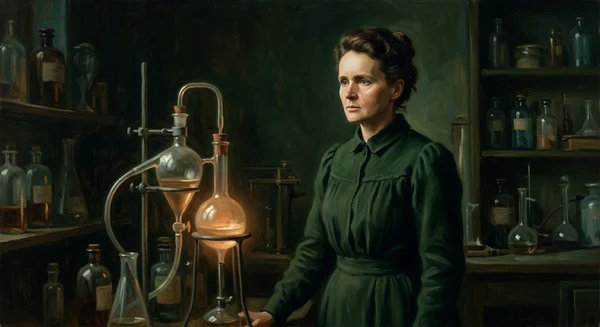
Marie Curie
1867–1934 · Physicist & Chemist
Discovering radioactivity and two new elements: radium and polonium.
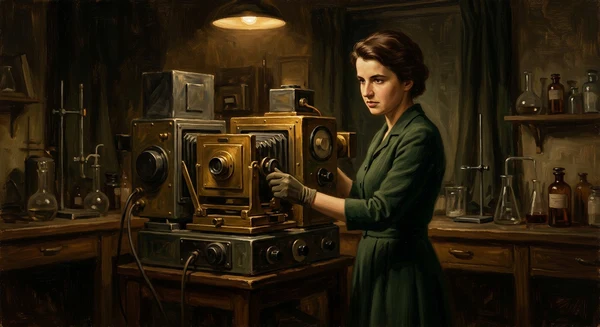
Rosalind Franklin
1920–1958 · Chemist & X-ray Crystallographer
Taking the photograph that revealed the double-helix structure of DNA.
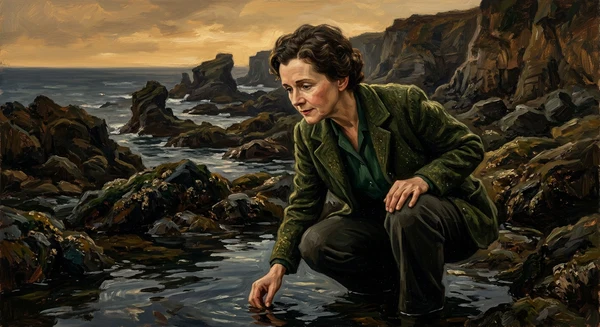
Rachel Carson
1907–1964 · Marine Biologist & Conservationist
Wrote Silent Spring, launching the global environmental movement.
Articles about this scientist
Sources & references
Books and educational kits about Alexander Fleming coming soon