_(2).jpg)
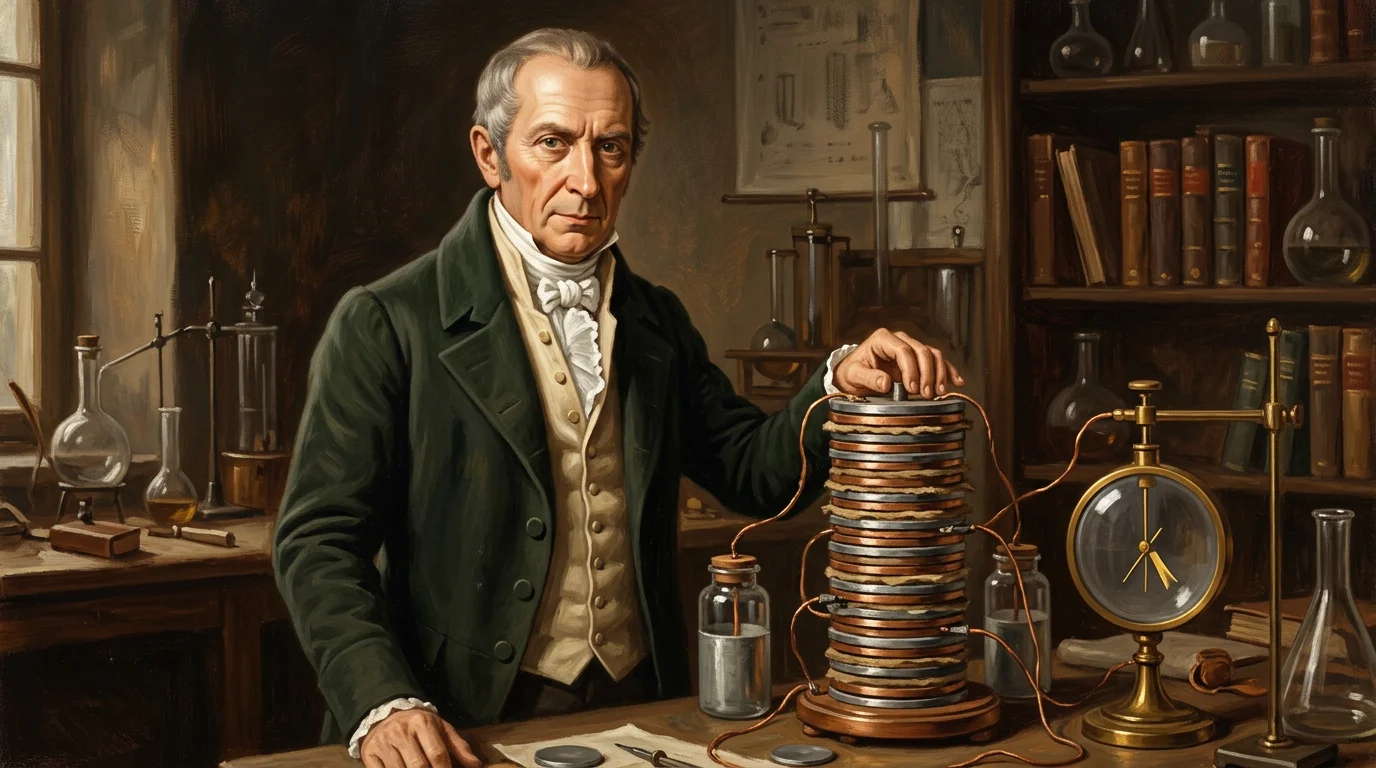
Alessandro Volta
1745–1827 · Physicist
An Italian physicist whose invention of the electric battery opened the door to all modern electrical science and technology.
Volta's voltaic pile was built from alternating discs of zinc and copper separated by brine-soaked cardboard — a design so simple it could be assembled in minutes, yet it changed the world.
Why is this scientist famous?
Invented the voltaic pile in 1800, the first electric battery capable of producing a continuous current. The volt is named after him.
Alessandro's story
Early Life
Alessandro Giuseppe Antonio Anastasio Volta was born in Como, Italy, into a noble but not wealthy family. He did not speak until he was four years old, causing his relatives to fear he was slow-witted, but once he started talking he quickly proved to be extraordinarily bright. He was educated at the Jesuit school in Como and showed a passionate interest in electrical phenomena from his teenage years, reading everything he could find on the subject and performing his own experiments with homemade devices.
Rise in Science
By 1774 Volta was teaching physics at the Royal School in Como. The following year he invented the electrophorus, a device that could produce static electricity through electrostatic induction — a simple but highly effective tool that made his name in scientific circles across Europe. In 1778 he identified and isolated methane gas from the marshes near Como, recognising it as a distinct combustible substance. These accomplishments earned him a professorship at the University of Pavia in 1779, where he would teach and conduct research for nearly forty years.
The Frog Controversy
In the 1780s Volta found himself in a famous scientific dispute with Luigi Galvani, a Bologna anatomist. Galvani had observed that a dead frog's leg twitched when touched with two different metals, and he believed this proved the existence of 'animal electricity' — a special fluid within living tissue. Volta disagreed, arguing that the electricity was being produced by the metal contacts, not by the frog. The debate raged for years, but it drove Volta to a breakthrough: to prove that no animal tissue was needed, he set out to build a device that could generate electricity using only metals and a liquid.
The Voltaic Pile
In 1800 Volta unveiled his masterpiece: the voltaic pile. It was a stack of alternating zinc and copper discs separated by pieces of cardboard soaked in salt water or brine. When the top and bottom of the stack were connected with a wire, a steady electric current flowed — something no one had ever achieved before. Previous electrical devices like Leyden jars could only release a single brief spark. The voltaic pile produced a continuous, controllable current, making it the first true electric battery. Volta described his invention in a letter to the Royal Society in London, and within months scientists across Europe were building their own piles and exploring the new world of continuous electric current.
Napoleon's Patronage
Volta's invention caused a sensation, and no one was more impressed than Napoleon Bonaparte, who attended one of Volta's demonstrations in Paris. Napoleon made Volta a count, awarded him a gold medal, and provided generous funding for further research. Volta was also elected a foreign member of the French Academy of Sciences. Despite the political turbulence of the Napoleonic era, Volta maintained his scientific standing and continued his work at Pavia, respected by both French and Austrian authorities as Italy changed hands between empires.
Legacy
Volta retired in 1819 and spent his final years at his estate in Como. He died there in 1827 at the age of 82. The voltaic pile had already transformed science: within years of its invention, Humphry Davy used powerful batteries to isolate sodium, potassium, calcium, and other elements for the first time. In 1881, long after his death, the International Electrical Congress named the unit of electrical potential — the volt — in his honour. Every battery in every phone, laptop, and car today traces its ancestry back to Volta's stack of metal discs and brine-soaked cardboard.
What did they discover?
The Voltaic Pile
Invented in 1800, the voltaic pile was the first device capable of producing a continuous electric current. Built from alternating zinc and copper discs separated by brine-soaked cardboard, it made all subsequent electrical technology possible and enabled the discovery of new chemical elements through electrolysis.
The Electrophorus
Invented in 1775, this simple device produced static electricity through electrostatic induction. It was widely adopted in laboratories across Europe and established Volta's reputation as an electrical researcher.
Discovery and Isolation of Methane
In 1778 Volta identified methane gas rising from the marshes near Como and recognised it as a distinct combustible substance. He successfully isolated it, making him one of the first scientists to study this important hydrocarbon.
The Volta-Galvani Debate
Volta's disagreement with Luigi Galvani over 'animal electricity' led him to prove that electricity could be generated by metal contacts alone, directly inspiring the invention of the voltaic pile and launching the field of electrophysiology.
Amazing facts
Volta did not speak a word until he was four years old, and his family feared he was developmentally delayed — he went on to become one of the most celebrated physicists in Europe.
Napoleon Bonaparte personally attended one of Volta's demonstrations in Paris and was so impressed he made Volta a count and gave him a gold medal.
The volt, the standard unit of electrical potential, was named in Volta's honour in 1881, more than fifty years after his death.
Volta discovered methane gas in the marshes near his hometown of Como in 1778, making him one of the first scientists to identify and isolate a hydrocarbon gas.
The voltaic pile was so simple to build that within months of Volta's announcement, scientists across Europe were constructing their own and performing new experiments with continuous electric current.
Volta personally presented one of his voltaic piles to Michael Faraday in 1814 in Milan — a symbolic passing of the torch from the inventor of the battery to the man who would transform electrical science.
Timeline
Born in Como, Italy
Began teaching physics at the Royal School in Como
Invented the electrophorus, a device for producing static electricity
Identified and isolated methane gas from marshes near Como
Appointed professor of physics at the University of Pavia
Began his famous debate with Luigi Galvani over animal electricity
Invented the voltaic pile and described it in a letter to the Royal Society in London
Demonstrated the voltaic pile to Napoleon in Paris and was made a count
Retired from the University of Pavia and returned to Como
Died at his estate in Como, aged 82
Awards & honours
Related Super Scientists
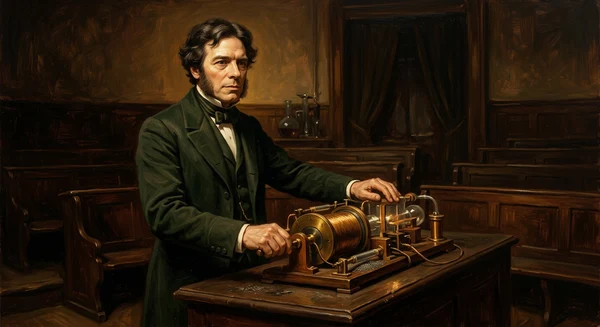
Michael Faraday
1791–1867 · Physicist & Chemist
Discovered electromagnetic induction and built the first electric motor and generator.
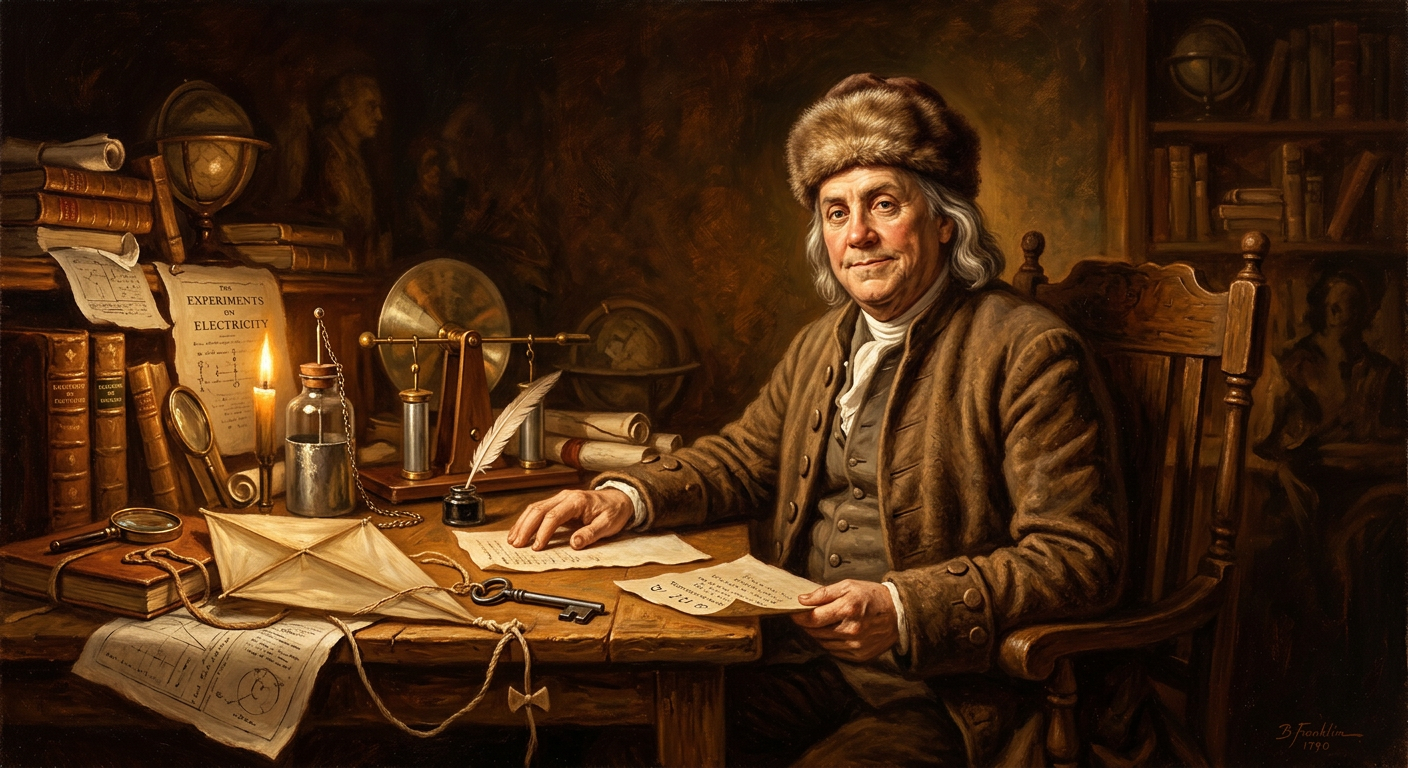
Benjamin Franklin
1706–1790 · Polymath: Scientist, Inventor, Statesman, and Printer
The American polymath who proved lightning is electricity, invented the lightning rod and bifocals, and helped draft the Declaration of Independence.
Sources & references
Books and educational kits about Alessandro Volta coming soon